REVIEW · KUSADASI
PRIVATE Ephesus and House of Virgin Mary Tour (Skip-The-Line)
Book on Viator →Operated by OTTI Travel · Bookable on Viator
Two ancient miracles, one smooth day. You’ll start with private pickup in Kusadasi, then head straight to Ephesus for an on-foot walk through major Roman highlights—before the day gets too thick with crowds. The plan also includes the House of the Virgin Mary on Mount Koressos and a stop at the Basilica of St. John, so you get both archaeology and pilgrimage sites in one outing.
I especially like the way this tour is built for clarity and comfort: an English-speaking guide with an archaeological background, plus a luxury private vehicle that keeps you relaxed between stops. In real pairings, guides like Melike and Nagi are praised for pacing you well and explaining what you’re actually looking at, not just rattling dates.
One thing to consider: the headline price is only the tour. Site admissions are extra (Ephesus, St. John, and the Virgin Mary House), and you may also find your day includes time at craft shop stops depending on your guide’s routing.
In This Review
- Key highlights before you go
- Kusadasi pickup and the quiet start before crowds
- Ephesus Ancient City on foot: Harbor Street to the Library of Celsus
- The Roman city feeling: Agora, temples, baths, and public life
- Basilica of St. John: where tradition meets architecture
- Meryemana on Mount Koressos: the House of the Virgin Mary
- Temple of Artemis: the Wonder you can only sense in ruins
- Lunch time and the craft stops: plan your appetite and your boundaries
- Private tour value: what $49 really buys (and what it doesn’t)
- When to choose this tour: best-fit travelers
- Practical tips to make the day smoother
- Should you book this private Ephesus and Virgin Mary tour?
- FAQ
- How long is the tour?
- Do you get pickup from the cruise port or a hotel?
- Where does the guide meet cruise passengers?
- What sites are included on the tour?
- Is lunch included?
- What admission fees are not included?
- Is the tour only for my group?
- What language is the tour guide?
- What fitness level is required?
- Can I cancel for a full refund?
Key highlights before you go
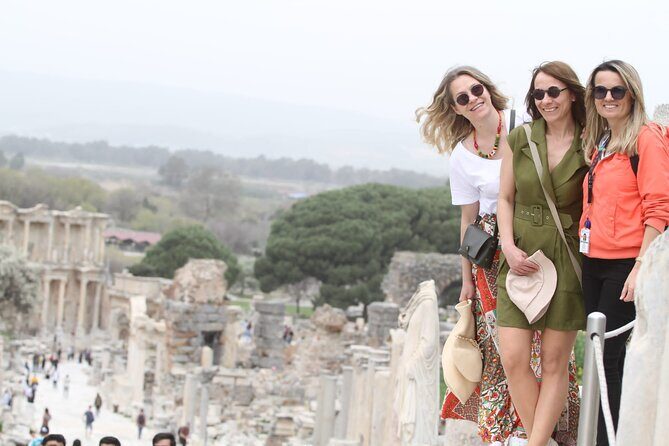
- Private pickup and drop-off from cruise port or your hotel
- Skip-the-line access to speed up your time at major sites
- Ephesus highlights on foot, from Harbor Street and Marble Street to the Library of Celsus
- Mount Koressos at Meryemana, the Virgin Mary House pilgrimage site with a quiet, green setting
- Basilica of St. John, built over the traditional burial place and later developed during Justinian’s era
- Temple of Artemis foundations, free to view, with only the remains of this ancient Wonder
Kusadasi pickup and the quiet start before crowds
The day begins with pickup in Kusadasi, typically between 7:30am and 11am. If you’re arriving by cruise ship, a good rule is to schedule your departure about 30 minutes after docking so you’re not sprinting from the ship when lines and paperwork are at their worst.
From there, you ride by private vehicle to Ephesus. This matters more than you’d think. The faster you get out of the port area and into the main route, the more time you can spend walking the ruins rather than waiting in traffic.
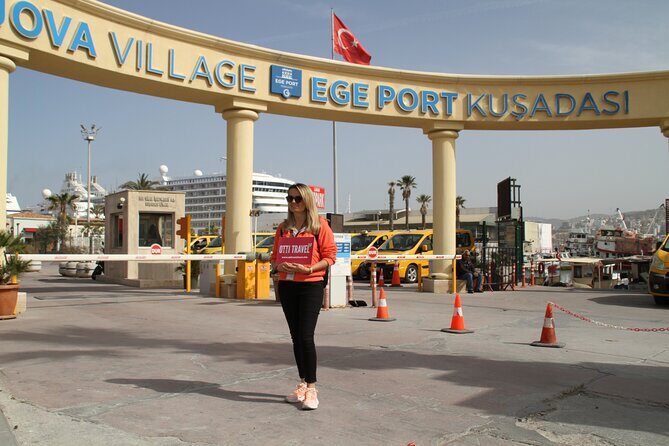
Your guide meets you at an organized spot: cruise passengers gather at the exit of the immigration gate of Kusadasi Cruise Port with a sign showing your name. Hotel guests meet by the hotel reception. It’s a simple system, and it helps you keep the day calm and on schedule.
You can also read our reviews of more private tours in Kusadasi
Ephesus Ancient City on foot: Harbor Street to the Library of Celsus
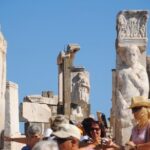
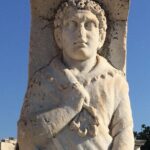
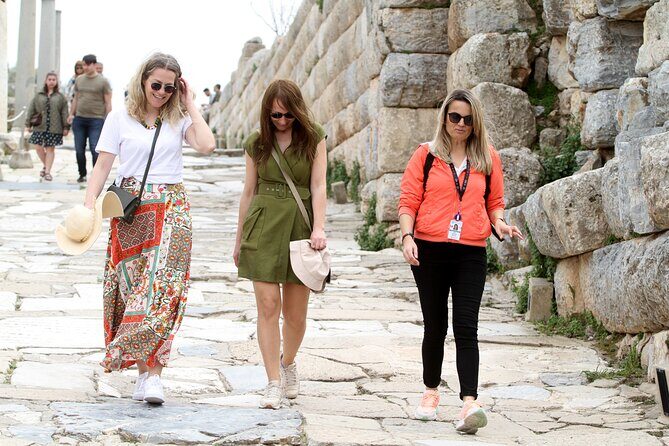
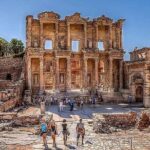
Ephesus is the anchor of this tour, and it’s where your “wow” factor comes from. The site covers layers of ancient life, including Greek and Roman periods. You’ll walk through an archaeological enclosure that balances conservation with visitor access, so you can actually see how the city worked instead of just staring at a few scattered stones.
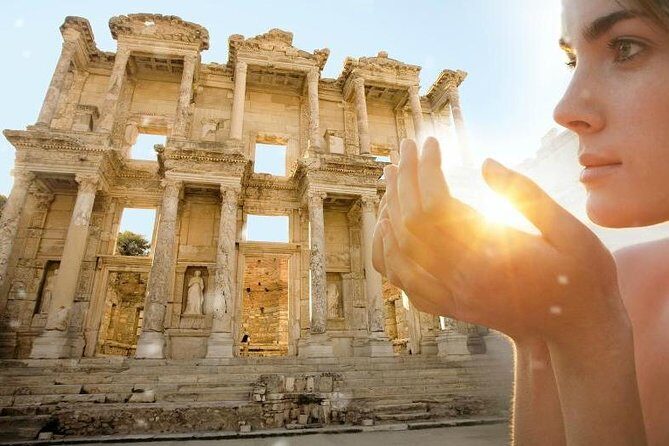
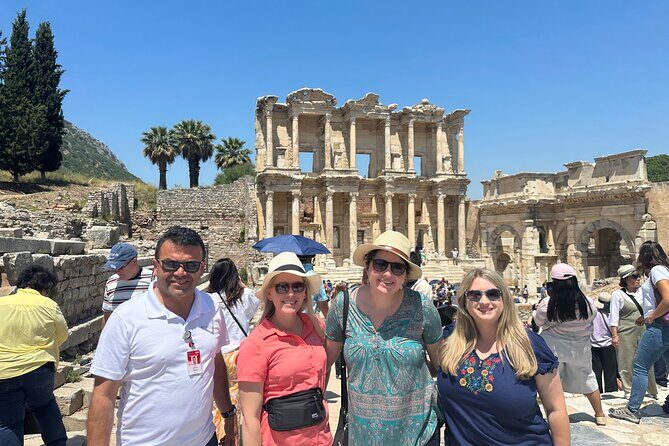
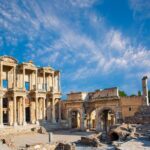
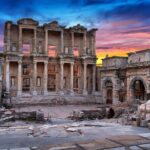
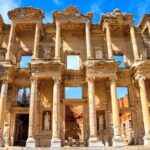
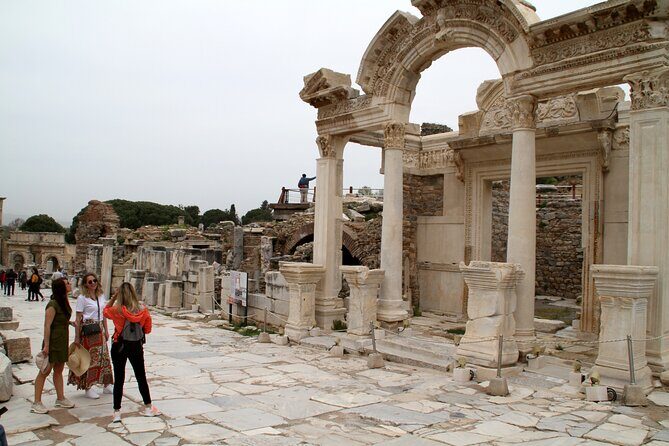
Your route commonly starts along Harbor Street, then continues to key “set pieces” visitors come for: Marble Street, the Library of Celsus, and the imposing gate area linked to Mithridates and Mazeus. The Library of Celsus is one of the most famous facades here, and it’s easier to appreciate in a structured walk with an on-foot guide pointing out details rather than trying to guess what matters.
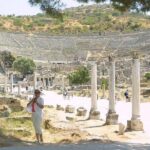
You also get a strong sense of how Ephesus functioned as a big Roman city. You’ll move past areas associated with commerce (the agora) and through zones with well-preserved temples, baths, fountains, and monuments. That’s the big advantage of a guide-led route: you’re not just seeing stones—you’re seeing the city’s rhythm.
Skip-the-line access also helps. Ephesus can mean long waits if you arrive when everyone else does, so anything that reduces that queue turns into more time walking.
The Roman city feeling: Agora, temples, baths, and public life
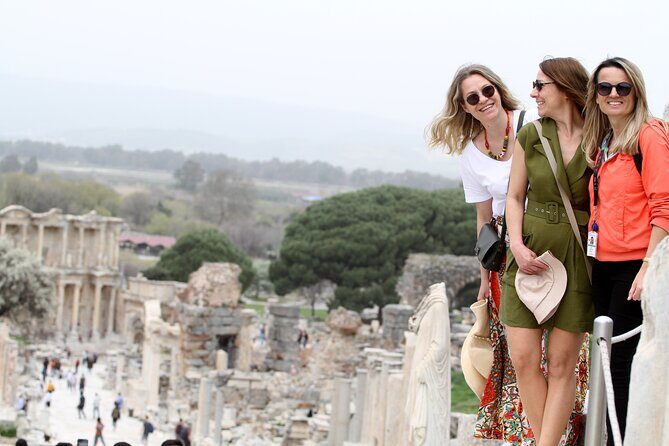
Ephesus isn’t only about one iconic building. The power of the visit is how the stops connect. As you walk, you’ll pass through what feels like the city’s daily engine room: public spaces, civic structures, and places where people gathered, worked, prayed, and cared for their bodies.
One highlight is the commercial agora, where the city’s business life comes into focus. Pair that with the temples and public monuments, and you start to understand why Ephesus was once one of the biggest cities in the eastern Roman world.
Even if you don’t call yourself a “ruins person,” the layout tends to click. Streets line up, buildings cluster, and you can picture the flow of crowds—especially when your guide ties each stop to what people likely did there.
A practical note: Ephesus involves walking across uneven ground and climbing in spots. Your tour is listed as moderate physical fitness, so plan on comfortable shoes and a steady pace.
Basilica of St. John: where tradition meets architecture
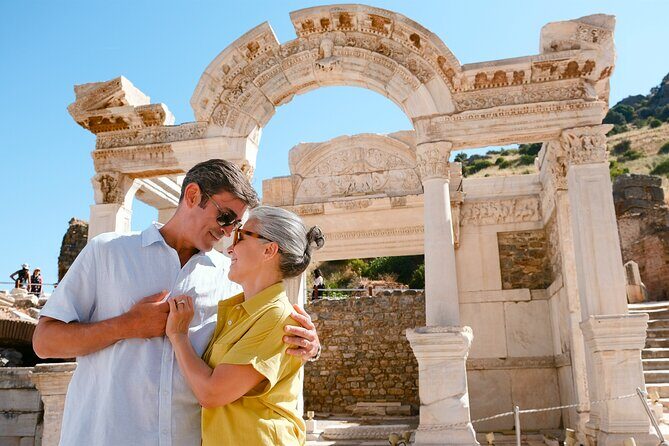
After Ephesus, you head to the Basilica of St. John, a smaller stop in time (about 30 minutes) but meaningful in context. The site connects to the tradition that St. John spent his later years in the region around Ephesus and was buried on Ayosolug Hill.
The story goes like this: a small chapel was built in the 4th century over the grave area, and later the building developed into a more impressive basilica during the period associated with Emperor Justinian (527–565 AD). That “chapel to basilica” evolution matters because it shows how Christian memory and physical space reinforced each other over centuries.
Historically, the area connects to a tough era for early Christians, with persecutions across different places. When a guide frames the basilica this way, the stop feels less random and more like a chapter in the same long timeline as Ephesus.
Meryemana on Mount Koressos: the House of the Virgin Mary
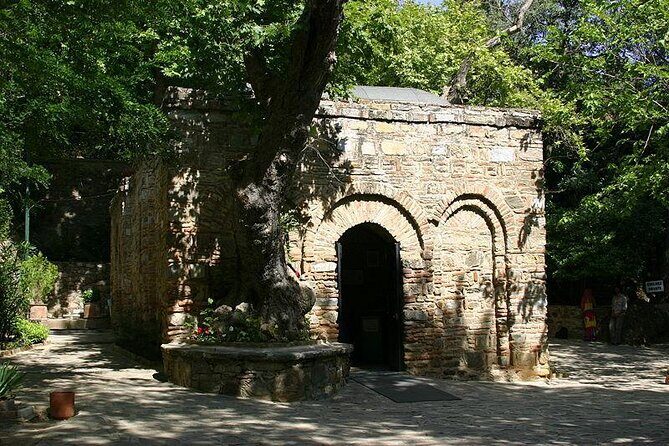
The House of the Virgin Mary—also called Meryemana—is a different kind of experience than Ephesus. Instead of major stone streets and monumental architecture, this one is about atmosphere. It’s located up on the Bulbul mountain, about 9 km ahead of Ephesus, and it’s set in a quiet, green area that pilgrims describe as peaceful.
The house itself is built in a typical Roman stone style. Over time, a church was built combining the house and grave, and it’s traditionally associated with the 4th-century period. You’ll see the overall layout: an anteroom-like area (where candles are offered), a bedroom space, and a praying room. There’s also mention of a room with a fireplace connected to a chapel area.
Even if you’re not traveling for Catholic pilgrimage, this stop lands well because it’s human-scale. It’s also one of the few places on this outing where the visit can feel reflective instead of “look at the ruins, move on.”
Time on site is shorter (around 40 minutes), so go in with a calm pace. If you want photos, do them early or at natural quiet moments, not while you’re rushing between groups.
You can also read our reviews of more tours and experiences in Kusadasi

Temple of Artemis: the Wonder you can only sense in ruins
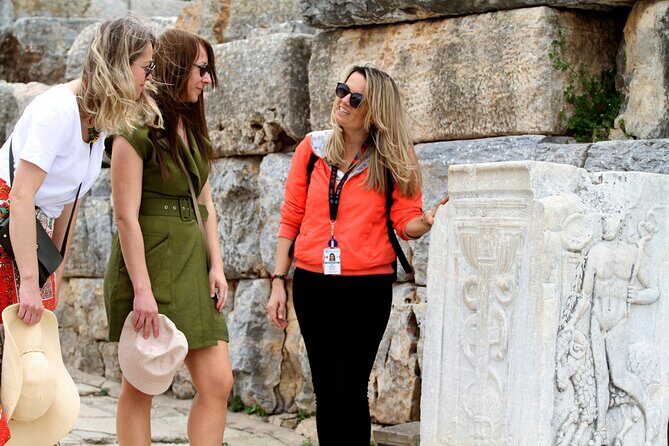
Your final ancient-world stop is the Temple of Artemis. This is tied to one of the Seven Wonders of the ancient world, but here’s the truth: what you see today is mainly the foundation stones and chipped remnants of the structure.
It sits on land that, over centuries, turned into a swamp area. That context helps explain why the temple’s remains are what they are, rather than an intact building you can walk inside. Even so, the ruins are still worth it—especially because the temple was known for its monumental marble construction and sculptural detailing.
The good news: the Temple of Artemis is free to visit on this route. So even if you’re trying to control costs, you still get a major cultural stop without added ticket fees.
Lunch time and the craft stops: plan your appetite and your boundaries
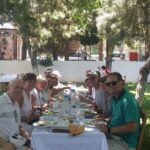
There’s a lunch break at a nearby restaurant. Lunch is not included in the tour price, but the structure is there: you’re not stuck searching for food while your group falls behind.
You’ll likely be offered local Turkish meals, and some guides also arrange specific lunch options. For example, one booking experience described an organic lunch option, which suggests your guide may have a couple of choices depending on what’s available that day.
One more reality check: you might also spend time at stops tied to local crafts—rug weaving and rug shop presentations show up in some versions of the day. These can be interesting if you like handmade products and don’t mind a short “watch and learn” presentation. But if you prefer zero shopping pressure, give yourself a mindset for saying no politely and getting back to your main plan.
If you want the pure archaeology/pilgrimage focus, tell your guide clearly that your priority is sites only. A private format makes that easier than you’d think.
Private tour value: what $49 really buys (and what it doesn’t)
The tour price is listed at $49 per person for a private day (about 4–6 hours). That covers your guide, pickup/drop-off, a private vehicle, and parking/taxes. It also includes English support and the skip-the-line concept.
What’s extra is the site admissions. Based on the listed fees, you should budget for:
- Ephesus Ancient City: €40 per person
- House of the Virgin Mary: €18 per person
- Basilica of St. John: €6 per person
- Temple of Artemis: free
So the on-site totals add up fast. Still, the value is strongest if you care about guidance while walking the ruins, and if you want this in a private format rather than waiting in a crowded bus group.
It’s also a good value if you’re sailing with a group of adults who don’t want to split up to find taxis or negotiate separate tickets. In the private setup, you stay together and move as a unit.
When to choose this tour: best-fit travelers
This tour fits best if you want:
- A private, paced day built around both archaeology and a pilgrimage site
- An English-speaking guide with an archaeological background
- A route that includes major Ephesus highlights without turning into a marathon
- Time at Meryemana and St. John (not just a quick photo stop)
It’s especially smart for cruise travelers who need a schedule that starts early and gets you back on time. In the feedback you can’t miss a pattern: guides and drivers are praised for keeping the day smooth, safe, and efficient.
If you’re traveling with kids, a private guide can still work well because you can ask for slower moments and more explanations. Just be ready for uneven walking at the main ruin stops.
Practical tips to make the day smoother
Start with the basics:
- Wear comfortable, grippy shoes for walking around ruins.
- Bring a hat and water. The plan includes a lunch break, but you’ll be outdoors at Ephesus.
- Charge your phone. You’ll have a mobile ticket, and you’ll probably want photos.
At Meryemana and St. John, keep your expectations grounded. These stops are shorter than Ephesus, so your best strategy is to listen first, then take photos after you understand what you’re seeing.
Finally, go into the day knowing that admission fees are separate. When you plan that money up front, the tour becomes a clean win.
Should you book this private Ephesus and Virgin Mary tour?
I’d book it if you want a one-day private plan that hits Ephesus plus the main faith-related sites around Mount Koressos, with skip-the-line help and a guide who can explain what you’re walking past.
I’d think twice if you’re on a strict budget for admission fees, or if you strongly dislike any craft-shop stops. In that case, message your preference before the day starts and be ready to say no to optional presentations.
If your goal is to see the big names—Library of Celsus, St. John’s basilica, Meryemana, and the Artemis foundations—without chaos, this is a solid way to do it from Kusadasi.
FAQ
How long is the tour?
The tour runs about 4 to 6 hours.
Do you get pickup from the cruise port or a hotel?
Yes. Pickup and drop-off are included from the cruise port or from hotels.
Where does the guide meet cruise passengers?
For cruise passengers, the guide meets you at the exit of the immigration gate of Kusadasi Cruise Port holding a sign with your name.
What sites are included on the tour?
You visit Ephesus Ancient City, the Basilica of St. John, Meryemana (the House of the Virgin Mary), and the Temple of Artemis.
Is lunch included?
No. Lunch is not included. There is a pause for lunch at a nearby restaurant.
What admission fees are not included?
Admission fees are not included for Ephesus Ancient City (€40 per person), the House of the Virgin Mary (€18 per person), and the St John Basilica (€6 per person). The Temple of Artemis is listed as free.
Is the tour only for my group?
Yes. It is a private tour, meaning only your group participates.
What language is the tour guide?
The tour is offered with an English-speaking guide.
What fitness level is required?
The tour is listed for travelers with a moderate physical fitness level.
Can I cancel for a full refund?
Yes. Free cancellation is available up to 24 hours before the experience start time for a full refund.