REVIEW · KUSADASI
3-Hour Private Ephesus, Terrace Houses, Cruiser Only
Book on Viator →Operated by Guide of Ephesus · Bookable on Viator
Ephesus feels manageable when it’s private. This Kusadasi cruise-friendly tour strings together the big-name sights and the places people rush past, with private transport and a licensed English-speaking guide. You’ll start at the port, get pulled into the action fast, then finish with a guaranteed on-time return to your ship.
What I like most is the walking route. You hit Marble Street and the highlights of the main archaeological site in a smart order, so your time doesn’t evaporate in lines. I also really value the Terrace Houses stop, where mosaics, frescoes, and Roman-day-to-day luxury are explained in a way that makes the site click.
One thing to plan for: Ephesus is crowded during cruise season, and the day can feel hectic even with a guide. If you’re sensitive to sales stops (ceramics or rugs) or you need frequent bathrooms, go in with your expectations set low and your patience set high.
In This Review
- Key highlights at a glance
- Why the timing in Kusadasi matters more than you think
- Price and value: what $30.25 really buys
- Meeting at the port: how to make the first 30 minutes painless
- Kusadası in-between stops: castle views and an Ottoman trade hub
- Kuşadası Castle on Pigeon Island
- Öküz Mehmet Paşa Caravanserai
- Ephesus Ancient City: the main walk that people remember
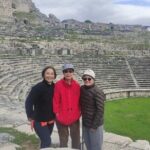
- The Great Theater and why it hits hard
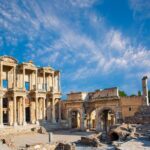
- Celsus Library: the photo spot with real story value
- Terrace Houses: Roman luxury, mosaics, and early heating
- Temple of Artemis: why columns still leave an impression
- Lunch and the ceramics or rug demo: included, but know what you’re signing up for
- Getting in and out fast: ticket-line help and on-time return
- Who should book this private Ephesus and Terrace Houses tour?
- Should you book this private tour or not?
- FAQ
- FAQ
- What’s included in the tour price besides the guide and transport?
- Are entrance fees included?
- How long does the tour take?
- Is this really private for just my group?
- How do cruise passengers find the guide?
- What’s the best time to meet the guide if I’m on a cruise?
Key highlights at a glance
- Cruise-port meeting with a name sign so you’re not playing guessing games
- Terrace Houses included as a dedicated stop, not an afterthought
- On-site ticket-line help arranged by your guide (pay cash if needed)
- Countryside lunch included, plus time tied to your return window
- Artemis Temple ruins even though only columns remain
- Private van for your group only, with a separate driver
Why the timing in Kusadasi matters more than you think
Ephesus isn’t a place you visit casually. It’s huge, uneven underfoot, and popular in every season that cruises run. That’s why this tour is built around your cruise schedule first and sightseeing second—in a good way.
The practical win is the pickup flow. For cruise passengers, your guide meets you near the main exit area holding a sign with your name. That small detail matters when thousands of people pour out at once. Several guide names come up in positive feedback—like Utku, Bilal, and Umut—because the best versions of this tour are the ones where the guide keeps things moving and keeps you calm when the port crowds are anything but.
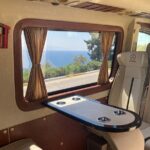
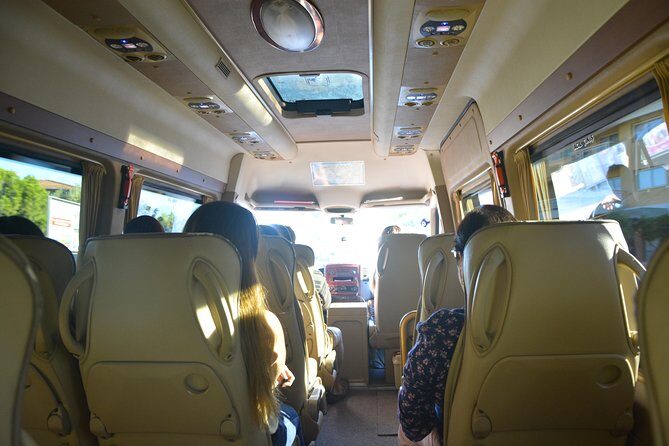
Your van also helps you stay sane. It’s air-conditioned, non-smoking, and you have it to your party only. When the heat hits on the way between the port and the ruins, you’ll feel the difference.
You can also read our reviews of more private tours in Kusadasi
Price and value: what $30.25 really buys
The advertised price is $30.25 per person, and the big part of the value is not just the “private” label. You’re paying for three things that cost money in Turkey:
1) A licensed local guide’s time
2) Private transportation with parking fees handled
3) A cruise-safe schedule with a guaranteed on-time return
Now for the part you must budget separately: entrance fees. The tour doesn’t include the museum/site tickets, and the costs are clearly listed:
- Ephesus entrance fee: €40.00 per person
- Terrace Houses entrance fee: €15.00 per person
Temple of Artemis is listed as free, which is great because it helps you keep the total predictable.
So the real value equation looks like this:
- You pay the tour price plus the main site tickets.
- In exchange, you get efficient routing, help with ticket lines, and a lunch stop included.
If you’re the type who hates wasting time—waiting for shared groups, repeating ticket purchases, or getting lost in the shuffle—this setup tends to be worth it on cruise days.
Meeting at the port: how to make the first 30 minutes painless
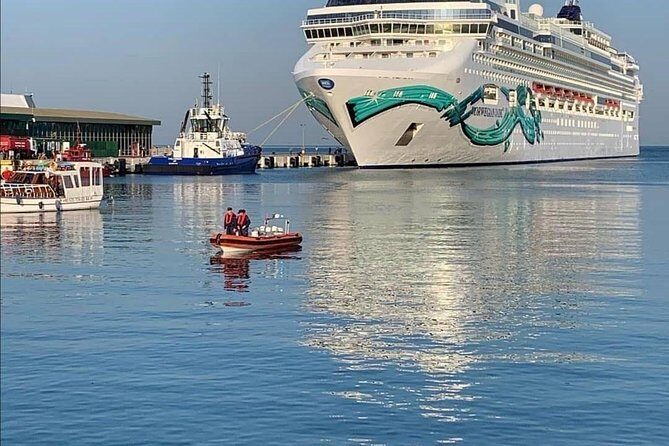
Kusadasi cruise days are basically a coordination game. Multiple ships dock, people spill into the same area, and tour groups gather in overlapping waves.
This tour is designed to reduce that chaos:
- You meet the guide at the port (for cruise passengers).
- Your guide is holding a sign with your name.
- You confirm your best meeting time after booking using your ship and arrival/on-board times.
Here’s the simple strategy the tour recommends for cruise guests:
- Aim to meet about 30 minutes after your ship docks to avoid peak crowd surges and the worst of the heat.
- If your ship arrives before 7:00 AM, plan to meet around 7:45 AM.
- Later arrivals: match the suggestion of 30–45 minutes after docking.
That timing doesn’t just make the day more comfortable—it helps you start Ephesus with fewer bottlenecks.
Kusadası in-between stops: castle views and an Ottoman trade hub
Before you go full ancient-city mode, you get two quick but meaningful breaks in Kuşadası itself.
Kuşadası Castle on Pigeon Island
This Ottoman-era fortress sits out on Pigeon Island and is tied to coastal defense. You’re not going there for long lingering time; you’re going for the context and the views. The Aegean around Kusadasi gives you a sense of why this coastline mattered—maritime routes, protection, and power.
If you like photos and short pauses, this works well. If you’re the type who wants every minute inside Ephesus, this is the part you might wish were shorter.
You can also read our reviews of more tours and experiences in Kusadasi
Öküz Mehmet Paşa Caravanserai
Next comes a very different vibe: a 1618 Ottoman caravanserai, built as a trade stop for merchants moving between East and West. It’s an architectural reminder that the history of this region isn’t only Greek and Roman—it’s also Ottoman, commercial, and practical.
The best part here is how it reframes Ephesus for your brain. It makes you realize you’re not standing on one civilization. You’re standing on layers of travelers and traders who kept coming back to the Aegean corridor.
Ephesus Ancient City: the main walk that people remember
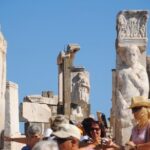
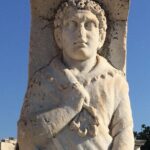
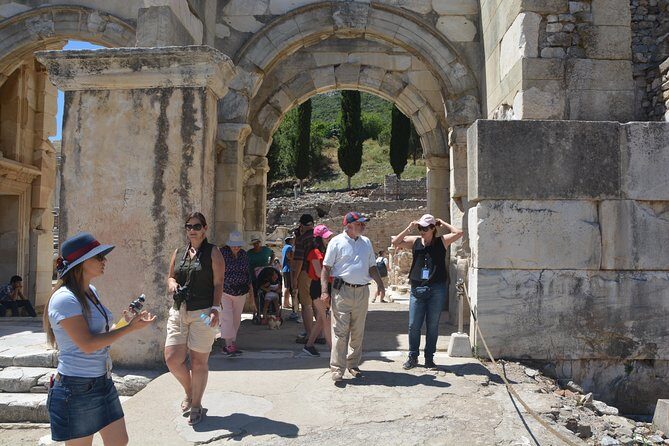
The core of the tour is the walk through Ephesus, one of the world’s best-preserved Greco-Roman cities. Even if you’re not a die-hard history fan, this site has a way of grabbing you fast because it’s not just ruins—it’s streets, buildings, and scale.
The route typically includes:
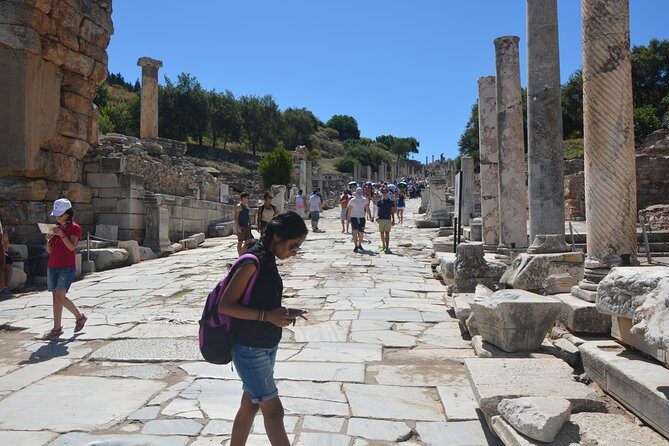
- Marble Street
- Roman Bath area
- Harbor Street
- Odeon (music/entertainment venue)
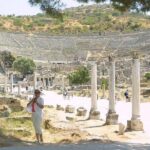
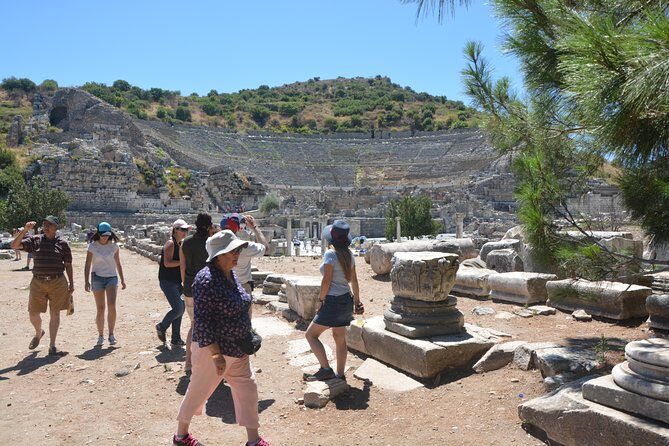
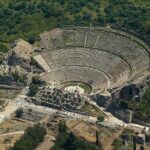
- Great Theater (about 20,000 seats)
- Public Agora, tied to St. Paul’s preaching
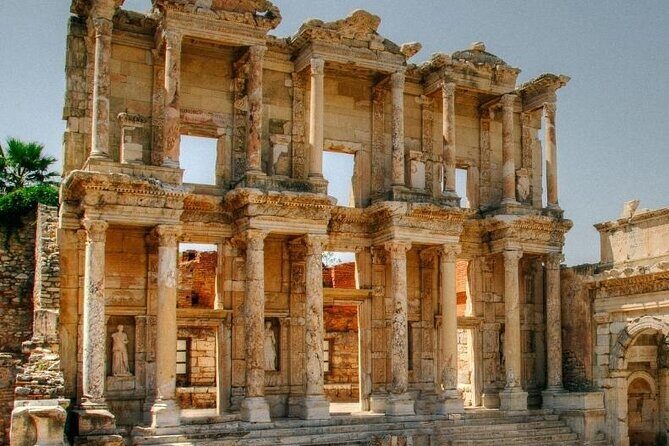
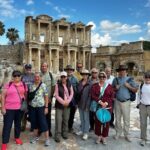
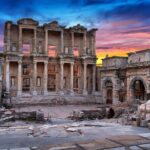
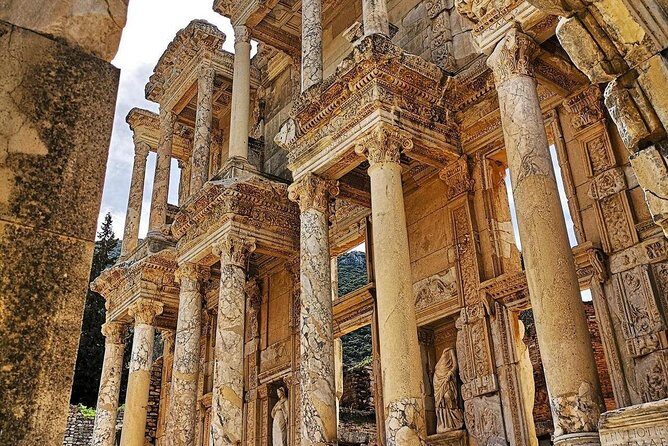
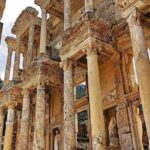
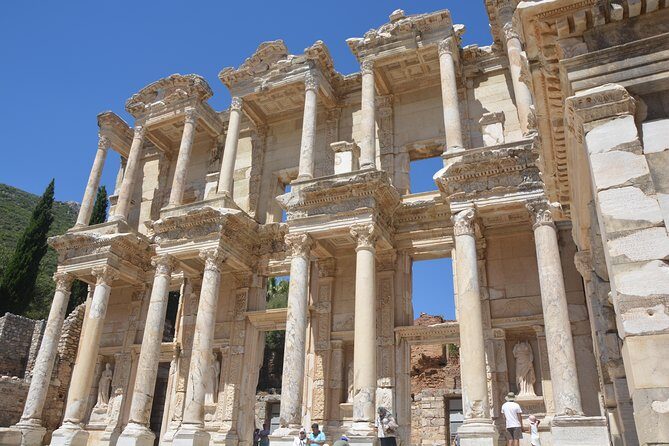
- Celsus Library (third-largest library in the ancient world, with a restored façade)
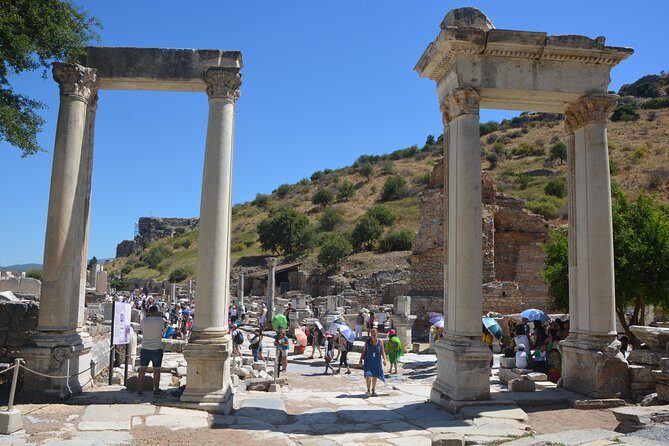
- Temple of Hadrian
- Trajan Fountain
- Domitian Temple
One neat detail that helps you “see” the city: you can still find chariot wheel marks embedded in the street surfaces. That turns the site from stone into transportation.
The Great Theater and why it hits hard
The theater isn’t just a big seating bowl. When you stand where performances once happened, you feel the engineering. It also explains why crowds moved the way they did—sound carried, and gatherings happened here.
Celsus Library: the photo spot with real story value
Yes, you’ll take pictures. But the library façade also gives you a sense of ambition. You’re seeing a monument built to impress, built to store knowledge, and restored enough that the details are readable.
A good guide makes the difference. In this tour’s feedback, guides like Bilal and Utku get praised for English clarity and for helping groups navigate efficiently when Ephesus is overwhelmed.
Terrace Houses: Roman luxury, mosaics, and early heating
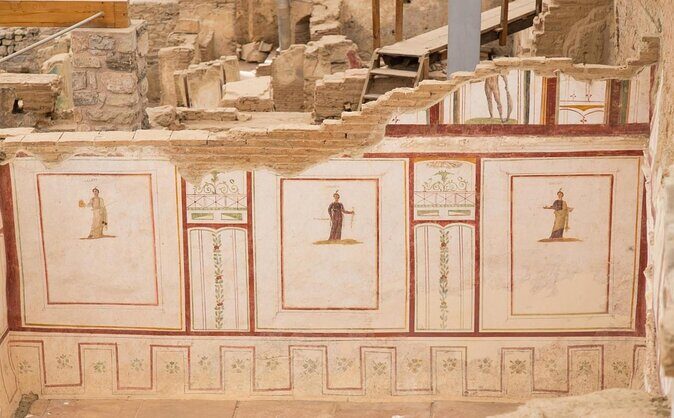
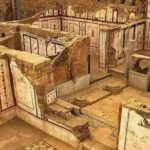
The Terrace Houses are often the part people say they’re glad they didn’t skip. They’re essentially the homes of the rich—homes that show you daily life for people with serious money and better ideas than their neighbors.
What you’ll see here includes:
- Intricate mosaics and vibrant frescoes
- Advanced architectural features
- One of the earliest examples of central heating systems
That heating detail is more than trivia. It shows how Romans treated comfort like infrastructure. When you picture ordinary homes today, you tend to picture basic rooms. These terrace residences make you realize luxury also meant planning: walls, heat flow, and controlled spaces.
Time-wise, it’s about 45 minutes. That’s long enough to understand what you’re looking at without turning the stop into a marathon. Entrance fees for Terrace Houses are separate, so budget that €15 per person.
If you want the most “worth it” upgrade feeling from this tour, this is usually it.
Temple of Artemis: why columns still leave an impression
Only columns and ruins remain of the Temple of Artemis—one of the Seven Wonders of the Ancient World. It’s free to visit, and it’s short, but it’s an important emotional stop.
The temple is dedicated to Artemis, tied to the Greek goddess of the hunt and moon. It was constructed around 650 BC, with stories about its construction method designed to handle marshy ground and resist earthquakes.
So even if the structure isn’t intact, you’re standing at a site that shaped reputations across centuries. It also makes your Ephesus walk feel bigger. Without this context, Ephesus stays “local.” With it, the whole region feels like a wider cultural gravity.
Lunch and the ceramics or rug demo: included, but know what you’re signing up for
This tour includes lunch in the countryside with authentic flavors. Baked into the way this region’s tours operate, you’ll also likely encounter hands-on demos and shopping stops connected to rugs and ceramics—often at co-op or workshop-style venues.
The useful way to think about this:
- You’re getting a lunch setting that feels outside the tourist crush.
- You may get a demonstration of carpet weaving or similar craft steps.
- You’ll have time to browse and ask questions.
The sales part is real. Multiple guide reports mention rug and ceramic shops. The good news from those stories is that it tends to be low-pressure rather than aggressive—people generally feel free to look instead of forced to buy.
Still, if you hate shopping detours, decide your approach before you go:
- If you want the included meal and craft process, lean into it and treat shopping as optional.
- If you truly want zero retail time, this is where you might want to adjust expectations or ask your guide what flexibility you have.
Getting in and out fast: ticket-line help and on-time return
This is a cruise tour, so the final priority is the last ten minutes: getting you back before your ship leaves.
Two systems support that:
1) Your guide helps with tickets to skip ticket lines (you may pay in cash to your guide, depending on how the process is arranged).
2) The tour includes a guaranteed on-time return, with close monitoring of multiple cruise schedules.
From the feedback, one of the most praised elements is how guides protect the return timing. People often mention guides adjusting pacing when crowds slow things down, and drivers keeping the van ready with a cool cabin.
There’s one practical caveat: Ephesus is crowded. Even with a plan, you’ll share the site with many tour groups. The best outcome is when your guide acts like a traffic controller—showing you where to stand, when to move, and how to listen at key points.
One more thing I’d flag: bathroom access can be limited during the main Ephesus portion. If you need frequent breaks, plan around that rather than assuming you’ll find facilities everywhere.
Who should book this private Ephesus and Terrace Houses tour?
This is a strong match if:
- You’re on a cruise and want a schedule built around your ship.
- You prefer private transport so you’re not stuck waiting for other groups.
- You care about Terrace Houses and want time set aside for them.
- You like having a guide who can explain what you’re seeing without you needing to research everything yourself.
It’s also a good fit for families and mixed-age groups. Several reports mention guides being patient and adjusting to different needs, and drivers keeping the ride comfortable with a cool van.
Consider another option if:
- You hate any craft or shop stop, even if it’s low-pressure.
- You’re extremely budget-sensitive once entrance fees are added.
- You’re hoping Ephesus will feel quiet. It won’t during cruise peaks.
Should you book this private tour or not?
If you’re deciding between a big group bus tour and something private, I’d steer you toward this one for cruise days. The private van, the licensed guide, the plan to meet with a name sign, and the guaranteed on-time return add up to real value—especially when Ephesus is crowded and your time is short.
The only reason not to book is mindset: if you absolutely must avoid ceramics/rug stops and you’re counting on the main site being calm, you may feel frustrated. But if you can handle a bit of retail browsing to get a great lunch, a well-paced Ephesus walk, and Terrace Houses as a serious stop, this tour is a very solid way to spend your limited hours in the Aegean.
FAQ
FAQ
What’s included in the tour price besides the guide and transport?
The tour includes a professional licensed local guide, private transportation in an air-conditioned non-smoking van, parking fees, lunch in the countryside, and cruise port/hotel pickup and drop-off. It also includes assistance so you can skip ticket lines by arranging tickets with the guide.
Are entrance fees included?
No. Entrance fees are not included for Ephesus (€40.00 per person) and the Terrace Houses (€15.00 per person). The Temple of Artemis stop is listed as free.
How long does the tour take?
It’s listed as approximately 3 to 5 hours.
Is this really private for just my group?
Yes. It’s an exclusive private tour for your party only, with no sharing with other groups.
How do cruise passengers find the guide?
You meet at the cruise terminal, and the guide will be holding a sign with your name. The tour also asks you to confirm the meeting time after booking with your ship name and arrival/on-board times.
What’s the best time to meet the guide if I’m on a cruise?
The tour recommends meeting about 30 minutes after your ship docks to reduce crowds and heat. If your ship docks before 7:00 AM, meeting around 7:45 AM is suggested; for later arrivals, meeting 30–45 minutes after docking is recommended.