REVIEW · KUSADASI
Tailor-Made Private Ephesus Tour with Local Experiences
Book on Viator →Operated by OTTI Travel · Bookable on Viator
Ephesus hits different when you pace it privately. This tailor-made Kusadasi tour strings together the House of the Virgin Mary on Bulbul Mountain and Ephesus’ biggest Roman and Greek sights, with a licensed English guide, skip-the-line tickets, and a smooth A/C Mercedes van. Guides like Nagi, Selin, Asli, and Tas are repeatedly praised for keeping the day practical and personal.
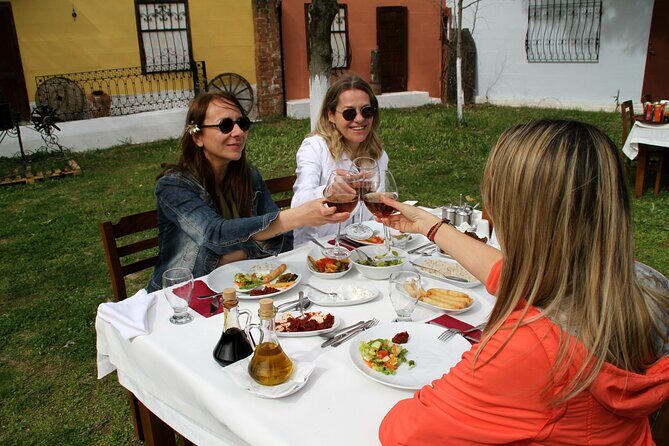
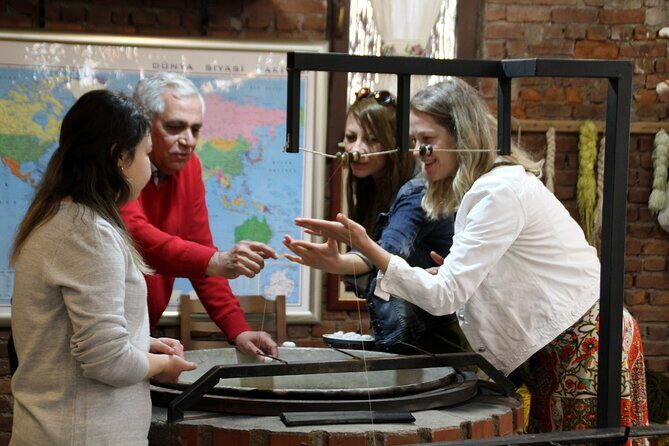
I love two things most: the tour feels genuinely custom to your pace, not like a fixed stamp-and-go script, and you get a real local lunch stop that often connects to a carpet-weaving school demo. I also like that it’s a private setup, so you can ask questions on the spot as you walk from one monument to the next.
The main drawback to plan for: big site admission fees are not included, and the day includes stairs, slopes, and lots of uneven stone. If you’re sensitive to steep climbs or slippery marble, you’ll want good walking shoes and you may need a bit of flexibility at the Virgin Mary House.
In This Review
- Key things that make this Ephesus tour work well
- A private Ephesus day from Kusadasi: how the pacing actually helps
- Entering Ephesus in comfort: pickup, mobile tickets, and the A/C van
- Stop 1: The House of the Virgin Mary on Bulbul Mountain
- Stop 2 and beyond: ancient Ephesus with the big landmarks you came for
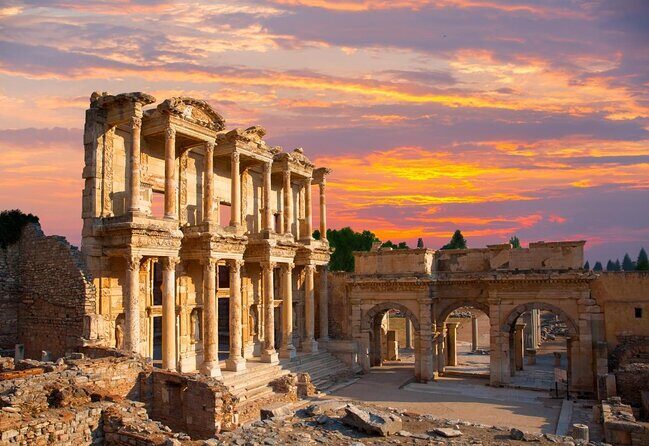
- Library of Celsus: the postcard façade with a real purpose
- Great Theatre: politics, faith, and staged spectacle
- Terrace Houses: wealthy homes and everyday Roman life
- The Roman civic spine: Agora, Odeion, Hadrian and Domitian temples, and Hercules Gate
- State Agora: business and government, not shopping
- Odeion: a small theatre with two big jobs
- Temple of Hadrian: the façade that still impresses
- Temple of Domitian: the emperor-temple story
- Hercules Gate: the narrowing of a once-vehicular street
- St John Basilica and Temple of Artemis: faith sites and the Wonder you can still feel
- Basilica of St. John: last years, then architectural layers
- Temple of Artemis: only foundations remain, but the scale still lands
- Okuz Mehmet Pasha Kervansaray and Kusadasi Bazaar free time
- Okuz Mehmet Pasha Kervansaray: Ottoman customshouse fortress
- Kusadasi Bazaar: time to shop, snack, or just wander
- Price and value: what $75 covers and what to budget for admissions
- Who should book this Ephesus private tour (and who should reconsider)
- Should you book this private Ephesus tour or pick something simpler?
- FAQ
- What’s included in the $75 per person price?
- How long is the tour?
- Are the site admission fees included?
- Do you pick up cruise passengers from Kusadasi port?
- Is this tour private?
- Can I cancel for a full refund?
Key things that make this Ephesus tour work well
- Skip-the-line tickets included for major stops, so you spend more time seeing and less time waiting.
- Luxury A/C Mercedes Vito transport with a private driver, helpful for long transfers and a hot coast.
- Bulbul Mountain at the Virgin Mary House gives you a quieter, greener pause before Ephesus’ crowds.
- Ephesus highlights plus the smaller Roman structures (Agora, Odeion, Hadrian and Domitian temples, Hercules Gate), not just the biggest headline ruins.
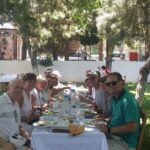
- A local lunch included, with time to eat like a regular person and not just a quick snack-between-sights.
- Free time in Kusadasi Bazaar at the end, so you’re not rushed straight back to the ship.
A private Ephesus day from Kusadasi: how the pacing actually helps
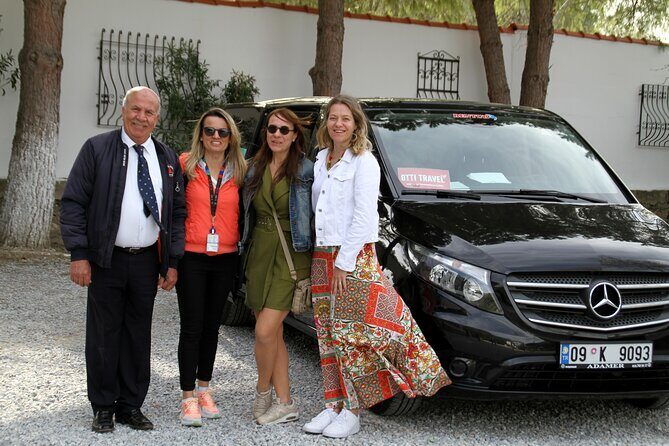
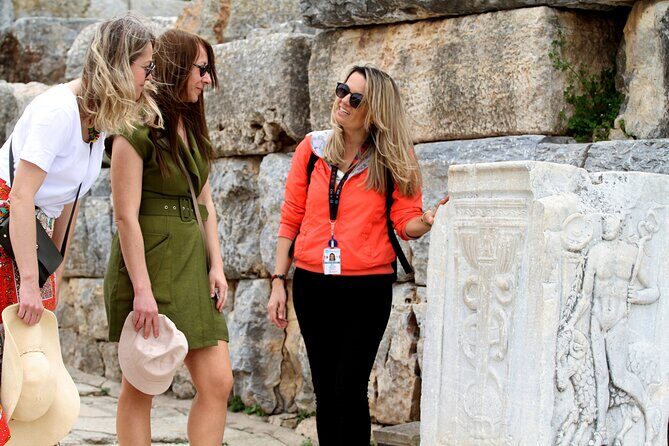
This is a 6 to 8 hour private excursion built around one simple idea: you don’t want your day bullied by group schedules. With a licensed English-speaking guide and your own driver, you can move at the pace your group needs, then shift time if someone wants more photos, less walking, or an extra stop.
That flexibility matters in Ephesus because you’re bouncing between broad open spaces and stone stairways. A good guide will also help you time the day better inside the ancient city so you’re not only there during the loudest, sunniest hour.
The tour is offered in English, and it’s set up as a private activity, meaning only your group participates. That also makes it easier to ask practical questions like what to prioritize first or how long to spend at each ruin without feeling like you’re slowing down a bus of strangers.
You can also read our reviews of more private tours in Kusadasi
Entering Ephesus in comfort: pickup, mobile tickets, and the A/C van
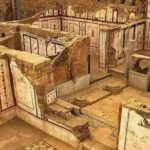
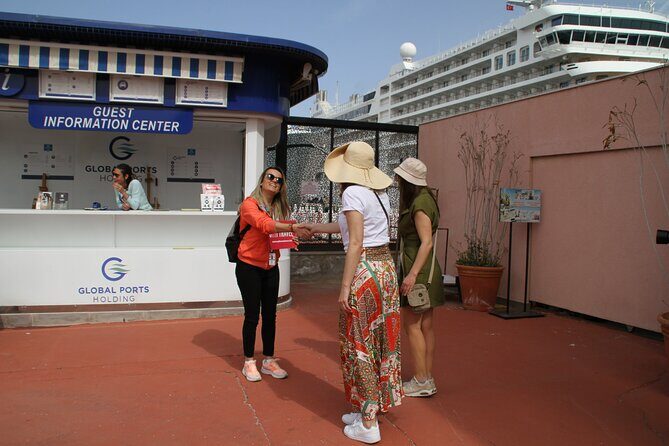
You start with pickup and drop-off, and the meeting point depends on where you’re coming from. If you’re on a cruise, you meet at the exit gate of the immigration terminal at the Kusadasi cruise port with a sign showing OTTI Travel. If you’re staying in a Kusadasi hotel, the guide meets you at the hotel reception. If you’re flying into Izmir, you meet at the exit gate of the domestic terminal with an OTTI Travel sign.
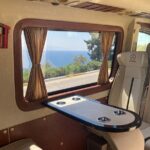
A/C transport is included, with a brand new Mercedes Vito and a private driver. That’s a big value add in Turkey’s warm months because you’re not trapped in heat while waiting between sights.
You’ll also use a mobile ticket. That can be a real help when you’re moving quickly through entry lines, even with skip-the-line tickets already included for the guided stops.
One small but important practical note: the day involves a lot of walking on stone. Several guides in this program are praised for checking pace and safety, especially because marble can be slick.
Stop 1: The House of the Virgin Mary on Bulbul Mountain
This visit is one of the most calming starts you can choose before diving into Ephesus. The House of the Virgin Mary sits on top of Bulbul Mountain, around 9 km ahead of Ephesus. You’re in a greener, tucked-away setting rather than a hard urban environment, and that shift sets the tone for the day.
The site is described as Roman in style, built of stone, and it’s linked to a tradition that Mary may have spent her final days here with Saint John. In the 4th century AD, a church was built that combined her house and grave. Today you can also see details connected to the space’s religious layered history, including areas used by Muslims according to the site descriptions.
What to watch: the route includes slopes and stairs. In real-world handling, the driver has been able to accommodate guests with hip issues by picking up closer to reduce the climb and return walk, so this is the kind of tour where it helps to speak up early about any mobility limits.
Admission ticket for this stop is not included, so plan extra money here. But as a spiritual and scenic warm-up, it’s usually worth budgeting for.
Stop 2 and beyond: ancient Ephesus with the big landmarks you came for
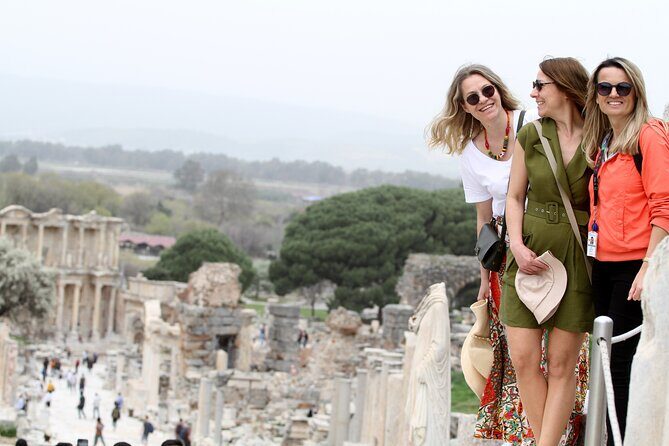
Once you reach Ephesus Ancient City, you’re stepping into one of the most important archaeological zones in Anatolia. The ruins sit on the south-west coast of Turkey, and the city’s story runs from Greek foundations into Roman power and administration.
The tour is paced around the main sights that most people expect, but also includes a number of Roman-era buildings that make Ephesus feel like a working city, not just a museum of columns.
Library of Celsus: the postcard façade with a real purpose
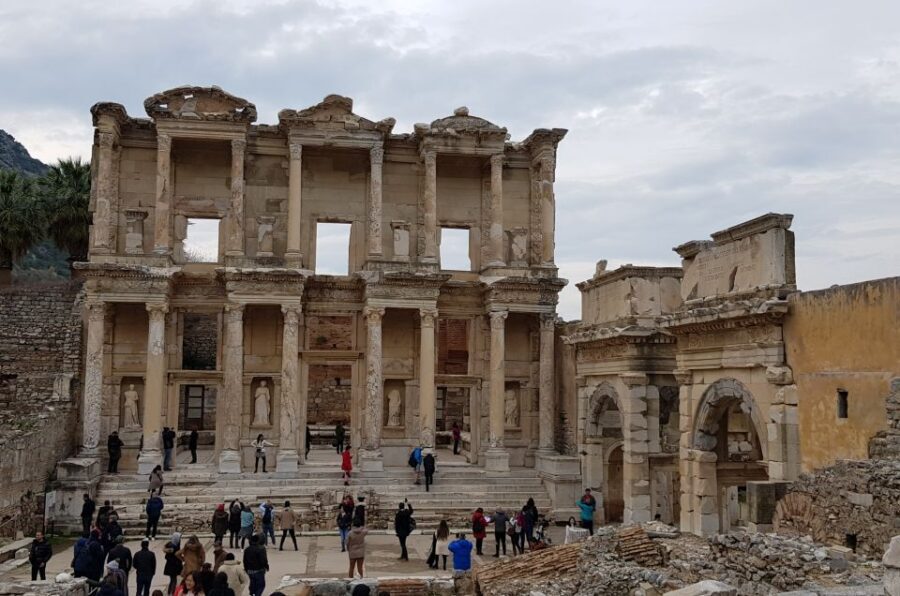
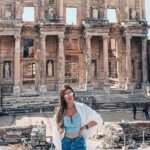
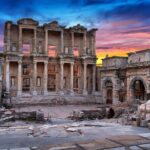
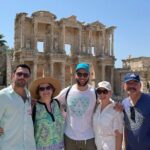
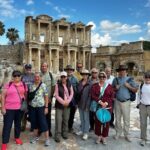
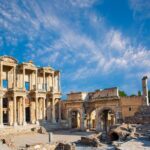
The Library of Celsus is one of the best-looking buildings in Ephesus. It was built in 117 AD as a monumental tomb for Gaius Julius Celsus Polemaeanus. The design is more than decoration: the grave was beneath the ground floor, and a statue of Athena stood above it, tying it to the idea of wisdom.
Inside, the library’s structure was designed to protect scrolls from temperature and humidity, using double walls behind bookcases. The capacity is described as more than 12,000 scrolls, and it’s noted as one of the richest libraries of the ancient world.
Great Theatre: politics, faith, and staged spectacle
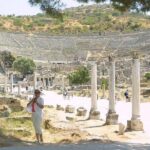
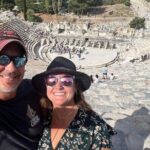
The Ephesus Great Theatre is enormous: it’s described as the largest in Anatolia, with a capacity of about 25,000. It began in the Hellenistic period in the 3rd century BC and was enlarged during the Roman period into the form you see today.
You also get a fuller picture of how Romans used public space. This theatre wasn’t only for plays and concerts. It also served religious and political purposes, along with philosophical discussions and even gladiator and animal fights.
Terrace Houses: wealthy homes and everyday Roman life
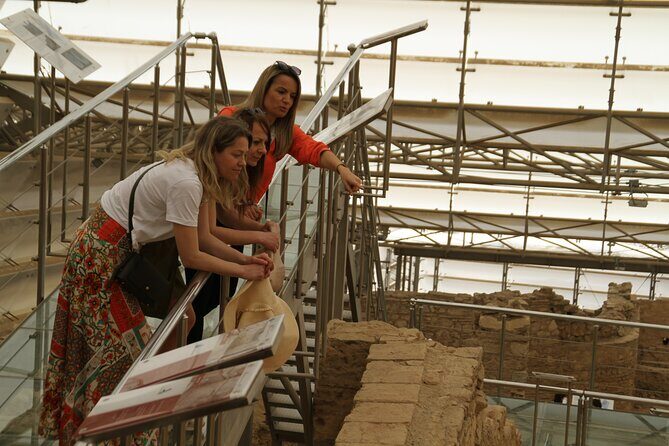
Opposite the Hadrian Temple, the Ephesus Terrace Houses are a highlight if you want more than temples and public buildings. These homes belonged to wealthy Romans and include multiple residential units arranged on three terraces. Protective roofing now covers parts of the complex, and mosaics and frescos have been consolidated.
They were built starting around 1st century BC and continued as residences until the 7th century AD, which helps you understand how long these places stayed important.
Here again, admission is not included, so budget for the added entry if terrace houses are on your must-see list.
The Roman civic spine: Agora, Odeion, Hadrian and Domitian temples, and Hercules Gate
This tour doesn’t treat Ephesus like one long walk to the same three photos. You also get a sense of administration and daily governance through Roman public spaces.
State Agora: business and government, not shopping
The State Agora is the southern part of the basilica complex. It’s described as built in the Roman period around the 1st century BC and used for government business and discussions rather than commerce. Excavations uncovered graves from the 7th to 6th centuries BC in one corner area, plus a stone-paved road and an archaic terracotta sarcophagus.
There’s also a water reservoir at the corner, fed by water brought through the Pollio Aqueduct (the remains are visible about 5 km away along the Selçuk-Aydin highway).
Odeion: a small theatre with two big jobs
The Odeion looks like a smaller theatre, with a stage building, seating, and an orchestra section. It served two functions: a Bouleuterion for council meetings and an Odeum as a concert hall.
It’s described as holding around 1,500 spectators and built in the 2nd century AD under Publius Vedius Antonius and his wife Flavia Paiana. There were three doors from the stage to the podium, and parts were restored.
Temple of Hadrian: the façade that still impresses
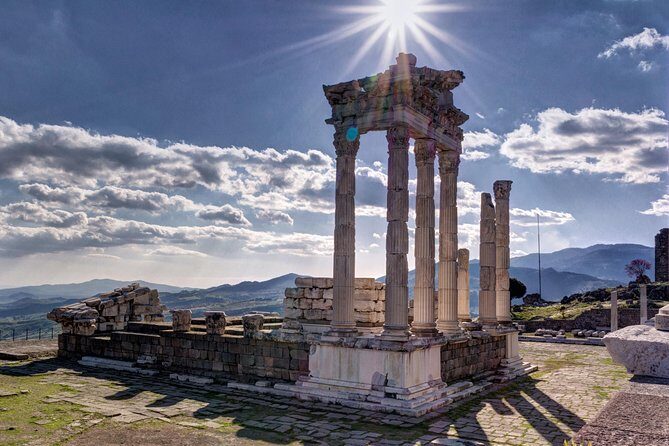
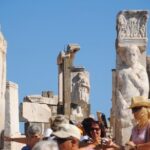
The Temple of Hadrian is one of the best-preserved structures on Curetes Street. It was dedicated to Emperor Hadrian and built before 138 AD. You’ll see four Corinthian columns supporting a curved arch and a central relief of Tyche, goddess of victory.
The temple’s pedestal has inscriptions and bases for emperor statues from later reigns, including Diocletian, Maximian, Constantius I, and Galerius.
Temple of Domitian: the emperor-temple story
The Temple of Domitian sits at the south end of Domitian Street, built on a high terrace supported by vaulted foundations. Its column layout is described as 8 columns on the short side and 13 on the long side, plus additional columns in front of the cella.
This is also where the story of being allowed to build an emperor temple shows up. Under Domitian’s reign, an emperor permitted the honor that gave Ephesus the status of neocoros for the first time.
Hercules Gate: the narrowing of a once-vehicular street
Hercules Gate is near the end of Curetes Street. It was called this because of a relief of Hercules. The gate was moved to its current place in the 4th century AD, while the relief itself dates to the 2nd century AD.
Only the column sides remain, but it still tells a story: by the 4th century, the street was becoming pedestrian-only, stopping vehicles from passing through.
St John Basilica and Temple of Artemis: faith sites and the Wonder you can still feel
After Ephesus’ Roman core, the tour continues toward sites that shaped early Christian tradition and the legacy of ancient Greek religion.
Basilica of St. John: last years, then architectural layers
The Basilica of St. John is tied to tradition that the evangelist John spent his last years around Ephesus and was buried on Ayosolug Hill. A small chapel was built over the grave in the 4th century, and later the church became a basilica during Justinian’s time (527–565 AD).
The narrative context around early Christian persecution is part of the story guide typically explains, connecting apostolic deaths, Paul’s execution in Rome, and the tradition of John bringing Mary to Ephesus.
Admission is not included for this stop.
Temple of Artemis: only foundations remain, but the scale still lands
The Temple of Artemis is one of the Seven Wonders of the ancient world. Ephesus’ site for it was flat, but over time it became swampy. Today, you don’t see the full temple, just ruins of the foundations and sculpted column pieces.
The description notes that the most beautiful remaining parts are now in the British Museum in London. On this tour, you’ll visit the site itself, and admission for the Temple of Artemis stop is listed as free.
If you like standing in front of big missing pieces of history, this stop delivers.
Okuz Mehmet Pasha Kervansaray and Kusadasi Bazaar free time
Not every Ephesus day needs to be 100% ancient. This itinerary includes two modern-friendly breaks.
Okuz Mehmet Pasha Kervansaray: Ottoman customshouse fortress
The caravanserai was commissioned by Öküz Mehmed Pasha, a governor of Ottoman Egypt and Grand Vizier. Construction dates are given as 1615 to 1618.
It was built like a fortress, used as a customshouse, then later underwent renovation starting in 1954 through 1966. Admission is free, which makes this an easy win if you need a less-steep walk and a chance to reset.
Kusadasi Bazaar: time to shop, snack, or just wander
At the end of the tour, you get about 1 hour of free time in Kusadasi Bazaar. Expect a big market with Turkish goods, leather items, sweets, small knick-knacks, and lots of souvenirs.
One of the practical benefits of this timing: you’re not stuck with shopping as an emergency on the last hour of your day. You can browse calmly, then decide whether any purchase fits your budget.
Price and value: what $75 covers and what to budget for admissions
The tour price is $75.00 per person, with a duration of about 6 to 8 hours. What’s included is the guide, transport, and several time-saving perks:
- Professional licensed English-speaking guide
- Pickup and drop-off for cruise guests
- Guaranteed skip-the-line tickets
- Brand new A/C luxury Mercedes Vito with private driver
- A delicious local lunch
The big catch is that admission fees are not included. Based on the listed site costs, you should budget:
- Ephesus Ancient City: €40.00 per person
- Virgin Mary House: €18.00 per person
- Terrace Houses: €15.00 per person
- St John Basilica: €6.00 per person
Temple of Artemis and Okuz Mehmet Pasha Kervansaray are listed as free admission stops. So if you do everything with paid entry, the total listed admissions add up to €79, plus the base tour price in USD.
My take: $75 is strongest value when you care about time. Skip-the-line access plus a private guide makes the day easier to manage, and the A/C transport keeps you from getting worn out before you even reach the ruins.
One more option: visiting Siringe Village is listed as $50.00 per booking. If it’s on your wish list, ask about how it fits without turning your day into a sprint.
Who should book this Ephesus private tour (and who should reconsider)
This tour is a strong match if you:
- Want a private guide and a flexible pace rather than a rigid group script
- Plan to hit the main Ephesus monuments and also appreciate Roman civic sites
- Value smooth transport and an included lunch
- Prefer asking questions as you walk through ruins
It might be less ideal if you:
- Struggle with stairs, steep slopes, and lots of walking
- Want only one or two highlights, because this itinerary is packed with multiple stops and short time blocks
A note on physical comfort: the tour asks for moderate physical fitness level. And at the Virgin Mary House, expect steep hills. The driver may be able to help with adjustments, but the safest approach is to plan for uneven paths and bring shoes with good grip.
Should you book this private Ephesus tour or pick something simpler?
If your goal is to see Ephesus properly, with a guide who can explain what you’re looking at and help you manage time, this is a very solid booking. The combination of private transport, skip-the-line entry support, and a structured route that mixes the famous sights with the civic Roman buildings is hard to beat for a day trip.
If you’re traveling with mixed energy levels, or you want to keep your group comfortable in heat and walking-heavy terrain, private is the way to go.
Only hold off if you’re on a tight budget for admissions or you know you can’t handle stairs and uneven stone. In that case, you’d be happier with a shorter highlight-only plan.
FAQ
What’s included in the $75 per person price?
It includes a professional licensed English-speaking tour guide, pickup and drop-off for cruise guests, guaranteed skip-the-line tickets, A/C luxury Mercedes Vito transport with a private driver, and a local lunch.
How long is the tour?
The tour duration is approximately 6 to 8 hours.
Are the site admission fees included?
No. Admission fees are listed separately for Ephesus Ancient City (€40), House of the Virgin Mary (€18), Terrace Houses (€15), and St John Basilica (€6). Temple of Artemis and Okuz Mehmet Pasha KervansarayI are listed as free.
Do you pick up cruise passengers from Kusadasi port?
Yes. For cruise passengers, the meeting point is at the exit gate of the immigration terminal of the Kusadasi cruise port, with an OTTI Travel sign.
Is this tour private?
Yes. It’s a private tour/activity, and only your group participates.
Can I cancel for a full refund?
Yes. Free cancellation is available up to 24 hours in advance for a full refund. If you cancel less than 24 hours before the start time, the amount paid isn’t refunded.