REVIEW · KUSADASI
NEW: Private The Most Detailed Ephesus Shore Excursion / with Lunch
Book on Viator →Operated by OTTI Travel · Bookable on Viator
Roman streets and church sites in one day? I really like how this private format lets the guide tune the pace to your group, and it moves fast with skip-the-lines entry help. You also get a proper Turkish lunch in the middle of the day, not some sad afterthought. The one thing to plan for: major sites charge separate entrance fees, so your final cost depends on what you choose to enter.
This is the kind of day that feels like someone handed you a map and then explained what everything means, from Roman meeting spaces to the quieter side of faith history at St. John. I also love the “more than the highlights” approach, with stops that many quick tours skip, like the Terrace Houses and the State Agora details. One possible drawback: it’s a long walk-and-steps day, so bring decent shoes and don’t underestimate Terrace Houses stamina.
If you’re traveling on a cruise, the timing matters. The tour is built for shore days (private group, pickup arranged), but you’ll still want to stay close to your guide and keep an eye on the schedule—one past customer had a near-miss due to late return.
In This Review
- Key things that make this Ephesus day work
- Price and what you’re really paying for
- A calm start at Meryemana (The Virgin Mary’s House)
- Ancient Ephesus: the city route that includes more than the selfies
- State Agora: where government met, and why graves matter
- Odeion: a small theatre with two jobs
- Emperor Temples and street gates: Domitian, Hercules, and Hadrian
- Temple of Domitian
- Hercules Gate
- Temple of Hadrian
- Terrace Houses: mosaics, frescoes, and lots of stairs
- Library of Celsus: when a tomb also doubled as a statement
- The Great Theatre: the biggest sound in Anatolia
- Temple of Artemis and St. John: two different kinds of awe
- Temple of Artemis foundations
- Basilica of St. John
- Lunch in Kusadasi: included, plentiful, and not an afterthought
- Optional shopping stops: how to keep it from taking over your day
- Timing and cruise-ship sanity: how not to end up sprinting
- Who this private Ephesus tour suits best
- Should you book the private detailed Ephesus shore excursion with lunch?
- FAQ
- What’s included in the tour price?
- Are the entrance fees for Ephesus and other sites included?
- How long is the excursion?
- Is this a private tour?
- What language is the guide?
- Is pickup available for cruise passengers and hotels?
Key things that make this Ephesus day work
- Private group, customized pacing: Guides can adjust to your interests and needs, and many people specifically praise guides like Selin, Nesli, Ahmet, Özgür, and Mary.
- Skip-the-lines help: The tour is designed to reduce time wasted in queues at major stops.
- More stops than the usual circuit: You’re not only hitting the big photos. You’ll also see places tied to Roman civic life and everyday urban function.
- Lunch is part of the value: The included meal is described as good, plentiful, and genuinely Turkish.
- Stairs at the Terrace Houses: The mosaics and rooms are worth it, but you should plan for steps.
- Ticket fees are extra: Ephesus sites and key monuments are not included in the base price, so budget in euros.
Price and what you’re really paying for
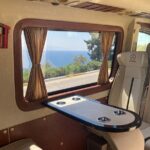
At $79.20 per person, this tour price looks surprisingly reasonable when you break down what’s included. You get an English-speaking licensed guide, round-trip pickup/drop-off, a Mercedes air-conditioned van, parking fees, and lunch. Most importantly, the operator promises help to skip long lines, which is where shore excursions quietly make or break your day.
Now the math you should do upfront: entrance fees are listed separately. The Ephesus Ancient City fee is €40 per person, Virgin Mary House is €18, Terrace Houses is €15, and the St. John Basilica is €6. That totals €79 per person in site admissions, plus drinks at lunch (not included). If you’re adding those numbers, you’ll see the base price is mainly paying for guide + transport + time-saving entry help, not for the museum-ticket pile.
You can also read our reviews of more private tours in Kusadasi
A calm start at Meryemana (The Virgin Mary’s House)
The day begins at Meryemana, the Virgin Mary’s House. It’s a shorter stop—about 30 minutes—but it sets a different tone from the loud scale of Ephesus. Expect a quiet, reverent atmosphere where the focus is on the site itself and your guide’s context.
Admission is not included, so you’ll want to have euros ready. I like this stop because it gives your brain a break. Then you re-enter the ancient world at full speed.
Ancient Ephesus: the city route that includes more than the selfies
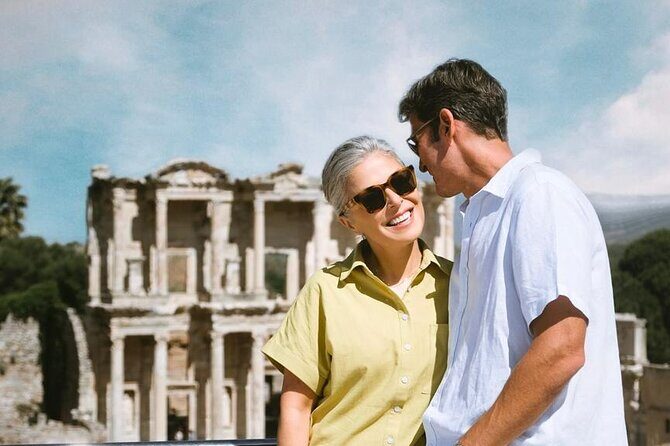
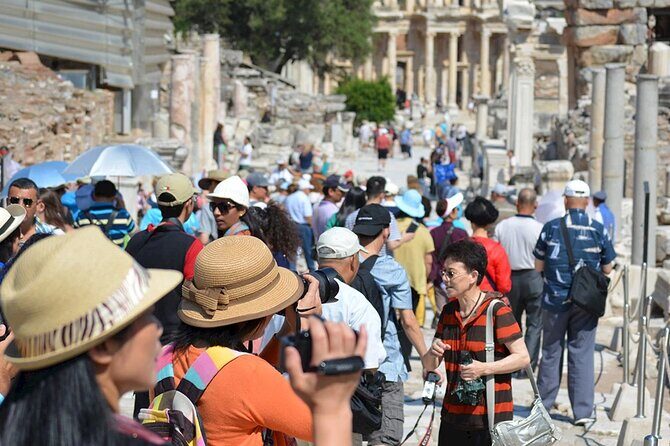
The main block of time is spent in the Ancient City of Ephesus, roughly two hours on-site. This is where the tour earns its name as detailed: you don’t just do one straight line to the top photos. You get a guided walk past multiple functional districts and monuments, with stop-by-stop explanations that connect the dots.
Expect highlights such as Harbour Street and the theatre area, plus major civic streets like Marble Street and Curetes Street. You’ll also see the Celsus Library area, Gate of Mihridates and Mazues, Commercial Agora, and reminders that ancient cities weren’t only temples—there were baths, fountains, and even a latrina (yes, a toilet facility).
Two practical tips for this section:
- Wear footwear that handles uneven ancient stone. You’ll do better if your soles have traction.
- If your group wants photos, ask the guide to suggest quick photo points while you’re moving, not only at full stops.
State Agora: where government met, and why graves matter
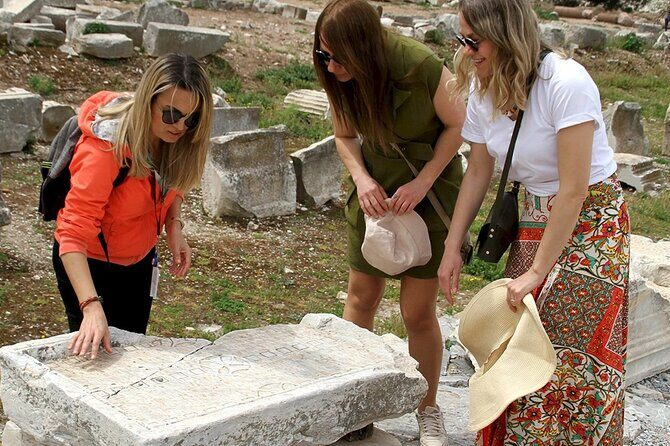
One of my favorite “extra” stops is the State Agora. It’s only about 15 minutes, but it’s full of meaning. This part of the agora wasn’t built for commerce. It was used for business and governmental discussions—so you’re seeing a political heartbeat, not just a shopping street.
What makes this stop memorable is the excavation story. In the northeast corner, excavators found graves from the 7th–6th centuries B.C., plus an archaic sarcophagus and a stone-paved road. Your guide can help you understand how that area shifted roles over time, even before the big Roman-era structures.
There’s also a water reservoir tied to the Pollio Aqueduct system. The remains of the aqueduct are said to be about 5 kilometers away, so you get a sense of how Ephesus supplied water far beyond what you can see in the ruins.
Odeion: a small theatre with two jobs
Next comes the Odeion, again around 15 minutes. It looks like a mini theatre, but it had a double function. First, it served as a Bouleuterion—meeting space for the Boules or Senate. Second, it worked as an odeum, a concert hall for performances.
This is the kind of stop that helps you see ancient design as practical. Different uses, similar architecture. The Odeion was constructed in the 2nd century A.D by Publius Vedius Antonius and his wife Flavia Paiana, and it’s described as seating about 1,500 people.
You can also read our reviews of more tours and experiences in Kusadasi
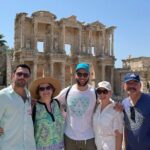

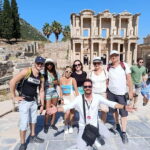


Emperor Temples and street gates: Domitian, Hercules, and Hadrian
After that, the route moves through imperial landmarks that tell you how seriously Rome played for respect in Ephesus.
Temple of Domitian
The Temple of Domitian is about 15 minutes. It’s noted as the first structure in Ephesus dedicated to an emperor, built on a wide, elevated terrace on vaulted foundations. The layout includes multiple columns and an altar area noted as u-shaped, with the altar displayed today in the Izmir Museum.
If you like understanding titles and civic honors, this is a good stop. The tour framing connects the temple to the honor system around permission to build and the idea of being granted the neocoros status.
Hercules Gate
The Hercules Gate is another short, about 15 minutes. It’s called Hercules Gate because of a relief of Hercules. Only the two sides of the columns remain today, which helps you imagine the gate as a narrower entrance to Curetes Street—especially as the street became pedestrian by the 4th century.
I also like the reasoning your guide can give here: sometimes relief elements get moved or reused over time. This gate’s relief is described as being brought from another place in the 4th century, while the relief itself dates to the 2nd century AD.
Temple of Hadrian
Then you reach the Temple of Hadrian, around 10 minutes, described as one of the best-preserved structures on Curetes Street. It was dedicated to Hadrian, and the facade is built with four Corinthian columns supporting a curved arch, with a relief of Tyche in the middle.
A small detail that matters: the pedestals with inscriptions served as bases for emperor statues between 293 and 305 CE. The originals aren’t found on-site, but the story helps you understand how later rulers reinforced the city’s identity.
Terrace Houses: mosaics, frescoes, and lots of stairs
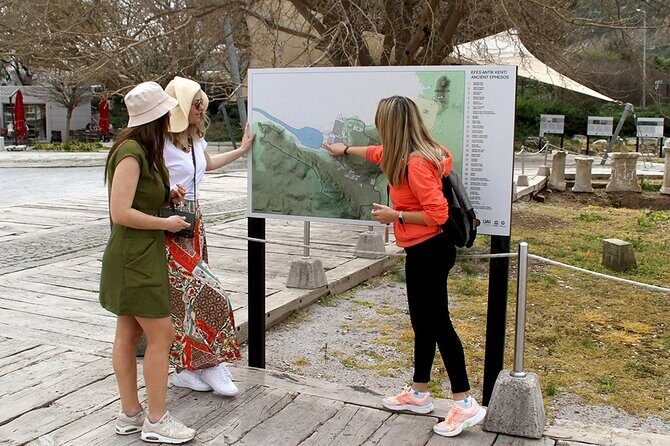
If your legs can handle it, the Ephesus Terrace Houses stop is worth centering your day around. It’s listed at about 30 minutes, but it can feel like more because the place is visually dense—protected roofs, consolidated mosaics, and frescoes.
This is also where the tour becomes human and lived-in. These were houses of wealthy Romans, built across three terraces. The oldest structures date back to the 1st century B.C., and the residences continued up through the 7th century A.D. That timeline helps you see it wasn’t just a “snapshot” site; it adapted across centuries.
Important reality check: this stop involves stairs, and the tour notes a moderate physical fitness level. One past guest specifically called out how the Terrace Houses can be stair-heavy, even though it was still a favorite.
Library of Celsus: when a tomb also doubled as a statement
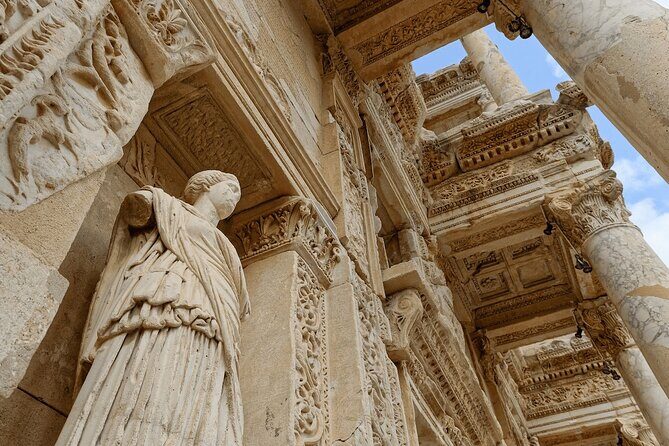
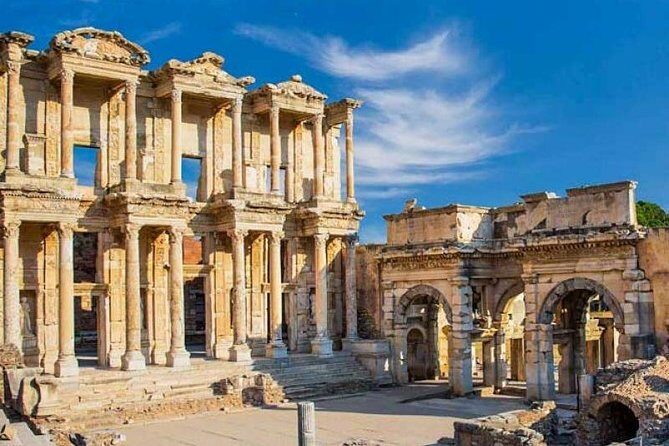
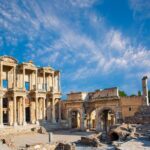
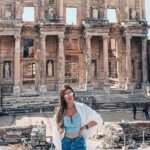
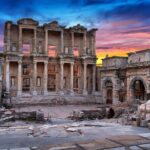
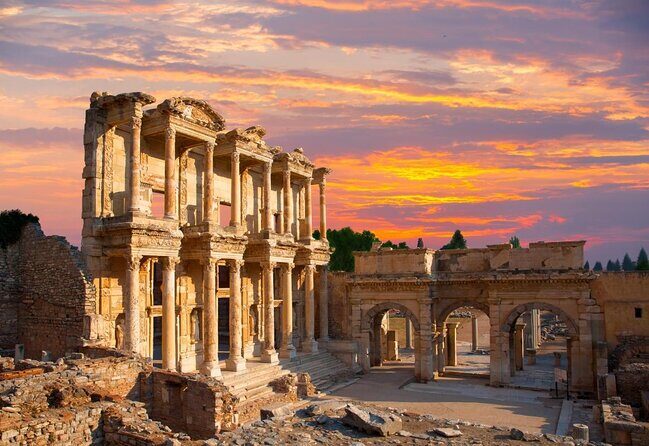
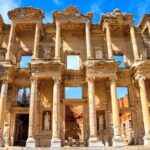
The Library of Celsus gets a lot of attention, and for good reason. You’ll have about 30 minutes here, and the structure is described as a monumental tomb for Gaius Julius Celsus Polemaeanus, built in 117 A.D by his son Galius Julius Aquila.
Here’s what I find fascinating: the grave is beneath the ground floor, and the entrance area is tied to symbolism, including Athena as a figure of wisdom. The library’s design was practical, too. Scrolls were stored in niches with double walls behind bookcases to control temperature and humidity extremes.
The capacity is described as over 12,000 scrolls, and it’s noted as the third richest library in ancient times after Alexandria and Pergamum. Even if you don’t remember those facts exactly, your guide can help you notice how the building itself “talks” about importance and protection.
The Great Theatre: the biggest sound in Anatolia
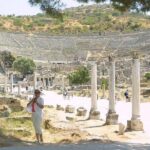
Next is the Ephesus Ancient Greek Theatre, about 25 minutes. This is the big one—the largest theatre in Anatolia, described as holding around 25,000 seats. It was built in the Hellenistic period and then enlarged during the Roman period.
You’ll see how the seating is divided, with 66 rows and walkways (diazoma) splitting the sections. The description also mentions restoration use of marble pieces and the presence of an Emperor’s Box.
One thing your guide should explain: this wasn’t only about performances. It also hosted religious, political, and philosophical discussions, plus gladiator and animal fights. That mix is why the theatre feels like a time machine for your imagination.
Temple of Artemis and St. John: two different kinds of awe
Temple of Artemis foundations
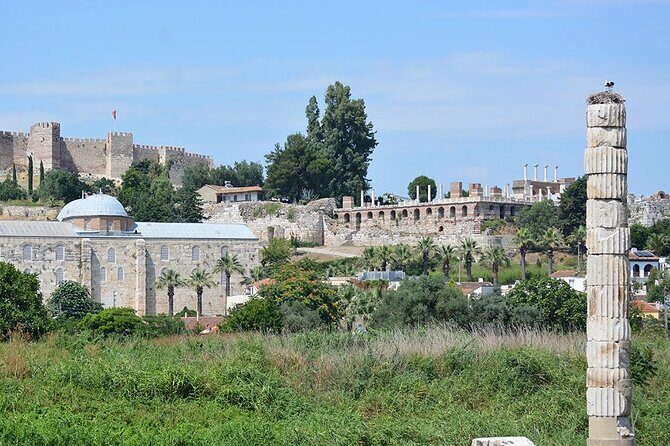
The stop at the Temple of Artemis is listed at about 40 minutes. Today, what you’ll see are mostly foundations. The tour frames it as one of the Seven Wonders of the ancient world, built in an area that turned into swamp over centuries, leaving you with a partial footprint.
The site’s value is in what you’re asked to picture. You can’t admire whole marble columns standing tall, but you can understand scale and artistry—and learn that some of the best surviving pieces ended up in the British Museum.
Basilica of St. John
The Basilica of St. John is also about 40 minutes. According to tradition, St. John spent his last years near Ephesus and was buried on the southern slope of Ayosolug Hill. A chapel was built over the grave in the 4th century, and later it became a basilica under Justinian’s reign.
This stop includes the story of early Christian persecution and links to the idea that John wrote the Gospel in Ephesus. It’s not only a “look at the stones” moment. It’s more like a layered interpretation of why places mattered to people.
Lunch in Kusadasi: included, plentiful, and not an afterthought
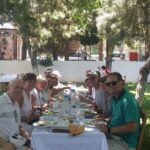
Lunch is included, and in the feedback it’s consistently called out as good and generous. People describe it as Turkish food with satisfying portions, not just something to keep you moving.
Some guides also add local flavors as small extras—one guest highlighted figs. Another described pomegranate juice and even an olive-oil and pomegranate-juice salad dressing. These little touches aren’t guaranteed, but the pattern is clear: the lunch portion is taken seriously.
Drinks with lunch are not included, so if you like coffee, tea, or something stronger, plan for that.
Optional shopping stops: how to keep it from taking over your day
One detail that shows up in past experiences is a possible rug-making or carpet-weaving stop. There’s nothing wrong with learning how something is made, and it can be interesting to see the work behind the rugs.
The caution: the selling energy can turn up. One person described hovering shop employees that felt a bit pressure-based, and another said the balance of pressure/no pressure was managed well. If you want a straight history-only day, tell the guide up front. You’ll save time by making expectations clear early.
Timing and cruise-ship sanity: how not to end up sprinting
This tour runs about 5 to 7 hours. That range is helpful, but it still requires focus—especially for cruise passengers.
The operator specifically sets up pickup for cruise guests at the exit gate of the immigration terminal of the cruise port with an OTTI Travel sign. That can make the meeting point easier. Still, no tour can control ferry lines, walking time, or unexpected queue behavior at every single monument.
One past customer had a late return and said it ended up close to ship departure, though the cruise line delayed sail time by 30 minutes. I’d treat that as a warning sign: watch the clock, keep your phone ready for any updates, and don’t let shopping expand to fill the gap.
Who this private Ephesus tour suits best
This is a strong fit if:
- You want a private tour with your group’s pace (and not a herd experience).
- You care about details beyond the standard highlights—State Agora, Odeion, imperial temples, Terrace Houses.
- You like guides who can explain connections clearly. Names that came up often include Selin, Nesli, Mehmet, Ahmet, Tas, Asli, Özgür (Oscar), Mary, Devon, and Ali.
It’s less ideal if:
- You have limited mobility or you don’t want to deal with stairs at Terrace Houses.
- You’re extremely tight on budget, because admissions add up quickly in euros.
Should you book the private detailed Ephesus shore excursion with lunch?
I’d book it if you want three things in one day: a guided walk through the working parts of Ephesus (not only the postcard spots), a lunch that actually feels local, and enough structure to reduce time lost at major entrances. The very high recommendation rate (4.9 with 71 ratings and 99% recommending) lines up with the biggest themes: guide quality, customization, and a smoother day.
Just go in with eyes open. Plan your day around entrance fees (listed separately), wear shoes for stone and stairs, and keep your schedule tight if you’re on a cruise. If you do those basics, this tour is one of the better ways to turn a shore day into something you’ll remember when you’re back home.
FAQ
What’s included in the tour price?
The tour includes an English-speaking professional licensed guide, pickup and drop-off, skip-the-lines help, an air-conditioned Mercedes van, parking fees, and lunch.
Are the entrance fees for Ephesus and other sites included?
No. Entrance fees are listed as not included for the Ephesus Ancient City (€40 per person), Virgin Mary House (€18), Terrace Houses (€15), and St John Basilica (€6). Drinks at lunch are also not included.
How long is the excursion?
It’s listed as about 5 to 7 hours.
Is this a private tour?
Yes. It’s a private tour/activity, and only your group participates.
What language is the guide?
The tour is offered in English.
Is pickup available for cruise passengers and hotels?
Yes. For cruise passengers, pickup is arranged at the exit gate of the immigration terminal of the cruise port with an OTTI Travel sign. For hotel pickup, the meeting is by the hotel reception.