REVIEW · KUSADASI
Ephesus Half Day Tour From Kusadasi Hotels / Selcuk Hotels
Book on Viator →Operated by Turkey Tours Company · Bookable on Viator
That marble city still feels unreal.
This Ephesus half-day tour is designed for people who want the main sights without losing hours to logistics. You get picked up, ride in an air-conditioned vehicle, and use included entry tickets to get in more easily than you could on your own.
I especially like two things: the tour’s small-group feel (max 14 people), and the way the guide ties together what you’re seeing—so you’re not just walking past stones. One thing to plan for: Ephesus entrance isn’t fully covered in the price, and you’ll also want cash for tips if that’s your style.
In This Review
- Quick hit points before you go
- A half-day Ephesus plan that fits real schedules
- Hotel or cruise pickup: less fuss, more focus on ruins
- Price and what you should budget: $68.23 plus the €40 entrance
- Stop 1: The Ancient City of Ephesus (your main event)
- Why the guide matters in Ephesus
- Temple of Artemis: fast stop, huge legend
- A practical note about time
- Prytaneion and the story of the eternal flame
- Why this stop is worth your attention
- Baths of Varius: a Roman day-life stop
- The only drawback: short and in-progress
- Pollio Fountain and how water shaped the city
- What makes this stop memorable
- The guide experience: licensed help with real storytelling
- What you should do during the tour
- What to expect from the pacing (and what to bring)
- Is this tour good value for $68.23?
- Who should book this Ephesus half-day tour?
- Should you book this tour?
- FAQ
- How long does the Ephesus Half Day Tour take?
- Do I get picked up from my hotel or the cruise port?
- What’s the group size limit?
- What’s included in the tour price?
- Is the Ephesus entrance fee included?
- Are meals and drinks included?
- Do I need to pay tips?
- Will the tour return me on time for my cruise?
- Do hotels in Ozdere or Guzelcamli require extra transfer payment?
- What’s the cancellation policy?
Quick hit points before you go
- Air-conditioned pickup and drop-off from Kusadasi or Selcuk-area hotels and the cruise port area helps you beat the slow start.
- Small group size (up to 14) keeps the pace manageable and makes it easier to ask questions.
- Guided stops that actually match the time: you’ll cover Ephesus, then hit Temple of Artemis and several key ruins.
- A separate €40 Ephesus entrance fee means your total cost isn’t just the headline $68.23.
- Optional skip-the-line help: you can pay the guide to arrange it.
- Guaranteed return on time to your cruise is a big deal when your day has a deadline.
A half-day Ephesus plan that fits real schedules
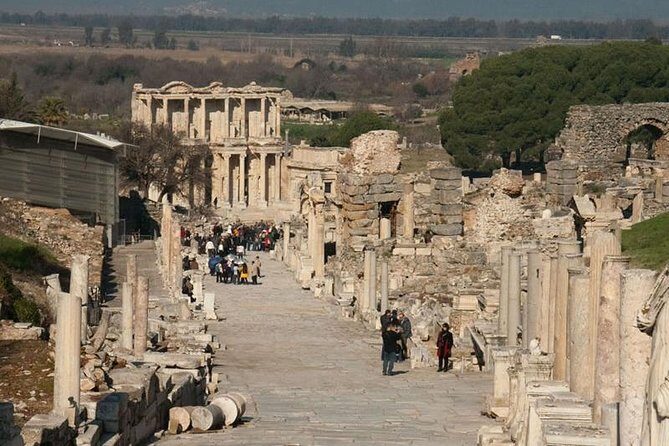
Ephesus is huge. Trying to do it on your own in a short window is where good intentions go to die—because you spend time figuring out routes, tickets, and timing instead of seeing things.
This tour is built around a 4 to 5 hour rhythm. That length is long enough to get the major highlights, but short enough that you’re not trudging back to the hotel feeling like you lost a whole day to walking.
If you’re coming from a cruise, the timing matters even more. You’re told there’s a guaranteed return on time to the cruise, which is exactly what you want when your ship won’t wait for your museum selfie.
You can also read our reviews of more tours and experiences in Kusadasi.
Hotel or cruise pickup: less fuss, more focus on ruins
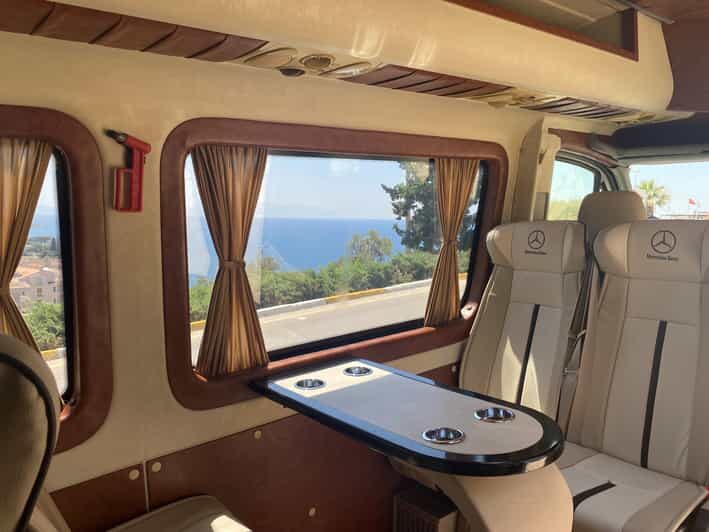
The tour includes pickup and drop-off, plus transport in a fully air-conditioned vehicle. In practice, that means you meet your group and move toward Ephesus without worrying about taxis, parking, or navigating early traffic.
There’s also a practical advantage: the operator provides a mobile ticket. That helps on busy days when lines and paper tickets slow everything down.
For some hotel areas, there may be an extra transfer fee. If you’re staying in Ozdere hotels, you should pay 20 euro per person for round-trip transfer. If you’re in Guzelcamli hotels, the round-trip transfer is 25 euro per person. If you’re outside the main pickup zone, it’s smart to confirm this early so your day doesn’t start with a surprise.
Price and what you should budget: $68.23 plus the €40 entrance
The tour price is $68.23 per person, and it includes a professional licensed guide, insured transportation, and that air-conditioned vehicle. That part is the value.
But Ephesus entrance is listed separately: Ephesus entrance fee is €40 and it is not included in the tour price. You can pay the guide for skip-the-line tickets, which can be worth it if you’d rather spend your limited time inside the ruins instead of negotiating queue time.
So your real budget looks like:
- Tour price: $68.23
- Plus Ephesus entrance: €40
- Plus meals (not included) and tips (not included)
If you’re doing Ephesus for the first time and you want a guide to explain what you’re looking at, this pricing structure often makes sense. If you already know you’ll spend most of the time taking photos and wandering without much guidance, then you may want to compare what you’d save by self-guiding. The tour is best when you’ll use the guide time.
Stop 1: The Ancient City of Ephesus (your main event)
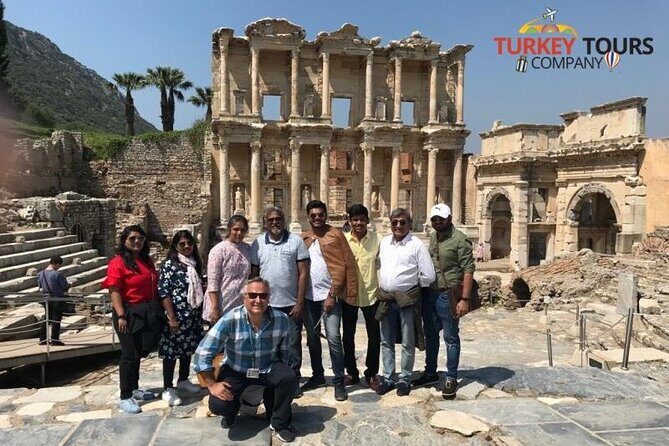
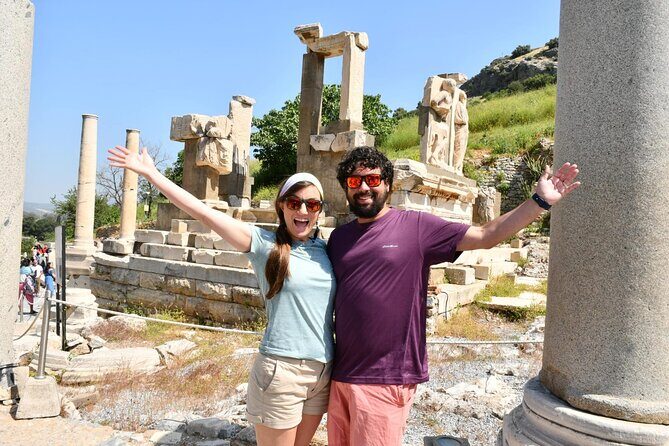
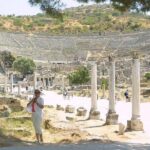
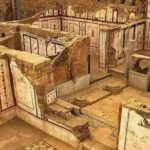
This is the heart of the tour, with about 2 hours 30 minutes allocated here. Ephesus is described as the second largest city in the Roman Empire, with a population around 250,000 in the 1st BC, second only to Rome. It was also a harbor city, and the materials mattered—this city is often associated with being built with marble.
You’ll get a guided walk that hits the big visual anchors and the stories behind them. Expect stops such as:
- Goddess Nike
- Hadrian Gate
- A local pharmacy stop (yes, that’s a thing here)
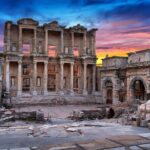
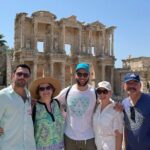
- Library of Celsus (listed as the third largest library)
- Marble Street and Harbour Street
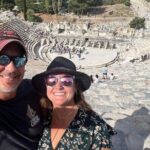
- And the amphitheater (noted as having over 25,000 seats, among the largest in the ancient world)
Why the guide matters in Ephesus
Without guidance, Ephesus can feel like “a lot of ruins in one place.” With guidance, you get to understand what each space was for—public life, civic pride, worship, and how trade and the harbor shaped daily existence.
This is also where the short time is a trade-off. Two-and-a-half hours is enough for the essentials, but it’s not enough to treat Ephesus like a slow museum visit. If you’re the kind of visitor who loves to linger at every column and corner, you’ll feel the clock. Still, for most first-timers, it’s a smart pace.


Temple of Artemis: fast stop, huge legend
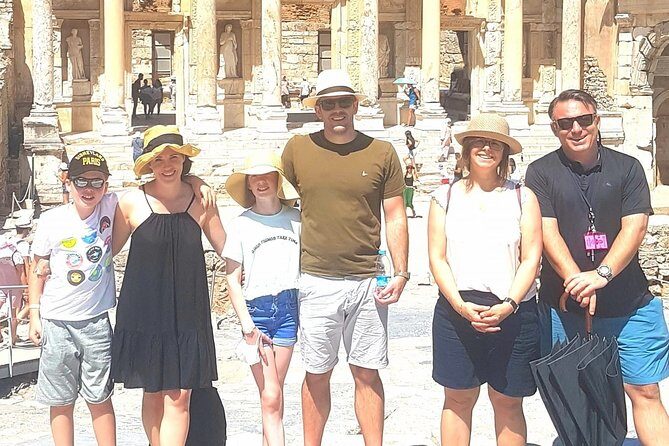
The second stop is Temple of Artemis (Artemision), often associated with the goddess Artemis and also known as the Temple of Diana. You’ll have about 30 minutes here, and the ticket is listed as free for this stop.
The famous part is the legend. It’s described as one of the seven wonders of the world, which is a big framing device for your brain. Even if you’re not expecting a fully intact building, knowing the scale of what once stood here changes how you look at the remains.
A practical note about time
Because it’s a half-day tour, your Temple of Artemis time is brief. That’s not bad—it’s just honest. You’ll leave knowing why it mattered, not leaving satisfied that you studied every stone like an archaeologist.
Prytaneion and the story of the eternal flame
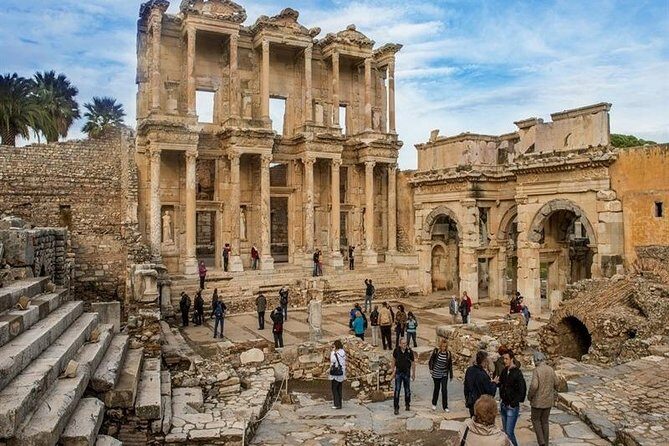
Next comes the Prytaneion, with about 10 minutes and ticket status listed as free. This stop is interesting because it’s not just about impressive architecture—it’s about ritual.
This building is tied to religious ceremonies, official receptions, and banquets. The sacred flame was kept constantly alight here—basically a symbolic heart of Ephesus.
The structure is described as dating to the 3rd century B.C. during the reign of Lysimachos, while the ruins of the complex are associated with the Augustan age. You’ll also hear about the famous relic: a four-cornered pit where the sacred fire was burned.
Then there’s the layout detail that really helps you picture it: four columns at the front, then a courtyard surrounded by a portico, with a central ceremonial hall and side rooms.
Why this stop is worth your attention
In a quick tour, it’s easy for “small ruins” to feel like filler. Prytaneion isn’t filler. It gives you a sense of how power, religion, and public ceremony connected in daily city life. You’ll likely remember it because the story is clear and specific.
Baths of Varius: a Roman day-life stop
The Baths of Varius are next, roughly 15 minutes. This stop is also listed as free for admission.
The ruins here date to the Roman period, with construction noted as the 2nd century A.D. Mosaics in a 40 meters long corridor are listed as dating to the 5th century, and excavation is said to be incomplete.
You’ll hear the structure described in parts:
- Frigidarium (cold water)
- Tepidarium (warm water)
- Caldarium (hot water)
Even if you don’t get long in this area, it’s a nice change of pace from gates, libraries, and temples. It’s city life in stone: public bathing, socializing, and the Roman taste for comfort.
The only drawback: short and in-progress
The time is limited, and excavation isn’t complete. So you won’t leave with the feeling of a finished, museum-ready complex. You will, however, get a realistic sense of scale and function.
Pollio Fountain and how water shaped the city
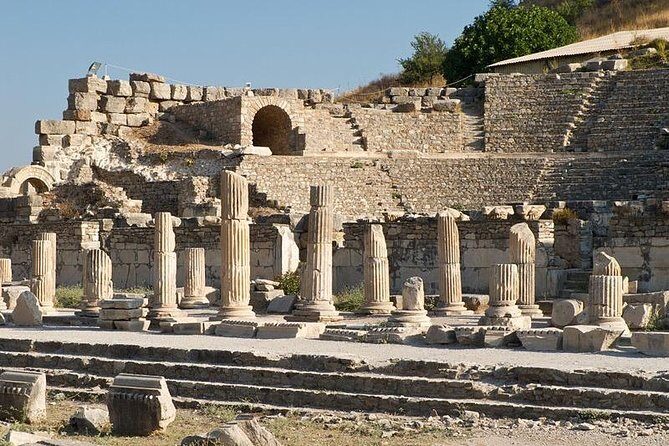
The final listed stop is the Fountain of Pollio, with about 5 minutes. Admission is free here too.
This one is a reminder that Ephesus wasn’t only about monuments. It also depended on infrastructure.
The fountain is said to have been built in 97 A.D. by C. S. Pollio and his family. Water came via aqueducts from three sources:
- Kencherios (42 km) at Kuşadası
- Çamlık village stream of Marnas (15 km)
- Cayster River (20 km)
The water distribution is described as using a branching system of baked clay pipes. In the city, water in public fountains was provided freely, and the text notes it was a relief during hot summer days.
What makes this stop memorable
It’s short, but it’s smart. After the big religious and civic sites, Pollio gives you a “how the city worked” moment. It’s one of those stops that makes the rest feel more believable.
The guide experience: licensed help with real storytelling
This tour includes a professional licensed tour guide. In practice, that matters because these ruins can be hard to decode on your own.
From past guide names that have come up in this company’s orbit—people like Cayeda Zengin and Erdem—the common theme is clear explanations and strong organization. I’d expect that kind of professional pacing here, where you’re guided through the sights in a way that helps the time feel worth it.
What you should do during the tour
Ask questions while you’re walking. If you wait until you’re back in the vehicle, you’ll miss the chance to connect the story to the exact building you’re standing next to.
Also, be honest about your pace. If you need more time at Ephesus, tell your guide early. This tour is structured, but good guides can adjust where your attention goes.
What to expect from the pacing (and what to bring)
The plan is tight: Ephesus first, then Artemis and a handful of smaller-but-meaningful ruins. That’s why the guide time is valuable.
Bring what you’ll need for a short outing where meals and beverages are not included. If you plan to snack, bring it yourself so hunger doesn’t take over the last part of the tour.
Sturdy shoes help too. Even though you’re on a guided route, Ephesus includes uneven ground and lots of walking between sights.
Is this tour good value for $68.23?
Let’s be practical. You pay for:
- Pickup and drop-off
- Air-conditioned transportation
- A professional guide
- Insurance coverage
- A small group setting (max 14)
- A mobile ticket and included entry tickets for certain stops
Then you pay extra for:
- €40 Ephesus entrance fee
- Tips (not included)
- Meals and drinks
For many visitors, the guide plus the convenience are the value. It’s one of those tours where you’re paying to save your own time and reduce decision fatigue.
If you’re the type who enjoys planning everything and reading every sign, self-guiding might feel cheaper. But if you’d rather trade a bit of freedom for certainty, this one is designed for that.
Who should book this Ephesus half-day tour?
This tour fits best if:
- You have limited time (especially cruise days)
- You want the main Ephesus highlights without turning it into a whole-week project
- You like learning why each site mattered, not just seeing it
- You prefer a small-group format where questions are realistic
You might skip it if:
- You want a slow, deep archaeological pace with lots of rest stops and long stays in each area
- You plan to photograph constantly and won’t use the guide’s explanations
Should you book this tour?
My take: book it if your priority is seeing Ephesus’s best-known places with guided context in a half-day. The pickup convenience, the licensed guide, and the small group size are the big reasons this works.
Just budget for the €40 entrance fee and plan for meals since they’re not included. If you do those two things, the tour is a strong way to get your bearings quickly and leave with places that feel connected, not random.
FAQ
How long does the Ephesus Half Day Tour take?
The tour runs about 4 to 5 hours.
Do I get picked up from my hotel or the cruise port?
Yes. Pickup and drop-off are included.
What’s the group size limit?
The tour has a maximum of 14 travelers, which helps keep things more personal.
What’s included in the tour price?
Included features are a professional licensed tour guide, pickup & drop-off, insurance, and a fully air-conditioned vehicle.
Is the Ephesus entrance fee included?
No. The Ephesus entrance fee is €40 and it is not included. You can pay the guide to arrange skip-the-line tickets.
Are meals and drinks included?
No. Meals & beverages are not included.
Do I need to pay tips?
Driver and guide tips are not included. The tour notes gratuity separately.
Will the tour return me on time for my cruise?
The tour includes a guaranteed return on time to the cruise.
Do hotels in Ozdere or Guzelcamli require extra transfer payment?
Yes. If you stay in Ozdere hotels, you should pay 20 euro per person for transfer both ways. If you stay in Guzelcamli hotels, it’s 25 euro per person for transfer both ways.
What’s the cancellation policy?
You can cancel for a full refund if you cancel at least 24 hours in advance of the start time.