REVIEW · KUSADASI
Private Full-Day Biblical Ephesus Tour From Kusadasi
Book on Viator →Operated by Ephesus Tours · Bookable on Viator
Morning gold is often found early. A private, biblical-leaning Ephesus day lets you see major early Christian sites and the big Greco-Roman ruins in one smooth route, with a licensed guide steering the stories and the pace. I especially like the door-to-door pickup from Kuşadası or Selçuk and the fact this is a true private group, not a cattle-car shuffle.
What I like second is the focus on the specific New Testament connections: the House of the Virgin Mary, the Church of Mary, and then the Cave of the Seven Sleepers and the Basilica of Saint John. In the best versions of this tour, guides like Tannar and Phyllis make the walking route make sense, so you’re not just looking at stones and hoping they sort themselves out.
One consideration: some admissions are marked as not included for certain stops (while others are free), so you’ll want to confirm what’s covered before you go. Still, you’ll have a clear plan for what to see and how long you’ll spend at each place.
In This Review
- Key things to know before you go
- A private Biblical Ephesus tour from Kuşadası actually saves your day
- Morning pickup from Kuşadası or Selçuk: how you start strong
- House of the Virgin Mary and Church of Mary: the part people feel first
- Temple of Artemis remains: the Seven Wonders stop without the fuss
- Ancient Ephesus on foot: Celsus, the Grand Theater, Hadrian
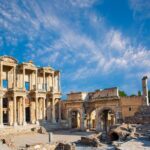
- Celsus Library
- Grand Theater
- Temple of Hadrian
- Lunch at a local Turkish restaurant: plan for a real reset
- Cave of the Seven Sleepers and Basilica of Saint John: faith legends meet archaeology
- Grotto of the Seven Sleepers
- Basilica of Saint John
- Timing, pace, and the 6-hour reality check
- Wheelchair accessibility and who this route is built for
- Price and value: $160 per person, with some admissions to confirm
- Should you book this private Ephesus tour?
- FAQ
- Is pickup included from Kuşadası or Selçuk?
- How long is the tour?
- What’s included in the price?
- Do I get a ticket for this tour?
- Is the tour wheelchair accessible?
- Are there options for kids and food?
Key things to know before you go
- Private, licensed guidance that helps you understand what each ruin or church would have meant at the time
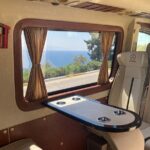
- Door-to-door pickup from Kuşadası or Selçuk and return transfer to your hotel or the cruise port
- Biblical stops beyond the ruins, including the House of the Virgin Mary and the Church of Mary
- Seven Wonders context with a stop for the Temple of Artemis remains
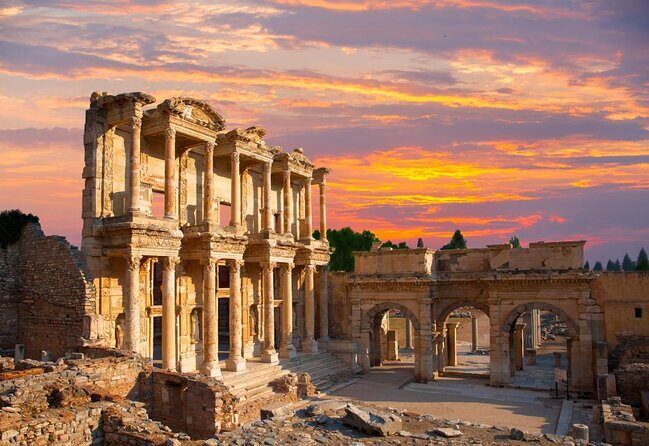
- A structured walking route that includes Celsus Library, the Grand Theater, and the Temple of Hadrian
- Lunch included, plus a small guidebook/gift bag at the end
A private Biblical Ephesus tour from Kuşadası actually saves your day
Ephesus can feel overwhelming fast. You arrive, you see crowds, and suddenly you’re making guesses about what you’re looking at. A private tour fixes that with two things you can’t easily recreate on your own: a guide who explains how the sites connect, and a route that moves you through the right highlights without turning your day into logistics.
This tour is built for people who want the famous ruins, but also want the Christian thread running through them. That combination matters. The UNESCO site is extraordinary for archaeology, yet the biblical landmarks are what give the day emotional context. You’ll come away with the sense that Ephesus wasn’t just a Roman city. It was also a place where early believers left a strong footprint.
Private also means you can stay with the pace that works for you. The tour is listed as wheelchair accessible, and since it’s one group, your guide can adjust the flow within reason.
You can also read our reviews of more private tours in Kusadasi
Morning pickup from Kuşadası or Selçuk: how you start strong
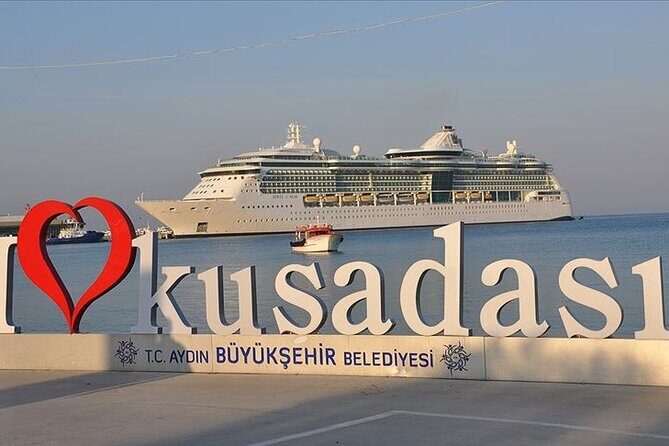
Your day starts with pickup at your hotel reception or at the cruise port, depending on where you’re staying or disembarking. The tour runs with a morning pickup window from 7:00 AM to 8:30 AM, seven days a week. That early start is practical for two reasons: cooler temps and more manageable crowds at the big outdoor sections.
If you’re coming via cruise, you’ll need to provide the ship name plus docking, disembarkation, and re-boarding times when booking. It’s a detail, but it matters because a tight shore-excursion day depends on timing discipline.
Two names came up in guides who handle this route well: Tannar and Phyllis. In an operation like this, a great guide is half the value. The best ones don’t just recite facts. They point out what to look for and what to ignore, so you don’t waste time reading tiny signs while your mind drifts.
House of the Virgin Mary and Church of Mary: the part people feel first
This is where the tour’s biblical focus becomes real, not theoretical.
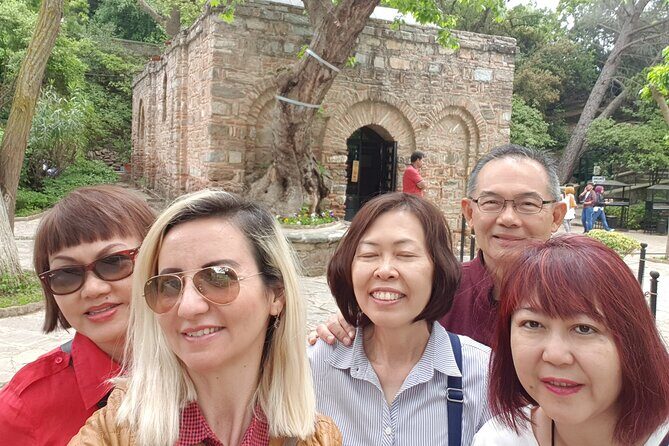
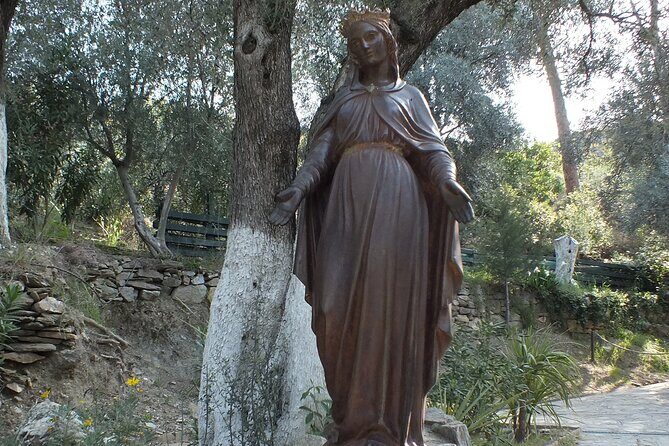
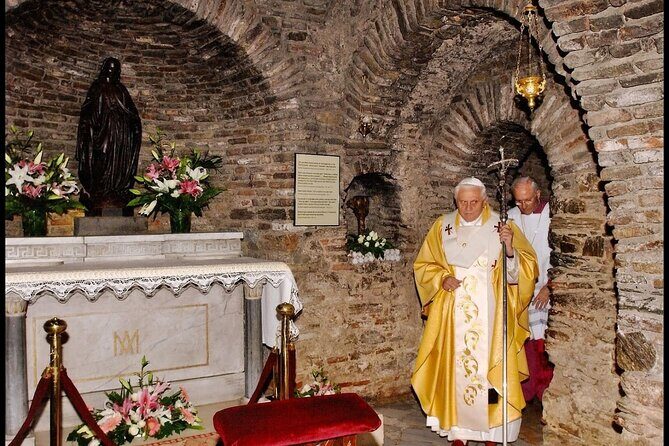
You’ll visit Meryemana (the Virgin Mary’s House), described as the house where it’s believed Mary spent her last years. The stop is about 40 minutes, and it’s marked as having an admission ticket not included. Even if you’re not there for faith, it’s still a memorable stop because the place is set up to slow you down. You can stand, look around, and take in why pilgrims return year after year.
Then you continue to the Church of Mary, where the Council of Ephesus was convened in 431 AD. That date is a big deal. It anchors the Christian story in time and shows how church leadership debates weren’t happening in some distant world. They were happening in the region, in a city that mattered.
Practical tip: these stops are often calmer than the big ruin areas, so they’re a good moment to reset your energy. If you’re sensitive to walking, you can treat this as your breathing space before the longer outdoor walk at the main Ephesus site.
Temple of Artemis remains: the Seven Wonders stop without the fuss
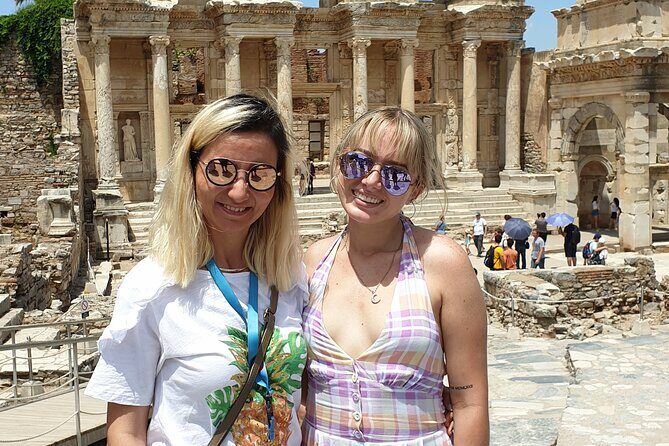
Next comes the Temple of Artemis remains. It’s part of the ancient world’s star power: the temple is tied to the Seven Wonders of the Ancient World.
Here’s the value: you get the “what used to be here” context before you enter the larger ruin area at Ephesus proper. That helps your brain file the city into a larger story—religion, power, trade, and public life all in one.
This stop is about 20 minutes, and it’s marked as admission ticket free. That’s a nice setup because it doesn’t inflate your budget, and it keeps the timeline smooth.
One consideration: because it’s remains, you’ll want a guide to explain what you’re seeing. Stones without explanation are just stones. With explanation, you start noticing patterns—where the temple’s scale would have been, and what “importance” looks like in architecture.
Ancient Ephesus on foot: Celsus, the Grand Theater, Hadrian
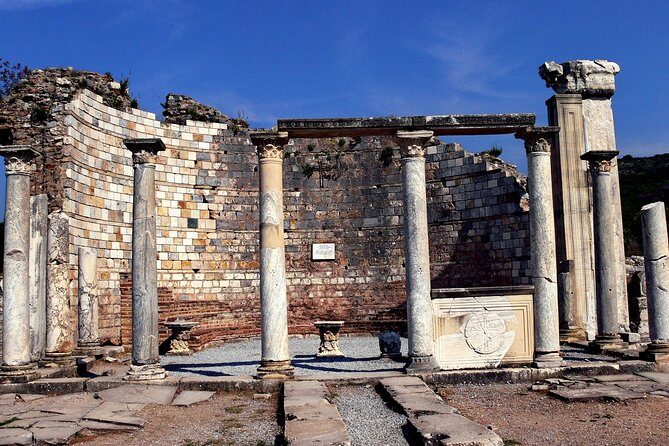
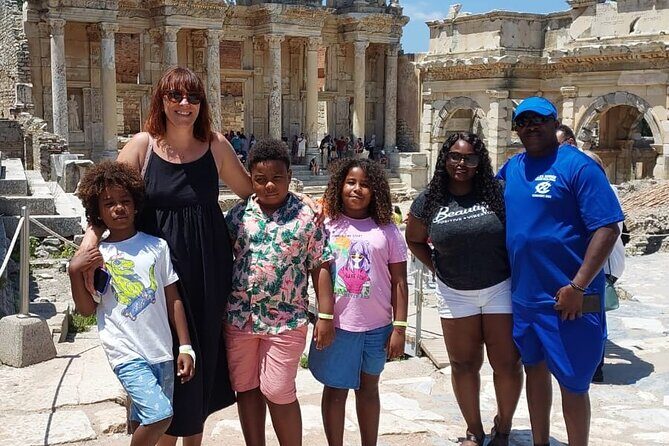
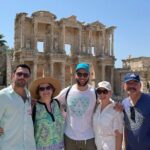
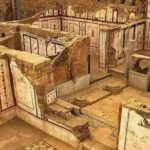
This is the day’s big archaeological section. Ephesus is a UNESCO World Heritage Center, and the tour route is designed to take you to the top landmarks: Celsus Library, the Grand Theater, and the Temple of Hadrian.
The main ancient city stop is listed with a very short time on the schedule, but the overview clearly points to a guided walking route up through the major sights. In practice, what matters is not the single listed timestamp. What matters is that you get a structured sequence on foot and you’re not improvising your own path.
You can also read our reviews of more tours and experiences in Kusadasi
Celsus Library
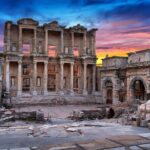
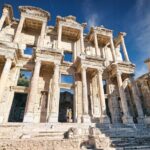
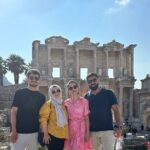
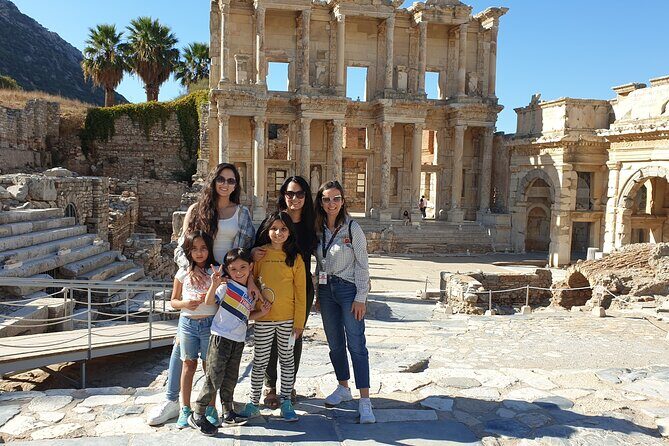
Celsus is one of those Ephesus sights that makes you sit up a little. It’s not just impressive because it’s large; it’s impressive because it shows how public spaces were built for knowledge and status. Your guide’s job here is to connect the architecture to everyday life: how a library functioned in a city, and why this kind of monument mattered.
Grand Theater
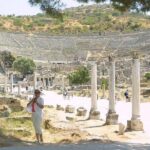
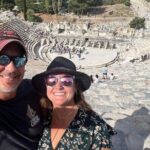
Then you move to the Grand Theater. Even without a Roman drama in progress, the scale is the point. This is where you can picture civic gatherings—performances, announcements, and moments when people needed to see and hear a message across a crowd.
Temple of Hadrian
Finally, the Temple of Hadrian adds a different layer. You’re seeing how emperors and imperial power were represented through religion-like monumental building. It’s a useful reminder that Ephesus wasn’t isolated. It was part of a much larger empire.
Practical tip: outdoor walking at Ephesus is real walking. Wear shoes you trust on uneven surfaces. Bring sun protection, and keep water handy even though lunch is included later.
Lunch at a local Turkish restaurant: plan for a real reset
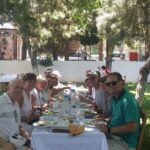
Between biblical stops and Roman ruins, you’ll get traditional lunch at a local Turkish restaurant. Lunch is listed as included, and there’s a vegetarian option available if you ask during booking.
Why lunch is more than a break: it’s when your brain stops juggling different centuries in the same hour. A good sit-down meal gives you the energy to keep walking through the final sites without turning the last part of the day into a shuffle.
If you have dietary needs beyond vegetarian, the data only promises the vegetarian option. For anything else, you’ll want to check directly at booking.
Cave of the Seven Sleepers and Basilica of Saint John: faith legends meet archaeology
The last stretch leans hard into Christian tradition tied to Ephesus.
Grotto of the Seven Sleepers
You’ll visit the Grotto of the Seven Sleepers. The tour describes it as the cave where seven young Christians slept for about 200 years, accepted as a miracle. This stop is about 20 minutes, and it’s marked as admission ticket free.
This is a great example of why you chose a themed tour. Even if you’ve read about the legend before, hearing how it’s understood in the region makes the site feel more grounded. It turns a “story” into a physical place.
Basilica of Saint John
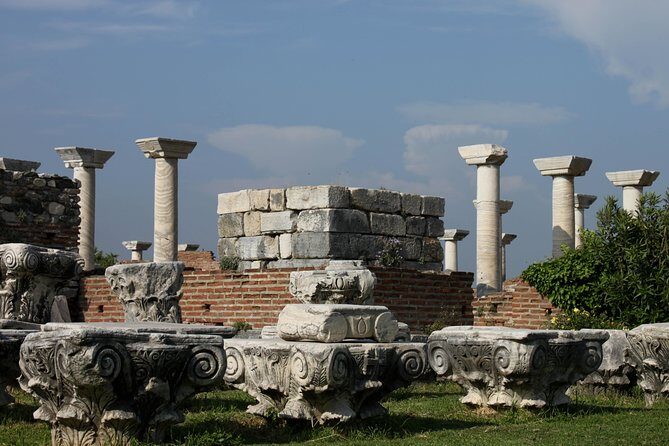
Then it’s the 6th-century Basilica of Saint John, linked to the legendary burial site of John the Apostle. The tour calls out Saint John Kilisesi as a dedicated church where you have a chance to see the tomb of St. John, and the stop is about 20 minutes. It’s marked as admission ticket not included.
This finale matters emotionally. By the time you reach the basilica, you’ve already seen the ruins and the other Christian-linked places. The day’s theme becomes coherent: Ephesus as a living memory of early Christianity layered over a huge Greco-Roman city.
Timing, pace, and the 6-hour reality check
The tour duration is listed as about 6 hours. The exact flow depends on time of day and traffic, especially for transfers. The pickup window is morning, so you’ll likely spend the day bouncing between a couple of concentrated areas rather than endless driving.
What helps most with this kind of day trip is having fewer decisions. A private guide handles the route, and door-to-door transport saves you from the “how do I get there and where do I park” stress.
One small schedule note: a few stop times in the details look short on paper. Don’t panic if you think 20 minutes won’t be enough. The tour’s overview emphasizes guided explanation and walking routes, which typically means the real experience time is more about how you’re moving and what you’re seeing across the day.
Wheelchair accessibility and who this route is built for
The tour is listed as wheelchair accessible, which is a major plus if you want the Ephesus highlights without finding your own transportation and accessibility solutions. Because Ephesus is an outdoor archaeological site with uneven ground, you should still plan to go slowly and expect some areas to be challenging. A private guide can help manage what’s realistic for your mobility level.
This day is especially well suited for:
- First-timers who want the main Ephesus hits plus biblical context
- Cruise passengers who need a controlled, timed plan
- People who enjoy explanations and want their questions answered on the spot
- Couples and small groups who prefer a quieter pace
Price and value: $160 per person, with some admissions to confirm
The price is $160.00 per person, and the tour includes round-trip transport, a professional private licensed guide, and lunch. It also states that entrance fees are included in the tour overview, yet the stop details mark admissions as not included for multiple key sites.
That doesn’t automatically mean a bad value. It usually means you should confirm what exactly is covered so there are no surprises on arrival. Based on the data:
- Some locations are marked free (Temple of Artemis; Cave of the Seven Sleepers)
- Others are marked not included for admission tickets (Meryemana; the main Ephesus site; Saint John Kilisesi)
So the value logic is this: you’re paying for a guided private route, transportation, and lunch, with certain admissions possibly handled separately depending on the stop. If you’re comfortable confirming the specifics when you book, you’re likely to feel you got your money’s worth because your time is protected and your understanding improves.
Also nice: the tour includes a complementary gift bag and a guidebook to the Highlights of Turkey.
Should you book this private Ephesus tour?
Book it if you want a single day that blends UNESCO-level Ephesus ruins with biblical sites tied to Mary, early church councils, and the Seven Sleepers tradition. The private setup plus licensed guidance is what makes the difference between reading about Ephesus and actually understanding it while you’re standing there.
Consider a different option if you’re mainly looking for a free-form archaeology wander with zero structure. This tour is more guided and story-driven than DIY. Also, if you dislike the idea of paying any admissions separately, confirm what’s included for each stop before you go, since several key admissions are marked as not included.
If you like your travel with a plan and a point of view, this one is a strong choice for a Kuşadası or Selçuk day trip.
FAQ
Is pickup included from Kuşadası or Selçuk?
Yes. You can be picked up from your hotel reception or from the cruise port, and the tour includes round-trip transport back to Kuşadası or Selçuk.
How long is the tour?
The duration is listed as about 6 hours, with transfer times approximate and dependent on traffic.
What’s included in the price?
The tour includes a professional private licensed guide, a private air-conditioned non-smoking vehicle, round-trip travel from the port or your hotel, entrance fees (as stated in the summary), and lunch (as stated in the summary). You should also double-check site admissions, since some stops are marked as admission ticket not included.
Do I get a ticket for this tour?
You’ll receive a mobile ticket.
Is the tour wheelchair accessible?
Yes, the tour is listed as wheelchair accessible.
Are there options for kids and food?
Children must be accompanied by an adult. A child rate applies only when sharing with two paying adults. A vegetarian option is available if you advise at booking.