REVIEW · KUSADASI
Private Ephesus Shore Excursion
Book on Viator →Operated by Guide of Ephesus · Bookable on Viator
Ephesus, packed into a smooth half-day. What I liked most about this private shore excursion from Kusadasi is how it turns a limited cruise stop into real time in the important places—Ephesus ruins plus the quieter Christian sites around it. You get a friendly, licensed local guide leading the story, not just pointing at stones.
Second, I really value the comfort and pacing: air-conditioned round-trip van transport, a countryside lunch, and a plan that’s built around getting you back to the port on time. It also helps that you can ask your guide to help skip ticket lines (ticket fees are still paid in cash to your guide).
The one thing to watch is that most of the big sights have entrance fees not included, so your final spend will depend on what sites you enter. Also, since this is a cruise-style half day, you’ll want to keep an eye on timing so you don’t feel rushed.
In This Review
- Key Highlights Worth Marking
- The Real Value of a Private Ephesus Shore Excursion
- Meeting Your Guide at Kusadasi Port Without Stress
- Kusadasi Warm-Up: Castle Views and an Ottoman Caravanserai
- Basilica of St. John: A Big Place With a Quiet Weight
- Meryemana (Virgin Mary’s House): When the Stones Feel Personal
- Ephesus in a Tight Two-Hour Window: What You Really Get
- Lunch in the Countryside Plus Local Craft Advice
- Transportation and Timing: The Secret Sauce for Cruise Days
- Who This Private Tour Suits Best
- Price and Value: Is $51.20 a Good Deal?
- Should You Book This Private Ephesus Shore Excursion?
- FAQ
- How long is the Private Ephesus shore excursion?
- Is this a private tour or a group tour?
- What’s included in the price?
- Are entrance tickets included for Ephesus and the sites?
- Is lunch included, and are drinks included?
- Where do I meet the guide at Kusadasi?
- How do I set the correct meeting time for my cruise?
- Will the tour return me to the cruise port in time?
- What if there’s bad weather?
Key Highlights Worth Marking
- Private, licensed guide: you get a story-driven visit, not a generic walk-through
- Skip-the-line help: ask the guide to arrange tickets and save time at entrances
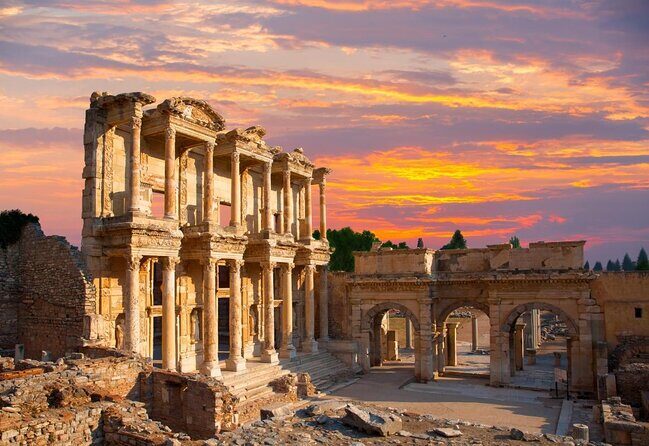
- Two-hour Ephesus focus: Great Theater, Agora, Marble Street, and Celsus Library in one sweep
- Belief sites with popes’ visits: Meryemana (Virgin Mary’s House) and Basilica of St. John
- Countryside lunch included: a real meal away from the tourist snack circuit
- On-time cruise return: guaranteed return early enough for your ship’s departure
The Real Value of a Private Ephesus Shore Excursion
This is the kind of tour that makes sense if you’re docked in Kusadasi and you want the headline sights without playing transportation roulette. You start with cruise-port pickup, ride in a separate vehicle with an air-conditioned non-smoking van, and then move through the sites with a guide who can connect what you’re seeing to how people actually lived and believed there.
The biggest value here is control. On a private tour, you’re not fighting the crowd flow or waiting for someone else’s pace. If you’re the type who likes to pause for photos, ask questions, and actually read the context behind the ruins, this format fits you well.
It’s also practical for cruises because the itinerary is built for a 5 to 6 hour window and a return that’s timed to your ship. That matters more than it sounds. In Ephesus season, the heat and lines can eat your hours fast—having guaranteed timing and a guide coordinating ticket entry can be the difference between a great visit and a frantic one.
One more note on price: at $51.20 per person, this sits in the range where you’re paying for structure—private transport, a professional licensed guide, parking fees included, and lunch. Entrance fees are extra, so treat that as the main add-on. If you compare this to piecing together taxis and individual entry tickets on your own, the value is usually better when you factor in time saved and the guide’s explanations.
You can also read our reviews of more private tours in Kusadasi
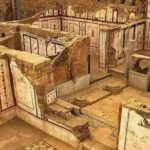
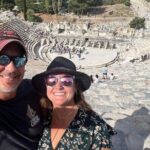
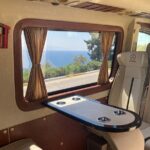
Meeting Your Guide at Kusadasi Port Without Stress
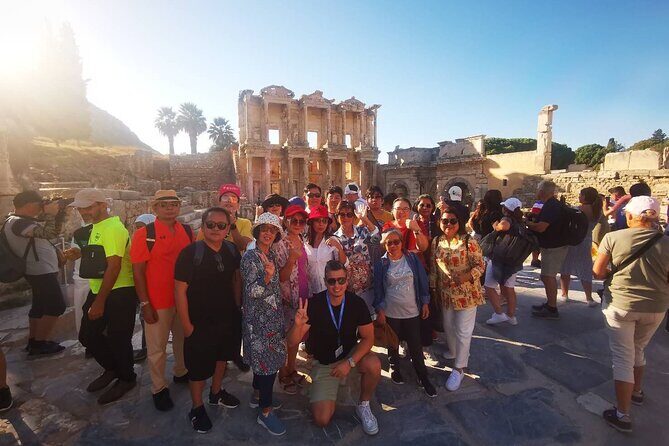
Cruise passengers meet your guide at a specific spot near the port exit gate area, where the guide holds a sign with your name. The meeting point is at the taxi tours area near Güvercin ada girişi, kale taksi durağı, Camikebir, 09400 Kuşadası/Aydın.
The tour is very up-front that you should coordinate your meeting time after booking. You’ll want to send your cruise ship name and your arrival and on-board times so they can suggest the best slot. If you’re arriving early, the guidance is to meet at about 7:45 AM. For later docking, plan on meeting roughly 30–45 minutes after you dock. The logic is straightforward: less crowding from other ships, and you dodge some of the midday heat because much of Ephesus is open-air.
This kind of scheduling is worth taking seriously. If you show up too late, you could lose the time you needed for entrances and photos. If you show up too early, you risk waiting around with nothing to do except watch other groups spill into the streets.
Kusadasi Warm-Up: Castle Views and an Ottoman Caravanserai
Not every Ephesus tour gives you a sense of what Kusadasi looked like as a port city. This one does, starting with pass-by views and a short stop that sets the Ottoman and maritime backdrop.
You’ll get a look at Kuşadası Castle on Pigeon Island from the route. The tour describes it as an Ottoman-era fortress tied to coastal defense against pirates and invaders. Even if you don’t spend a long time there, seeing it helps you understand why this coast mattered: ships, trade, and conflict all touched the same shoreline.
Then there’s the Öküz Mehmet Paşa Caravanserai, built in 1618. This is an Ottoman trade hub designed to connect merchants moving between the East and West. You get the feel of how travel worked back then—secure lodging for traders and protection for goods—plus the architecture, including its arched entrance and solid stone walls.
Why this stop is more than a quick photo op: it gives you a bridge between the ancient world of Ephesus and the later era that turned this region into a crossroads for commerce. The timing is also gentle. It’s not the heaviest emotional stop; it’s a palate cleanser before you step into the more intense religious and historical sites.
One small consideration: because it’s a cruise half day, you’re not getting long walks or deep museum-style exploration here. Think of these as context stops that improve how you read the rest of the day.
Basilica of St. John: A Big Place With a Quiet Weight
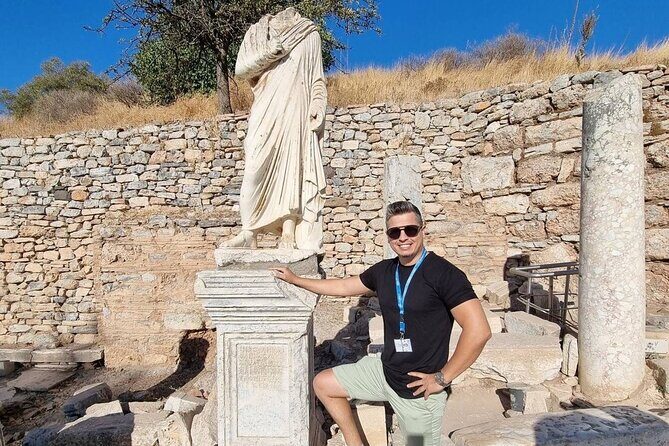
The tour includes a stop at Saint John Kilisesi, with emphasis on the Basilica of St. John. The guide frames it around St. John the Evangelist’s connection to Ephesus, his burial near Ayasoluk Hill, and the later construction.
The basilica itself is described as commissioned in the 6th century by Emperor Justinian, built over the tomb. You’ll hear about grand domes and intricate mosaics as part of why it became such a major pilgrimage site. Even if you’re not traveling for religion, it’s hard to ignore the scale and how seriously this place was treated.
What I like about adding this stop to an Ephesus visit is balance. Ephesus can feel like a roar of archaeology—columns, streets, theaters. The Basilica of St. John gives you a different tempo. It’s a reminder that people didn’t just admire ancient ruins; they believed in sacred history tied to the landscape.
Admission isn’t included here, so you’ll want to budget for it. Still, the time allocated—about 30 minutes—keeps it from eating your Ephesus block.
Meryemana (Virgin Mary’s House): When the Stones Feel Personal
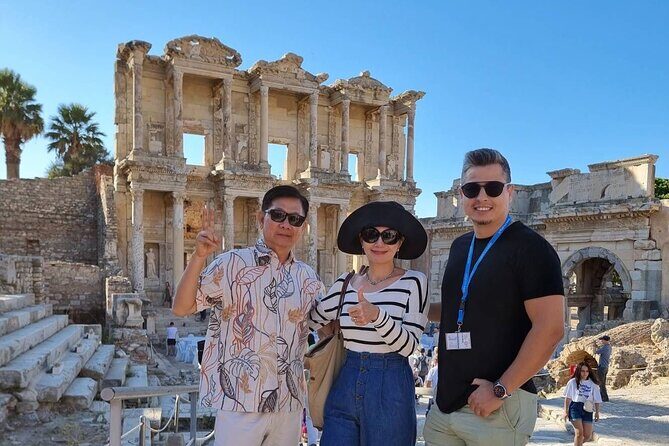
Next comes Meryemana, commonly called the House of the Virgin Mary. This is one of those places where the details matter because the site is tied to belief and family history within Christianity.
The tour explains the tradition that Mary spent her final days here and that Apostle John brought her to Ephesus after the Resurrection. Then it adds something very specific that makes the stop feel more documented than purely local legend: the house/church complex is described as authenticated through visits from three popes—Pope Paul VI (1967), Pope John Paul II (1979), and Pope Benedict XVI (2006)—with gifts to the shrine displayed today.
That popes-and-gifts information does two useful things for you as a visitor. First, it helps you understand why the place is treated as significant beyond the region. Second, it explains why people arrive with calm expectations; the vibe is more reflective than sightseeing.
The stop lasts about 45 minutes, and admission isn’t included. If you’re someone who likes a moment of quiet during a busy day, this is that moment. If you’re traveling with others who just want the biggest ruins, you might still appreciate it for the contrast—religious history told through a specific physical location.
You can also read our reviews of more tours and experiences in Kusadasi


Ephesus in a Tight Two-Hour Window: What You Really Get
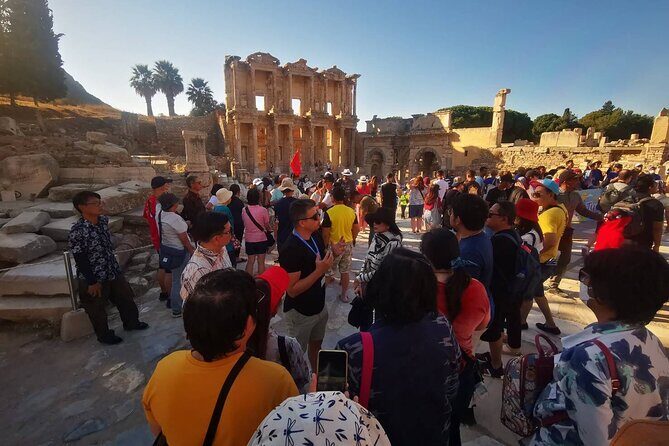
Ephesus is the star of this itinerary, and you’re given about 2 hours inside the ancient city. That’s a good length for a cruise excursion. Too short and you’ll feel like you sprinted through emptiness. Too long and you’ll cook in the heat and lose the story.
Here’s what you can expect to hit:
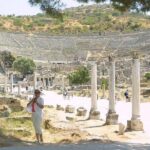
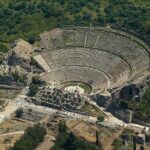
The Great Theater
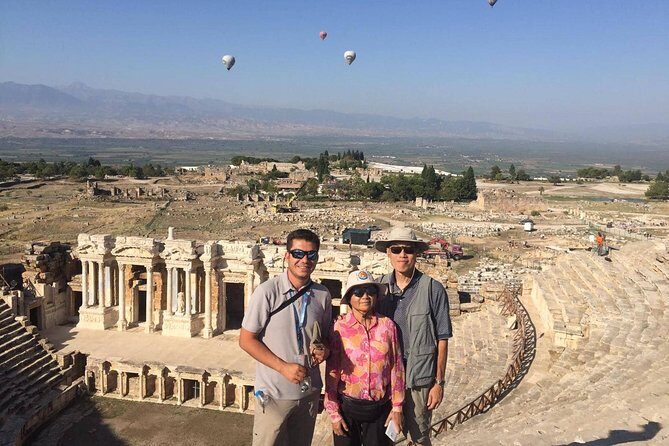
You’ll see the massive venue that once seated over 20,000. Even without attending an event, the size registers fast. It’s also where you can picture the social side of the city—performances, crowds, and public life.
Ancient wheel-mark streets
The tour points out that some streets still show the marks of chariot wheels. This is one of those details that makes you slow down, because it feels immediate. It’s not an abstract “long ago”; it’s a physical trace.
Public Agora
This area is described as the bustling center where St. Paul preached and where Anatolian handicrafts were traded, noted for quality. The Agora stops are especially valuable because they connect religion and everyday commerce. You’re not just viewing monuments; you’re seeing how a city functioned.
Marble Street and the Celsus Library
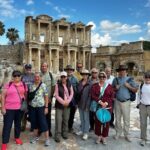
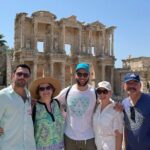
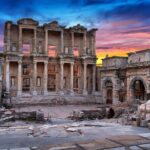
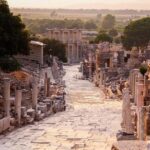
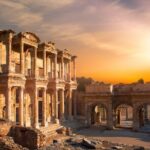
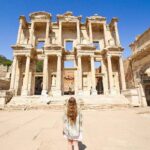
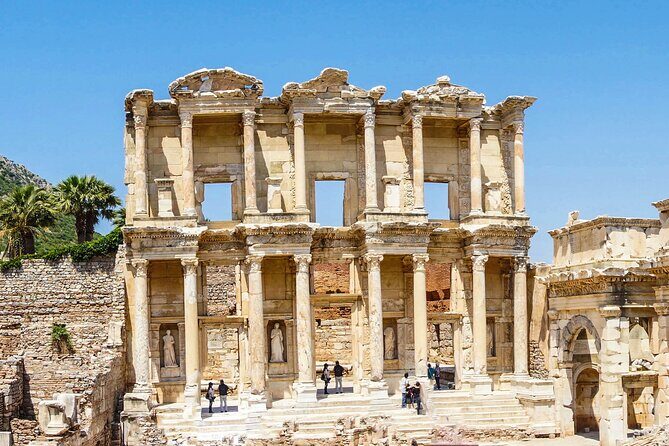
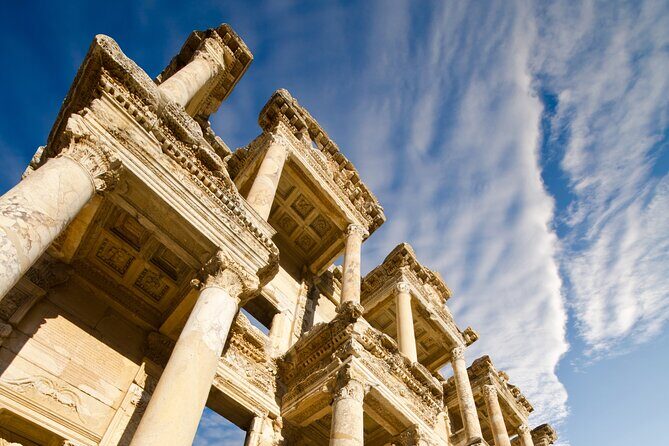
Marble Street leads you to the iconic Celsus Library, described as the third-largest library of the ancient world, with a beautifully restored façade. I like this moment because you get an instant photo subject, but you also get the chance to understand what libraries meant: knowledge, prestige, and public identity.
Other highlights around the route
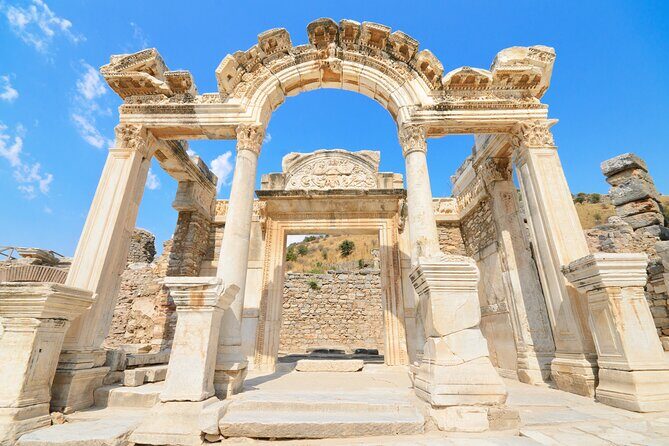
The tour also references additional sites like the Temple of Hadrian, the Trajan Fountain, and the Domitian Temple (the full list is longer, but those named stops are the anchor points). You won’t have time to fully wander each one like you would on a full-day visit, so the key is to let your guide connect the dots—why these structures were where they were and what they signaled.
Two practical considerations:
- Entrance fees are not included for the Ephesus site, so check your total budget ahead of time.
- You’ll want comfortable shoes. Even if the walking feels manageable, ancient surfaces and uneven ground add up quickly.
If you want the most out of Ephesus in limited time, take the guide’s lead on priorities. This itinerary’s strength is choosing the sites that give you the biggest “I understand this city now” payoff.
Lunch in the Countryside Plus Local Craft Advice
Between the major historical stops, you get lunch in the countryside, included in the price. The data also notes that beverages during lunch are not included. I like this meal approach because it removes you from the constant fast-and-flavored-for-tourists cycle. A sit-down lunch, even a simple one, helps reset your day so you can keep enjoying Ephesus instead of just enduring it.
There’s also a stop dedicated to best traditional handicrafts and local insights from your guide. This is less about shopping pressure and more about learning how to spot quality and understand what you’re seeing. If you like bringing home something small but meaningful—textiles, small craft items, or region-specific goods—this can be a helpful part of the day.
One thing to keep your expectations realistic: you’re on a cruise schedule. This isn’t a long market hunt. It’s a guided taste of local craftsmanship paired with practical safety advice and insider recommendations for a hassle-free experience.
Transportation and Timing: The Secret Sauce for Cruise Days
This is where the tour earns its place. You travel in a private, non-smoking, air-conditioned van with a separate driver. That matters because cruise groups often get squeezed into shared shuttles with frequent stops. Here, the transport is more direct and the pacing is designed around you.
Parking fees are included, which removes another annoying surprise. And the most important part is the promised on-time return to Kusadasi Cruise Port. The tour specifically says they monitor multiple cruise ship schedules docking and departing at different times and coordinate return timing so you’re back well before departure.
That guarantee is especially useful in Ephesus because delays happen: traffic, entrance lines, and the simple chaos of many tour groups in the same morning window. The tour’s structure tries to prevent you from being the person who sprints back to the ship with five minutes to spare.
Who This Private Tour Suits Best
This tour fits best if you:
- Want a guided, story-led Ephesus visit without planning logistics
- Are traveling with limited time on a cruise stop and want it done right
- Like a mix of major ruins plus the Basilica of St. John and Meryemana sites
- Prefer private transport and a controlled pace
It may be less ideal if you:
- Want a full-day archaeology deep-dive (this is a focused half day)
- Don’t want to pay extra for entrance fees at each stop
- Have a very slow pace and need extended time at every single site
Price and Value: Is $51.20 a Good Deal?
At $51.20 per person, the cost is relatively straightforward for what you’re getting: private transportation, a professional licensed guide, lunch in the countryside, parking fees, and cruise port pickup/drop-off. When entrance fees are not included, you should expect some add-ons. But even then, the value often comes from the time management: you’re not spending your day dealing with taxis, ticket lines, and schedule uncertainty.
If you’re a solo traveler, the private format is still a strong choice if you care more about comfort and coordination than saving money on a group tour. If you’re traveling in a group of friends, the private style can be even better because you still get the same guide attention while sharing the total cost.
Based on guide feedback and the small set of reviews with strong ratings, the service quality seems consistent—especially the way guides explain and keep things organized. One guide name that stands out from feedback is İbrahim, praised for clear explanations and friendly hospitality. Another name that’s credited with strong help in the Ephesus region is Umut Kurt, noted for professionalism and detailed narrative of the landmarks visited. You can’t guarantee which guide you’ll get, but those names hint at the kind of service you should expect from this provider.
Should You Book This Private Ephesus Shore Excursion?
I’d book this if your goal is a high-impact, half-day Ephesus visit that feels planned rather than improvised. You’ll get the big Ephesus highlights—Great Theater, Agora, Marble Street, and Celsus Library—plus two culturally significant pauses at St. John’s and Meryemana. Add in lunch, air-conditioned transport, and a cruise-safe return plan, and the whole day works better than trying to DIY it with a taxi app and hope.
Skip it if you hate entrance fees or want long time in every single site. Also, if your cruise arrival timing is awkward and you miss the recommended meeting window, you could feel the time pressure.
If you do book, my best practical advice is simple: budget for entrances, wear comfortable shoes, and don’t under-estimate how much you can learn when you let the guide lead you through the story.
FAQ
How long is the Private Ephesus shore excursion?
The tour runs about 5 to 6 hours.
Is this a private tour or a group tour?
It’s a private tour, meaning only your group participates.
What’s included in the price?
Included features are private transportation in an air-conditioned non-smoking van, a professional licensed local guide, lunch in the countryside, parking fees, and cruise port pickup/drop-off with an on-time return plan. The tour also notes that ticket line skipping can be arranged by asking the guide.
Are entrance tickets included for Ephesus and the sites?
No. Entrance fees to museums and sites are not included, though your guide can help arrange tickets so you can skip lines.
Is lunch included, and are drinks included?
Yes, lunch in the countryside is included. Beverages during lunch are not included.
Where do I meet the guide at Kusadasi?
Meet at Kuşadası Cruise Port Taxi tours near Güvercin ada girişi, kale taksi durağı, Camikebir, 09400 Kuşadası/Aydın, Türkiye.
How do I set the correct meeting time for my cruise?
After booking, contact the team with your cruise ship name and your arrival and on-board times. They’ll help you choose the best meeting time.
Will the tour return me to the cruise port in time?
Yes. The tour includes a guaranteed on-time return so cruise passengers return well before the ship’s scheduled departure.
What if there’s bad weather?
The tour notes that it requires good weather. If it’s canceled due to poor weather, you’ll be offered another date or a full refund.