REVIEW · KUSADASI
Ephesus: Full-Day Tour from Kusadasi or Izmir
Book on GetYourGuide →Operated by OKEANOS TRAVEL · Bookable on GetYourGuide
Ephesus feels unreal in daylight. I like how this tour bundles skip-the-line entry with a licensed guide so you spend your time seeing, not waiting. I also like that the day is built around the big emotional hits—Ephesus for the archaeology and the Virgin Mary and St. John stops for the faith side. The main consideration: it’s not for people with mobility impairments or wheelchair users, since it’s a long day of walking on uneven ground.
What you’re really buying here is structure. You get round-trip air-conditioned transportation plus entrance fees handled for Ephesus, the Terrace Houses, the Virgin Mary’s House, and St. John’s Basilica—so your day stays simple. Based on how these tours usually run and what I’ve seen in similar itineraries, the pace can feel tight if you’re hoping for slow, museum-style roaming at every stop.
If you want a one-day “greatest hits” of western Turkey without logistics stress, this works well. If you’re the type who gets cranky when a plan shifts (like language switching or a faster schedule), read closely and show up with the right expectations.
In This Review
- Key things to know before you go
- Kusadasi or Izmir pickup to Ephesus-Selçuk: the part you usually forget
- Ephesus in one day: the marble streets and the big-name sights
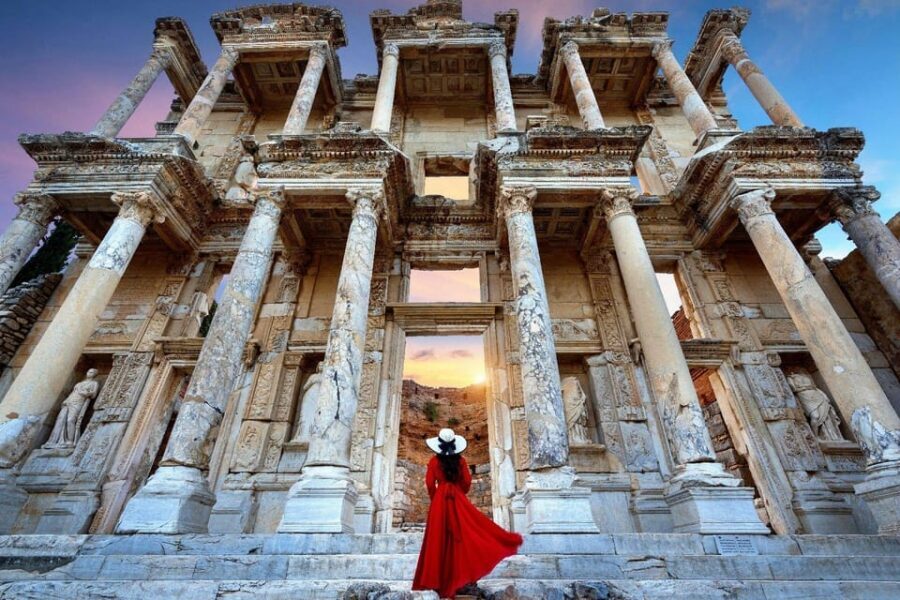
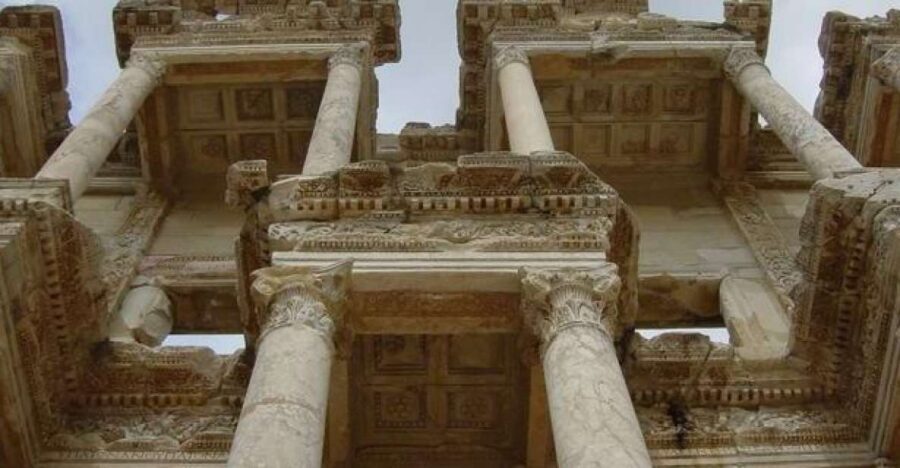
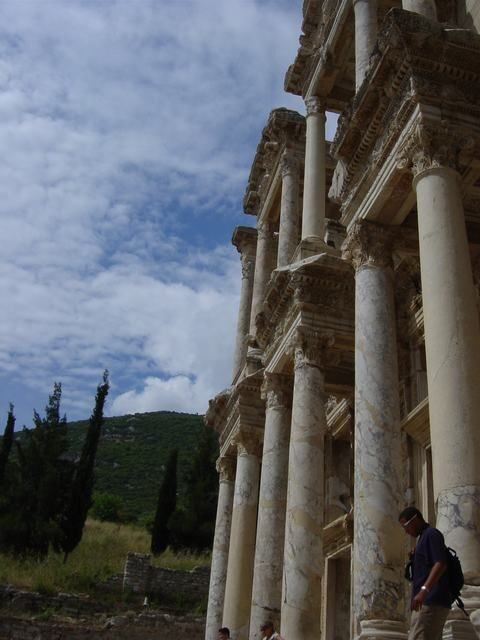
- The Library of Celsus: more than a pretty façade
- The Great Theatre: where crowds and faith history meet
- Hadrian’s Temple, Trajan’s Fountain, and an ancient brothel clue
- Terrace Houses: Roman VIP life under protective canopies
- Virgin Mary’s House on the Solmissos hillside: quiet, faith, and a spring
- St. John’s Basilica: Justinian’s giant church ruins and what to expect
- Guides, language options, and how they change your day
- Skip-the-line and entrance fees: what you avoid by paying for a guided package
- Price and pace: does $160 for 7.5 hours feel fair?
- What to pack for Ephesus heat and stone steps
- Should you book this Ephesus full-day tour?
- FAQ
- How long is the full-day Ephesus tour?
- Where does the tour pick up from?
- Is skip-the-line access included?
- What entrance fees are included?
- What languages are the live guides available in?
- What should I bring with me?
- Is the tour suitable for people with mobility impairments or wheelchair users?
- What is the price per person?
- What is the cancellation policy?
Key things to know before you go
- Skip-the-line access where available helps you get into the ruins faster
- Terrace Houses let you see Roman private life in preserved villas and mosaics
- Virgin Mary’s House adds a quiet mountain-side pause with a wishing wall and spring
- St John’s Basilica closes the day with Justinian-era scale (and possible renovation adjustments)
- Licensed guide explanations make the stones easier to follow and remember
- Full day walking means comfortable shoes are not optional
Kusadasi or Izmir pickup to Ephesus-Selçuk: the part you usually forget
This tour is set up for people coming from Kusadasi or Izmir, with pickup and drop-off included. You can request pickup from a port, airport, or your hotel, which is a big deal if you don’t want to figure out local buses at the start of the day.
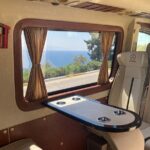
Once you’re moving, you’ll be in an air-conditioned vehicle with a professional driver. That matters because the drive time eats a chunk of your day—so you want it comfortable, not stressful. One small thing I’d keep in mind: most of these setups are efficient, not indulgent. If you like long “sit and stare” breaks, you may find the schedule more structured than you’d prefer.
You can also read our reviews of more tours and experiences in Kusadasi

Ephesus in one day: the marble streets and the big-name sights

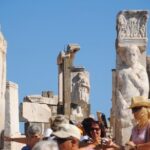
Ephesus is the kind of place where the scale hits you before the details do. You’ll walk through an open-air archaeological zone that’s famous for its street plan, public buildings, and the way so many features still line up visually.
Your guide brings the city to life by connecting sites to what happened there—often tying it to the stories people associate with Ephesus. That’s where a good guide earns their keep. With a licensed professional leading the walk, you’re not just looking at stones; you’re learning how the city functioned.
The Library of Celsus: more than a pretty façade
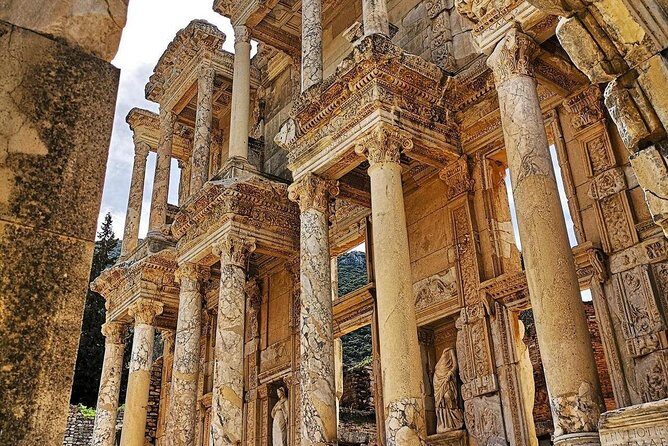
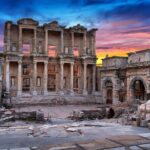
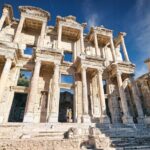
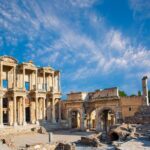
The Library of Celsus is the star photo, but it’s also a practical stop. You get to see the famous reconstructed façade and understand it as a monumental tomb complex, not just a reading room. If you’ve only seen Ephesus from postcards, this is one of the places where it suddenly makes sense why people cared about knowledge, status, and memory.
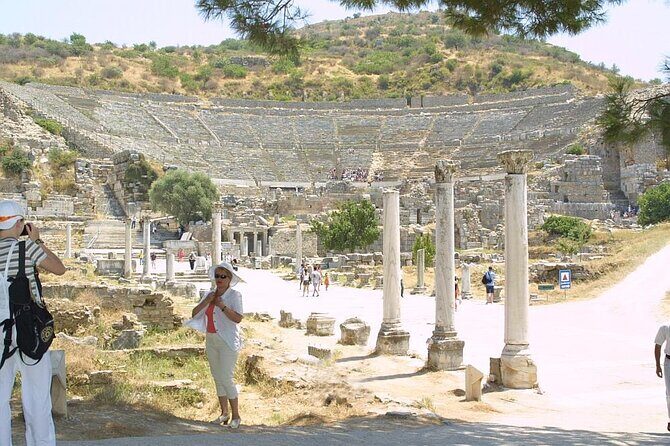
The Great Theatre: where crowds and faith history meet
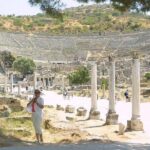
Then you’ll hit the Great Theatre, which once held roughly 24,000 spectators. Even if you don’t know ancient theatre layouts, you can feel how built-for-impact it was—both for spectacle and for speeches.
This stop also connects to early Christianity in the Ephesus story. Your guide may discuss the tradition that St. Paul preached there, giving the theatre a second layer beyond entertainment. It’s the kind of contrast that makes Ephesus more than just ruins.
Hadrian’s Temple, Trajan’s Fountain, and an ancient brothel clue
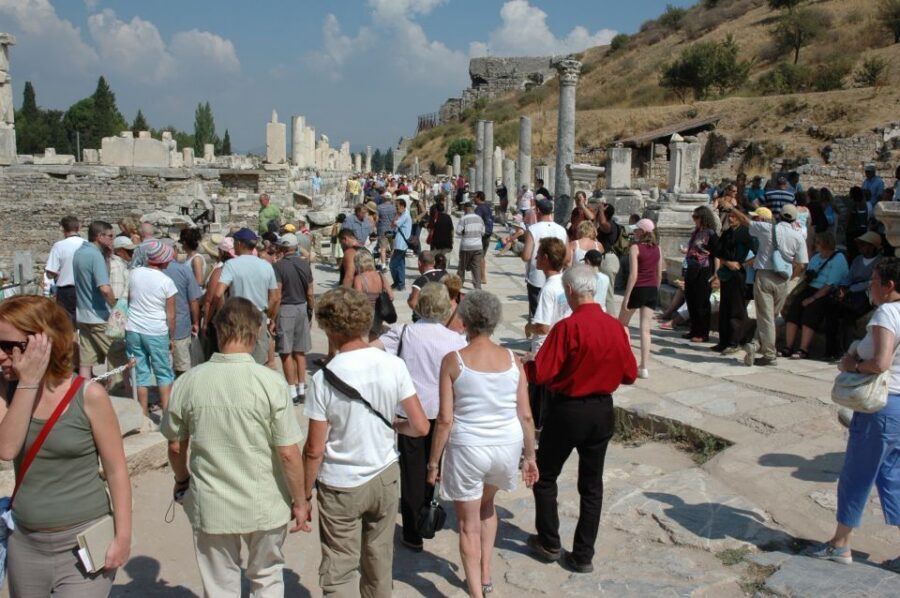
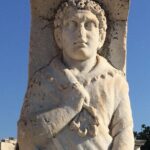
Ephesus is full of engraved stone, but two spots are especially satisfying because they mix art, politics, and everyday life. You’ll see Hadrian’s Temple and admire Trajan’s Fountain, including the relief work and engineering details that made Roman civic life run.
Then there’s a detail that tends to make people sit up: your guide points out what’s described as the world’s first known advertisement—an etched footprint and heart carving pointing to an ancient brothel. It’s a human moment in a place that can otherwise feel monumental and distant. If you like your history grounded in real people and real behavior, this is one of the more fun parts of the day.


Terrace Houses: Roman VIP life under protective canopies
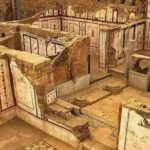
After the public world of Ephesus, the tour shifts to the private side with the Terrace Houses—often described as the elite residential quarter opposite Hadrian’s Temple. This is where you get a different kind of wow: not crowds and monuments, but preserved interior spaces.
What stands out here is the way the houses have been protected so you can actually make sense of daily luxury. You’ll see frescoes and mosaics in preserved rooms, plus details like ancient heating systems. Those are the kinds of features that are hard to imagine if you only see temples and street-level ruins.
It’s also a good reminder that empires weren’t just public buildings and statues. People lived like this—spending on design, comfort, and status.
One note: the Terrace Houses area is indoor-ish and covered, but you’ll still be in a walking day. Comfortable footwear helps here, too, because you’re moving between viewpoints and levels.
Virgin Mary’s House on the Solmissos hillside: quiet, faith, and a spring
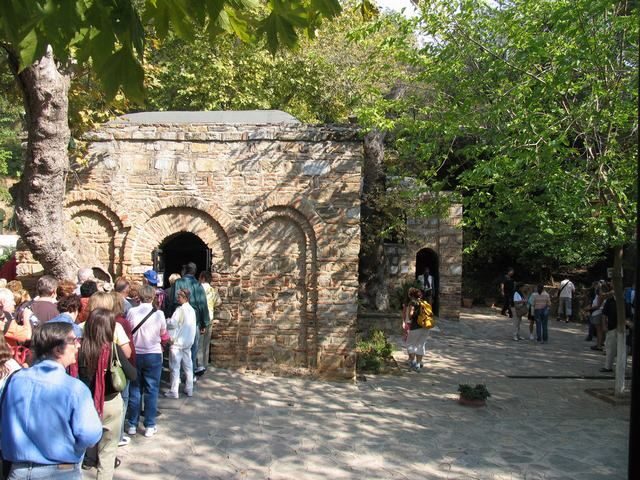
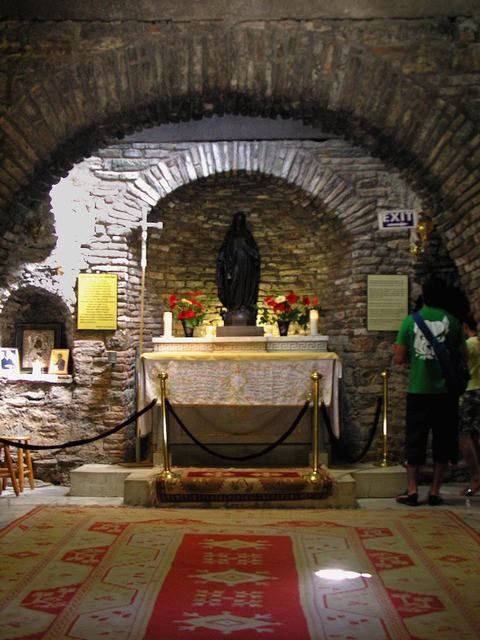
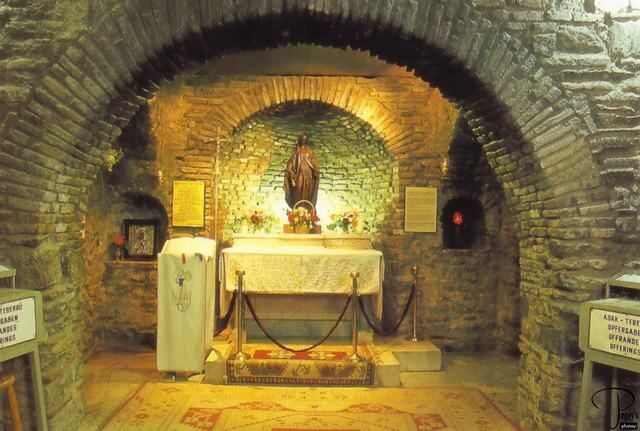
Next comes a big emotional shift. You’ll head up into the Solmissos Mountains to visit the House of the Virgin Mary. Unlike Ephesus’ grand public spaces, this is about calm and reflection.
The house itself is simple stone architecture, which is part of why it feels powerful. The belief here is that Mary spent her final years at this site, and the tour describes it as recognized in the broader Catholic tradition after a papal visit.
You’ll also see a wishing wall draped with prayers from pilgrims, and a natural spring on site that many people believe has healing properties. Even if you’re not religious, this stop works as a cultural landmark: a place where faith, geography, and tradition overlap.
St. John’s Basilica: Justinian’s giant church ruins and what to expect
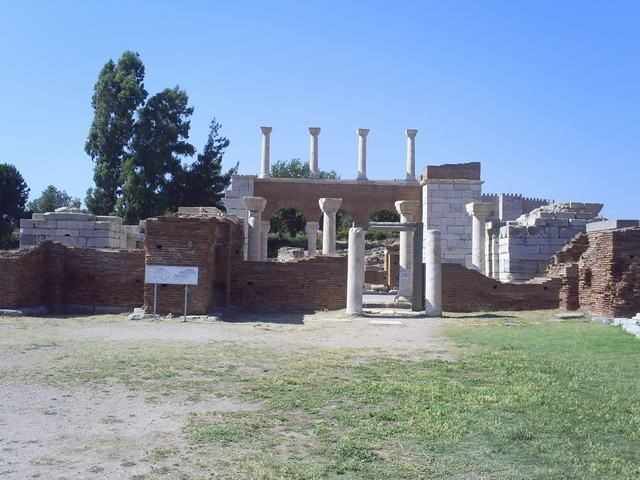
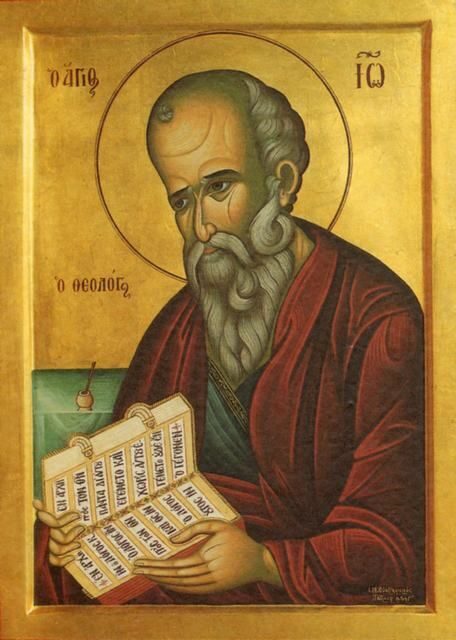
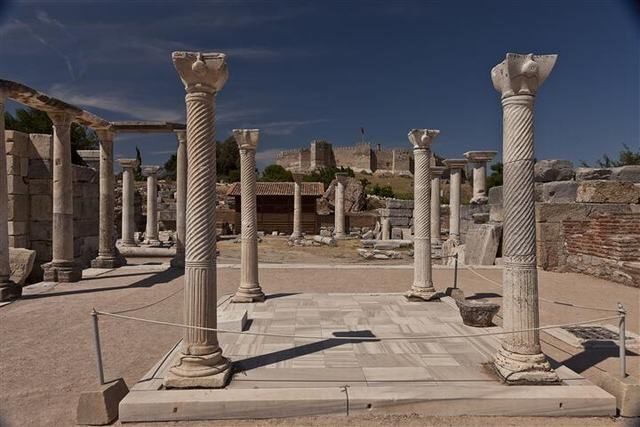
Your final major site is St. John’s Basilica, built by Emperor Justinian in the 6th century over the traditional tomb of John the Apostle. The ruins can look surprisingly “manageable” until you understand what the structure once was: a colossal cross-domed church that rivalled major Byzantine landmarks.
The scale becomes easier to grasp when you stand in the apse area and imagine the full church volume. Your guide’s explanation matters here, because the architecture is the story.
One practical heads-up from real-world experience: if the basilica area is under renovation, your visit may be adjusted. In one case, the stop was handled with an outside visit and a nearby museum instead. So if you’re planning for “perfect conditions,” keep some flexibility.
Guides, language options, and how they change your day
A licensed guide is the difference between a checklist and a meaningful walk. This tour lists licensed professionals for multiple languages, including English, Spanish, Italian, Dutch, French, German, and also options like Greek or Japanese depending on availability.
In one booking, the guide language didn’t match the requested Italian option and the tour shifted to English after a short delay. That’s not something you can control, but it’s a reason to double-check your chosen language before you finalize plans and to remember that availability can affect execution.
On the positive side, guide quality can be excellent. One guide named Ahu was highlighted for detailed historical and religious explanations at each stop. If you get a guide like that, the day clicks into place because they connect architecture to story and context fast.
Skip-the-line and entrance fees: what you avoid by paying for a guided package
This tour includes entrance fees for the major stops: Ephesus, the Terrace Houses, Virgin Mary’s House, and St. John’s Basilica. It also includes skip-the-line access where available, which helps at busy moments.
Why this matters: Ephesus isn’t a quick in-and-out site. You want to lose less time to ticket lines so your hours can go toward the parts you came for. When everything is bundled, you’re also less likely to get stuck hunting for tickets or arguing about where to rejoin the group.
That said, a guided format can still feel time-sensitive. One shorter booking reported a rushed feel and extra time at shops rather than ruins. I can’t promise what happens on every date, but you should choose this tour if you’re comfortable with a set plan and “moving along” rather than lingering for hours in one spot.
Price and pace: does $160 for 7.5 hours feel fair?
At $160 per person for about 7.5 hours, you’re paying for three things: transportation, a licensed guide, and entrance fees. If you were to do the same day independently, you’d likely spend time coordinating tickets, timing public transit, and managing re-entry logistics—especially at Ephesus.
So the value is strongest if:
- you want a guided explanation at every major site
- you prefer not to handle tickets and routing
- you’re starting from Kusadasi or Izmir and want round-trip convenience
The value can feel weaker if:
- you’re hoping for a slower, more flexible pace at every stop
- you get annoyed by schedule adjustments (like language changes or additional stops)
- you’re not prepared for long walking and sun
Pace is the one area where these tours can make or break the day. One review described a shorter, rushed experience and time spent at shops. That’s why I recommend keeping your expectations realistic: plan a “greatest hits” day, not a full archaeology semester.
What to pack for Ephesus heat and stone steps
You’ll do a lot of walking, so bring comfortable shoes—not just cute ones. The tour recommends passport or ID card, sunglasses, a sun hat, and sunscreen.
A camera is also a smart call. Ephesus is full of angles, and the Terrace Houses are easier to photograph when you can move calmly between viewpoints. If you wear sunscreen, reapply; if you forget, you’ll feel it by mid-day.
Also, don’t ignore the terrain. Even if the main paths are clear, you’ll be on uneven surfaces and dealing with stone steps and changes in elevation.
Should you book this Ephesus full-day tour?
Book it if you want an efficient, guided one-day Ephesus experience that hits the biggest monuments and the key faith sites without you doing logistics math.
Skip it or consider another option if:
- you need wheelchair-friendly access (this one isn’t suitable)
- you hate structured schedules and want lots of free time at each stop
- you’re very language-specific and depend on a particular guide language without any flexibility
My bottom line: for most visitors, this is a good value package because it covers the expensive-to-organize parts—transport, guide, and entry fees—and it gives you the story behind Ephesus, not just the scenery.
FAQ
How long is the full-day Ephesus tour?
The tour duration is listed as 7.5 hours.
Where does the tour pick up from?
Pickup and drop-off are available from Izmir or Kusadasi, and you can request pickup at the port, airport, or your hotel.
Is skip-the-line access included?
Yes, skip-the-line access is included where available.
What entrance fees are included?
Entrance fees are included for Ephesus, the Terrace Houses, the House of the Virgin Mary, and St. John’s Basilica.
What languages are the live guides available in?
The tour lists live guide options such as Spanish, English, Italian, Dutch, French, German, and Greek, and it also lists languages like Japanese among the available guide options.
What should I bring with me?
Bring a passport or ID card, comfortable shoes, sunglasses, a sun hat, and sunscreen. A camera is also recommended.
Is the tour suitable for people with mobility impairments or wheelchair users?
No. The tour is not suitable for people with mobility impairments or wheelchair users.
What is the price per person?
The price is listed as $160 per person.
What is the cancellation policy?
You can cancel up to 24 hours in advance for a full refund.