REVIEW · KUSADASI
From Kusadasi: Priene, Miletos, and Didyma Private Day Trip
Book on GetYourGuide →Operated by Visit to Ephesus · Bookable on GetYourGuide
History feels close here, and the drive between sites is part of it. This private day trip links three major Ionia locations—Priene, Miletus, and Didyma—with a live English guide and a comfortable air-conditioned ride.
I especially like that the stops are paced for real viewing time: Priene gives you the sweep of the ruins, Miletus focuses on key structures and mosaics, and Didyma lets you take in the scale of the Apollo sanctuary. I also like the guide-led storytelling, the kind that turns broken stones into an actual place with routines, worship, and civic life.
One thing to plan for: entrance fees are not included, and lunch (included) can be hit-or-miss depending on your preferences. If you’re picky about food, bring a backup snack idea in your day bag.
In This Review
- Key Things That Make This Trip Worth Your Day
- Kusadası Port Pickup and the Pace of an 8-Hour Ancient-Ionia Loop
- Priene’s Theater and Temple of Athena: Small Ruins, Big Atmosphere
- The Turkish Countryside Drive: It’s Not Just Transit
- Miletus and Its Philosopher Fame: Theater, Baths, and Mosaic Floors
- Didyma’s Temple of Apollo: Colossal Columns and the Oracle Story
- The Included Turkish Lunch (and How to Make It Work)
- Price and Value: What $190 Buys You in Real Life
- Who This Day Trip Suits (and Who Should Skip It)
- Book It or Skip It: My Practical Recommendation
- FAQ
- Where do I get picked up?
- How long is the tour?
- Are entrance fees included?
- Is lunch included?
- What language is the guide?
- Is this a private group tour?
- Is the tour suitable for wheelchair users or low mobility?
Key Things That Make This Trip Worth Your Day
- Three sites, one logical route: you see how Ionian cities and sacred life connect
- Live English guide: explanations are built for understanding what you’re looking at
- Well-timed viewing blocks: guided time at Priene, Miletus, and Didyma is balanced
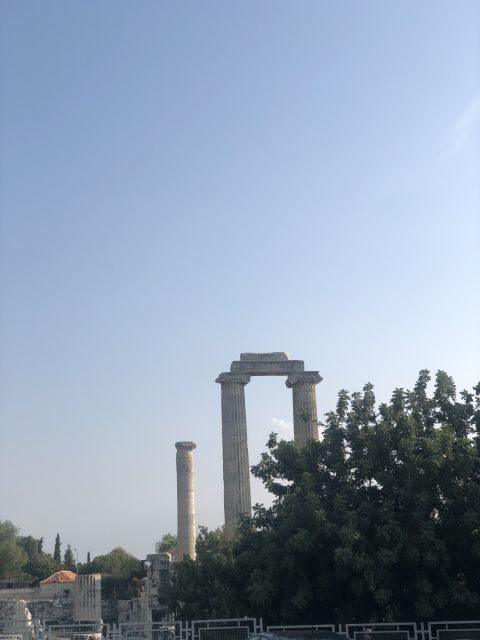
- Didyma’s scale: towering remains of the Temple of Apollo are the main photo moment
- Miletus mosaics and baths: you’re not just ticking off ruins—you get details
- Included Turkish lunch + skip-the-ticket line: practical perks for an 8-hour schedule
Kusadası Port Pickup and the Pace of an 8-Hour Ancient-Ionia Loop
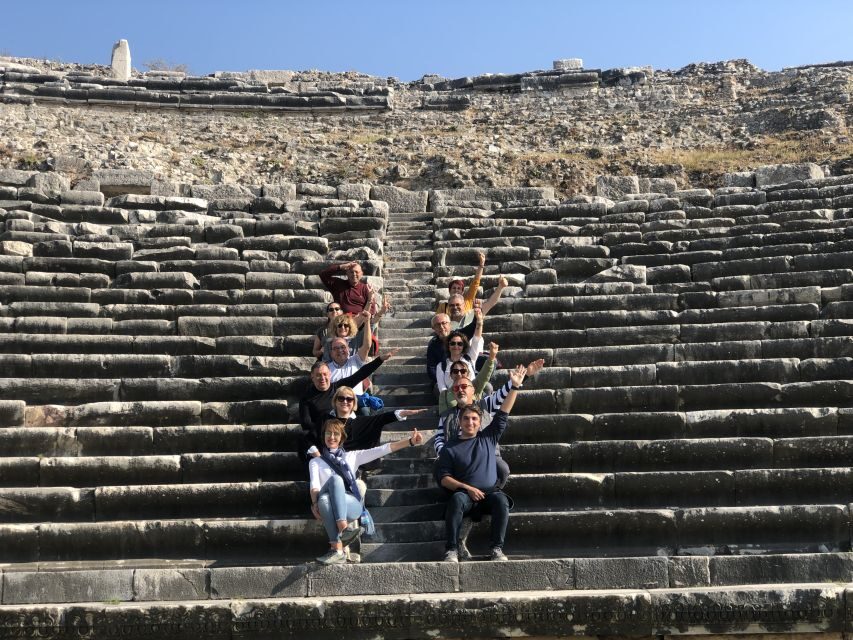
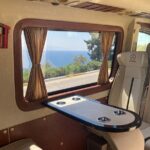
The day starts right where cruise and ferry travelers want it: pickup from Kusadası port with your private driver and guide meeting you on arrival. From there, you’re in an air-conditioned vehicle, which matters in Turkey’s summer heat and bright sun.
The overall pace is an 8-hour sprint through big-name history, but it doesn’t feel like a speedrun. You get a clear structure: one guided segment for Priene, another for Miletus, then the big sanctuary at Didyma, plus a lunch window before the return drive.
Practical tip: this tour isn’t built for sitting around. You’ll be moving between sites, walking on uneven ground, and spending time looking up at ruins. Comfortable shoes are not optional; they’re the difference between enjoying the day and feeling cranky by hour four.
You can also read our reviews of more private tours in Kusadasi
Priene’s Theater and Temple of Athena: Small Ruins, Big Atmosphere
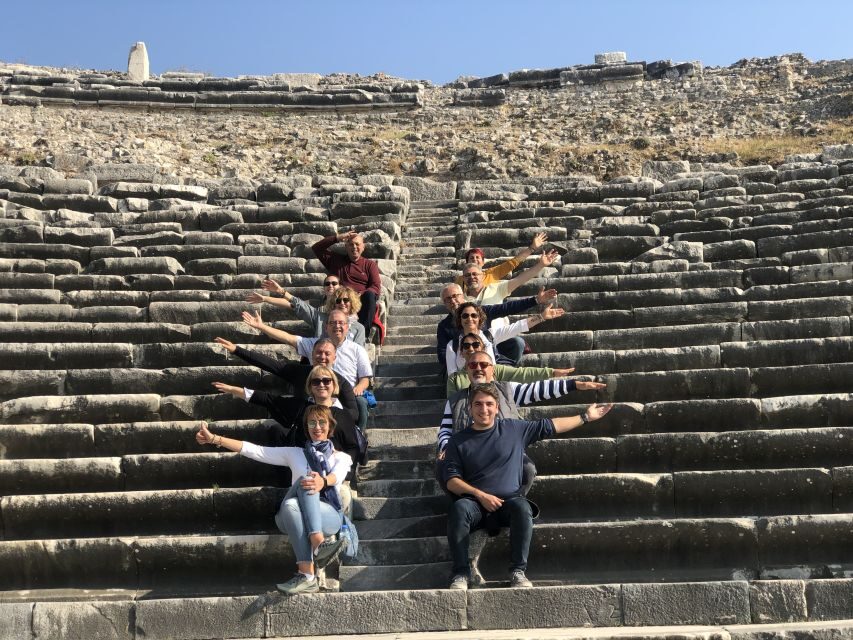
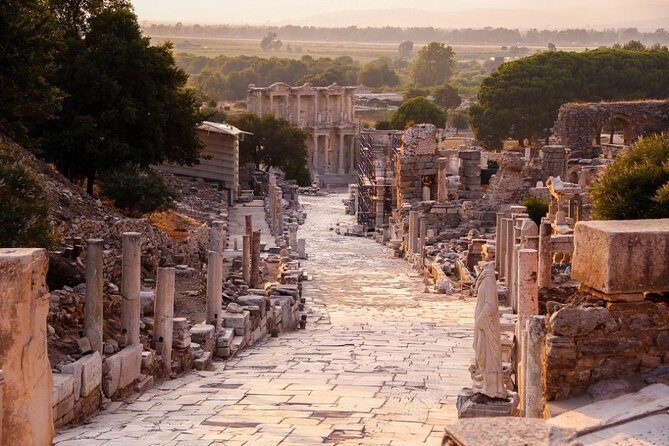
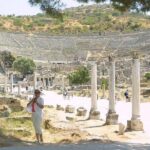
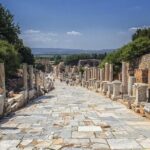
Priene is one of those places where the ruins feel “readable.” You’re not only seeing columns and walls—you’re getting a sense of how the city worked. You arrive to an ancient Ionian setting and then get a guided tour that focuses on major landmarks.
The highlight here is the Temple of Athena. Even in partial remains, you can understand the importance of civic religion and how central temples were to daily life. The tour also takes in key civic buildings, including the Bouleuterion (the council building) and the impressive theater.
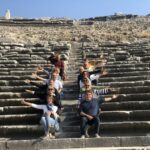
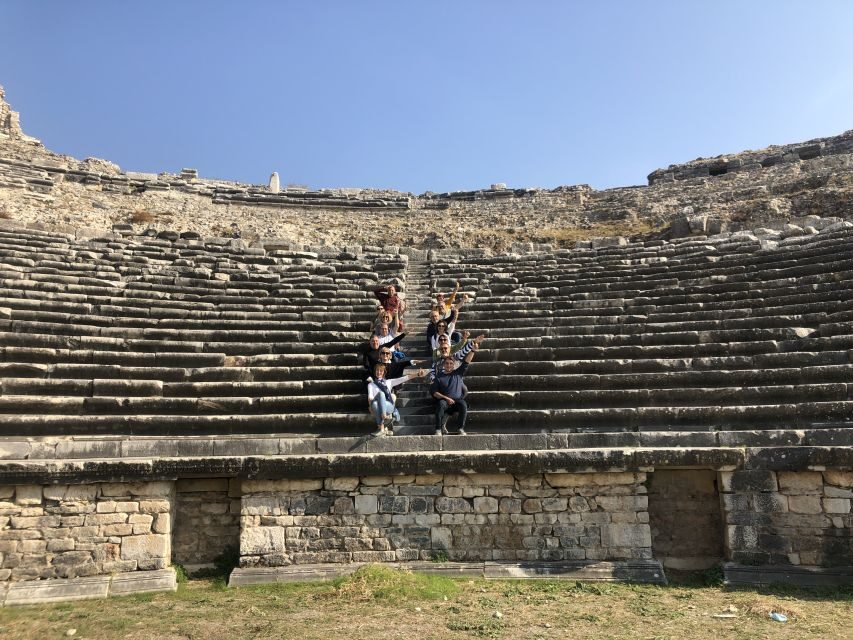
What I like about Priene is how it rewards a patient look. The theater helps you grasp scale: imagine speeches, performances, and the way people would gather for events. Then the surrounding ruins make you think about the planning of the city and the role of public spaces.
Possible drawback: Priene doesn’t have the same “one giant landmark” wow factor as Didyma. It’s more of a mind-set site—best when you enjoy architecture, civic buildings, and how cities were laid out.
The Turkish Countryside Drive: It’s Not Just Transit
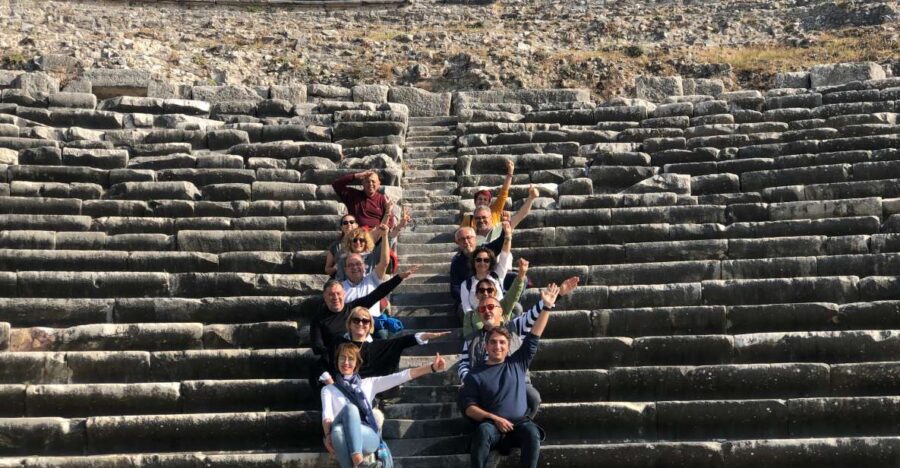
Between stops, you’re not staring at a wall. The route includes scenic countryside driving through the Turkish landscape, and that break matters more than it sounds.
Here’s why: the tour is built around ancient sites that are spread out, so the drive gives your brain a reset between “walking in the past” moments. You get a chance to cool down, take photos without rushing, and refocus before the next guided segment.
Bring a light layer if you run cold in the vehicle’s air-conditioning. Also, if you’re using a phone camera, keep an eye on battery life—sun + moving all day drains power faster than you’d expect.
Miletus and Its Philosopher Fame: Theater, Baths, and Mosaic Floors
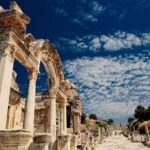
Next up is Miletus, an ancient city known as the birthplace of several renowned philosophers and thinkers. That reputation isn’t just name-dropping. It gives you a helpful lens for understanding why people valued education, public debate, and civic identity in these Ionian cities.
The guided visit focuses on structures you can actually connect to everyday life and public culture. You’ll see the Theater and get a sense of how performances and gatherings worked in a large urban setting. You’ll also visit the Faustina Baths, which help you picture communal routines—baths weren’t just for hygiene; they were social space.
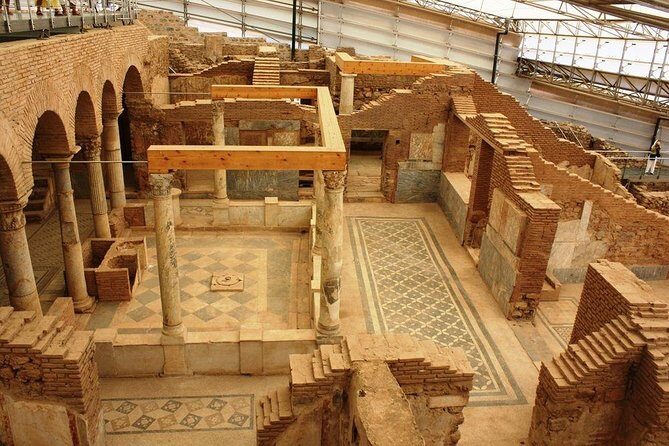
Then comes the part that tends to land hardest for history fans: the mosaic floors of the Delphinium. Even if you’ve seen mosaics before, this is the kind that makes you slow down. You’re looking at craftsmanship that survived long enough to still feel intentional.
This stop is often a “teacher moment” for visitors who thought they were only coming for ruins. When your guide ties the buildings to how people lived—gathered, bathed, watched events—it turns the site into something you can visualize, not just scan.
One thing to plan for: Miletus is a guided block of about 1.5 hours, which is long enough to learn, but not long enough to wander solo for long stretches. If you like extra time for photos, you’ll want your best shots early in the visit while the group is still moving at a steady pace.
Didyma’s Temple of Apollo: Colossal Columns and the Oracle Story
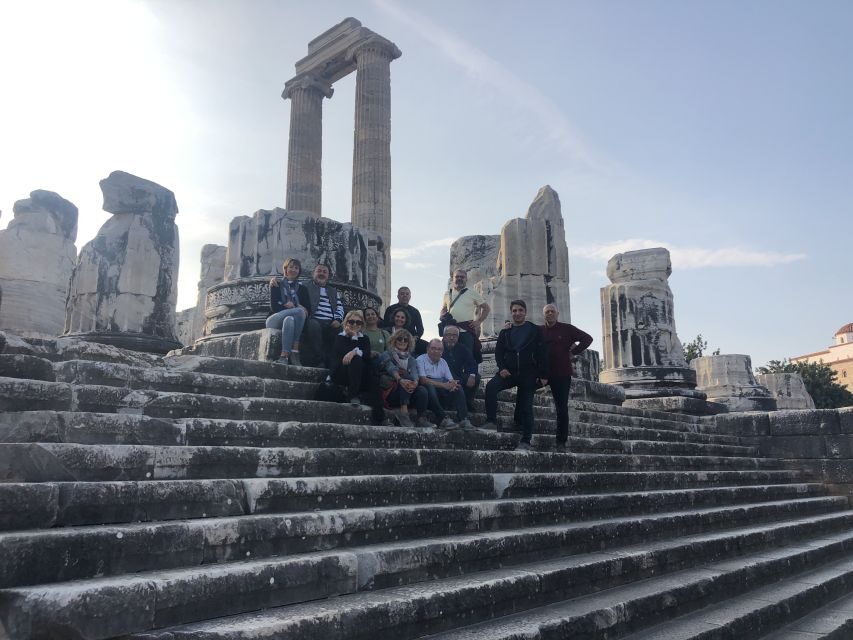
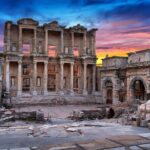
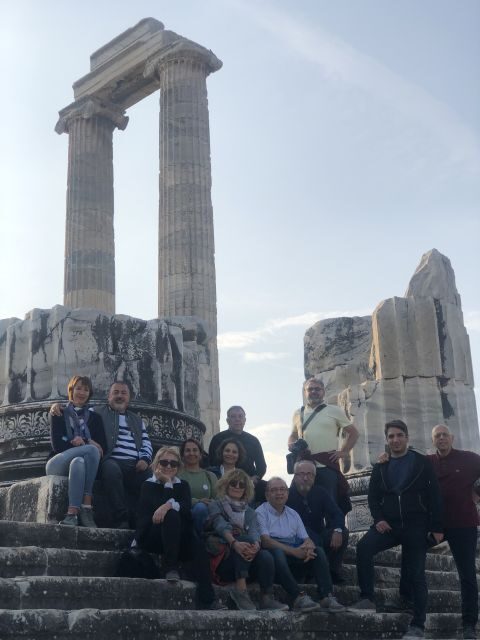
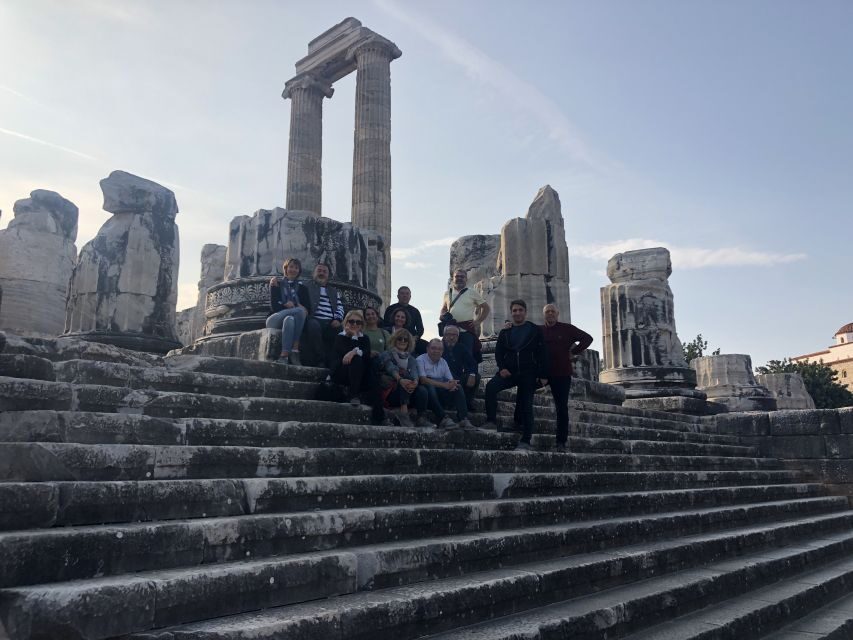
If Priene is “city life,” Didyma is “sacred power.” The big draw is the massive Greek Temple of Apollo—one of the most sacred sanctuaries of the ancient world—and it’s the kind of place where your brain keeps trying to understand scale.
Your guided tour covers the ruins and the remaining monumental columns. Even with what’s missing, the architecture is unmistakably Hellenistic in feel, and the craftsmanship shows in the surviving elements.
The guide also brings in the oracle angle: this was a site where the oracle operated, with stories and rituals tied to the sanctuary. That matters because temples like this weren’t just worship spaces; they were places where people sought guidance and meaning.
What I like about Didyma for a full-day format is that it gives you a clear emotional peak. After Priene and Miletus, you get a completely different atmosphere—more monumental, more “this mattered to the biggest questions in life.”
Practical note: Didyma is outdoor time. Bring sunscreen and shade protection. A sun hat helps a lot because you’ll likely look up, and the sun hits from angles you don’t expect.
You can also read our reviews of more tours and experiences in Kusadasi

The Included Turkish Lunch (and How to Make It Work)
Lunch is included, and you have about an hour at Didyma for it. That schedule makes sense: it keeps you from adding extra driving time just to eat, and it lets you stay in the site area while you recharge.
Still, food preferences are personal. One of the concerns raised by past guests is that they would remove lunch from the tour and lower the price, which tells you something important: if you’re a picky eater, lunch might not be the main reason to book this day.
My practical advice: treat lunch as a bonus, not a guarantee of your dream meal. If you have dietary needs or strong preferences, consider bringing a small snack you’ll enjoy so you’re not stressed if lunch isn’t exactly your style.
Price and Value: What $190 Buys You in Real Life
At $190 per person for an 8-hour private day trip, the value depends on what you’d otherwise spend to DIY it.
Here’s what your money covers:
- Pickup and drop-off at Kusadası port
- A private driver and air-conditioned vehicle
- A live English guide
- Lunch
- The advantage of skipping the ticket line (while entrance fees themselves aren’t included)
If you’re traveling with a group or you want someone else doing the routing and timing, the price can feel reasonable fast. Three sites in one day is tricky without a plan, and that’s where the private logistics matter.
If you’re the type who enjoys independent exploring and you’re comfortable hiring your own transport, you might spend less on transportation overall. But you’d lose the guide’s explanations and the smooth “move to the next stop” rhythm.
Entrance fees are the one cost you should budget separately. If you don’t like surprise costs, look up the expected entry totals before you go so you can decide if you’re still comfortable with the full day budget.
Who This Day Trip Suits (and Who Should Skip It)
This tour is built for people who like structured viewing with a guide, not long solo wandering. You’ll benefit most if you enjoy:
- Architecture and ruins with readable layouts
- Learning how ancient cities functioned (temples, council space, theaters)
- Hearing the oracle and sanctuary story at Didyma
It’s also a good option if you’re short on time in the area but want more than one site. A single-day combo can be the difference between seeing “one ruin” and seeing a connected picture of Ionia.
Who should be cautious: it’s not suitable for wheelchair users, and it’s not designed for low-fitness visitors or pregnant women. The ground at ancient sites can be uneven, and the day involves walking plus sun exposure.
If you’re traveling with limited mobility, you may find another option better suited to your pace.
Book It or Skip It: My Practical Recommendation
I’d recommend booking this tour if you want three major Ionia sites in a single day with a live English guide and you value a smooth private experience from Kusadası port. It’s especially good for people who like explanations, not just photos, and for history-minded travelers who enjoy mosaics, civic buildings, and the big sanctuary of Apollo.
I’d hesitate if you strongly dislike paying extra entrance fees or you know you’ll be disappointed by lunch. Also, if you need very slow pacing or wheelchair-friendly access, this one isn’t the right match based on the tour’s stated limitations.
If your goal is a well-organized day that connects Priene, Miletus, and Didyma into one clear story, this is a solid choice.
FAQ
Where do I get picked up?
You’ll be picked up at Kuşadası port.
How long is the tour?
The total duration is 8 hours.
Are entrance fees included?
No. Entrance fees are not included.
Is lunch included?
Yes. Lunch is included, served during the time at Didyma.
What language is the guide?
The live guide is English.
Is this a private group tour?
Yes. It’s a private group experience with a driver and guide.
Is the tour suitable for wheelchair users or low mobility?
No. It is not suitable for wheelchair users, and it’s also not recommended for people with low fitness or for pregnant women.