REVIEW · KUSADASI
From Kusadasi and Selcuk: Pamukkale and Hiearapolis Tour
Book on GetYourGuide →Operated by Castle Travel · Bookable on GetYourGuide
Pamukkale looks unreal, like someone dusted the hills with snow. What I like most is the small-group feel (up to 14) and the live English guidance that turns the site into an easy-to-follow story. The main trade-off is time: the Pools time is limited inside a full 10.5-hour day, so you’ll want to plan your swim and photos carefully.
This is a UNESCO stop for a reason. You’ll pair ancient Hierapolis sights (Roman streets, gates, and a massive necropolis) with the signature calcium terraces and warm mineral pools that people come for year after year. If you have mobility limits or medical concerns listed by the operator, this may not be the right match.
In This Review
- Key highlights to know before you go
- The 10.5-hour loop: why the timing works (and when it doesn’t)
- Pickup to Atça: the drive that sets the mood
- Hierapolis first: necropolis, gates, and Roman streets
- Pamukkale’s white terraces: the Sacred Pool moment
- Cleopatra’s Antique Pool add-on: worth the extra 6 Euro?
- Lunch, breaks, and the rhythm of the day
- The photography advantage: where you’ll actually get good shots
- What to bring: your checklist for terraces and warm water
- Small group and guide style: what you can expect from English commentary
- Price and value: is $118 a good deal for Pamukkale and Hierapolis?
- Who should book this tour (and who should skip it)
- Should you book? My practical call
- FAQ
- How long is the Pamukkale and Hierapolis tour from Kuşadası and Selçuk?
- What does the tour include in the price?
- Is lunch included, and what kind of break do you get?
- Do I have to pay extra for Cleopatra’s Antique Pool?
- Is swimming allowed at Pamukkale?
- Where are the pickup and drop-off points?
- What should I bring for the day?
- Is the tour wheelchair accessible?
- Are drones and tripods allowed?
- Who should not join this tour?
Key highlights to know before you go
- UNESCO day that pairs Hierapolis and Pamukkale in one smooth route
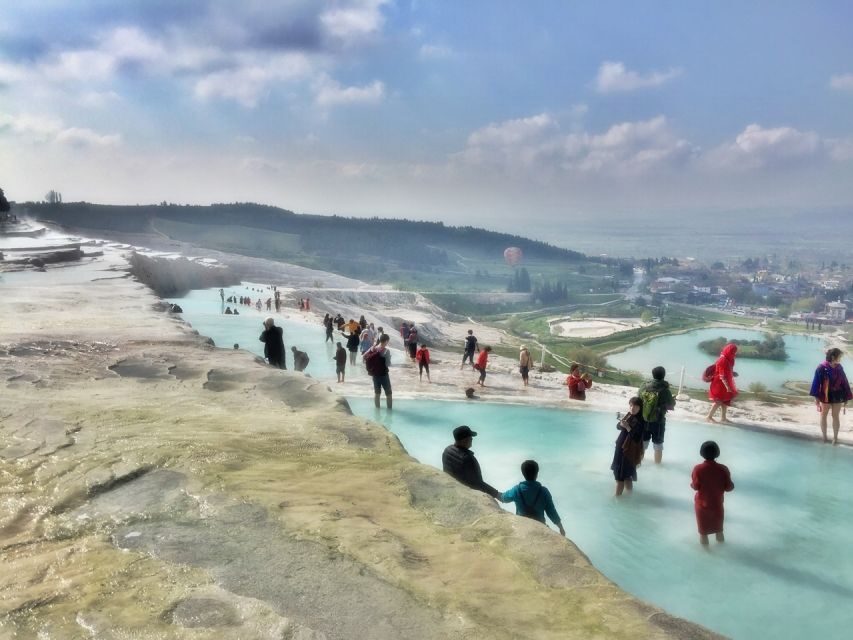
- White calcium terraces and warm pools, including time at the Sacred Pool zone
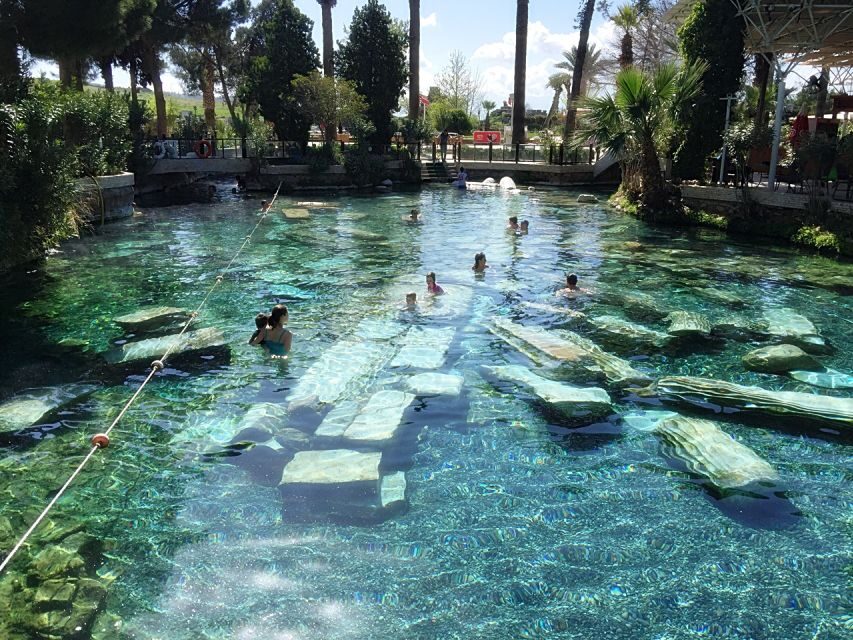
- Optional swim time at Pamukkale, with additional access for Cleopatra’s Antique Pool (6 Euro)
- Photography-friendly viewpoints and a guided walk that helps you know where to look
- Small group and English live commentary, with a named-constant style you’ll feel in the pacing
- Lunch included, plus scheduled breaks on the drive through Meander Valley
The 10.5-hour loop: why the timing works (and when it doesn’t)
From Kuşadası or Selçuk, your day starts with hotel pickup and then the long, scenic road toward the Pamukkale area. Expect about 3 hours of driving each way, with a midway break and photo stops, plus another stretch of road-time after Pamukkale. This is a full-day excursion, not a slow wander.
Here’s the good part: the drive through Meander Valley, mountains, farming land, fruit tree gardens, and small villages helps you build context before you reach the UNESCO sites. You’re not just being transported; you’re moving through the setting that shaped these towns and the thermal culture here.
The consideration is straightforward. You only get about 1 hour at Hierapolis and about 2 hours at Pamukkale, so you can’t do everything deeply. If your priority is extra pool time (or lots of photos), go in with a plan: terrace walk first, swim second, then photos, instead of trying to fit all three at once.
You can also read our reviews of more tours and experiences in Kusadasi.

Pickup to Atça: the drive that sets the mood
Your pickup options include Kuşadası and Selçuk, with an additional stop at Kirazlı. That’s a helpful spread if you’re staying around the coast or closer to Selçuk’s central area.
On the road, the tour includes scheduled stops so you’re not stuck on a bus for the entire day. You’ll pause at Atça (about 30 minutes), and later you’ll stop for a longer break and lunch (about 80 minutes) at a roadside stop area, plus an additional photo stop (around 20 minutes).
This matters more than it sounds. A lot of people underestimate how tiring ancient sites can be, even without climbing mountains. Those breaks help you keep energy for the walking and the water time.
Hierapolis first: necropolis, gates, and Roman streets
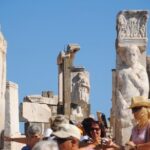
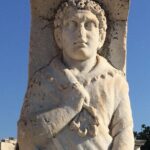
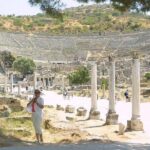
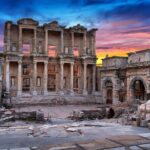
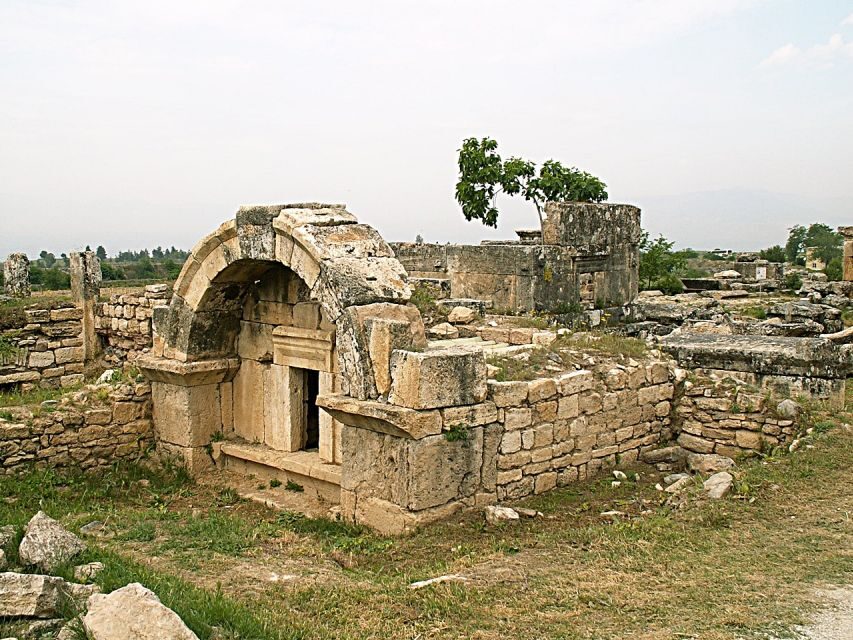
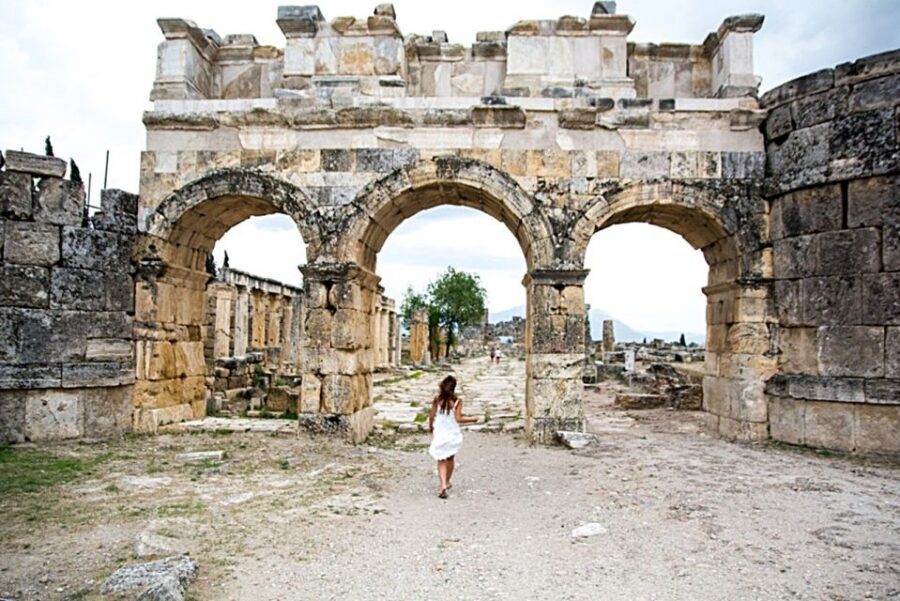
Hierapolis is where the day becomes more than just sightseeing. You start with time at the Necropolis (cemetery), described as one of the biggest ancient cemeteries in Anatolia, with around 1,200 graves. It’s the kind of place where you quickly realize you’re not looking at ruins that happened by accident—this was a major city with a long-term plan.
From there, the walk continues through major anchors of the site: the Roman Bath, the Domitian Gate, the Main Street, and the Byzantian Gate. The pacing here is designed so you can see the key structures without feeling rushed in the wrong way.
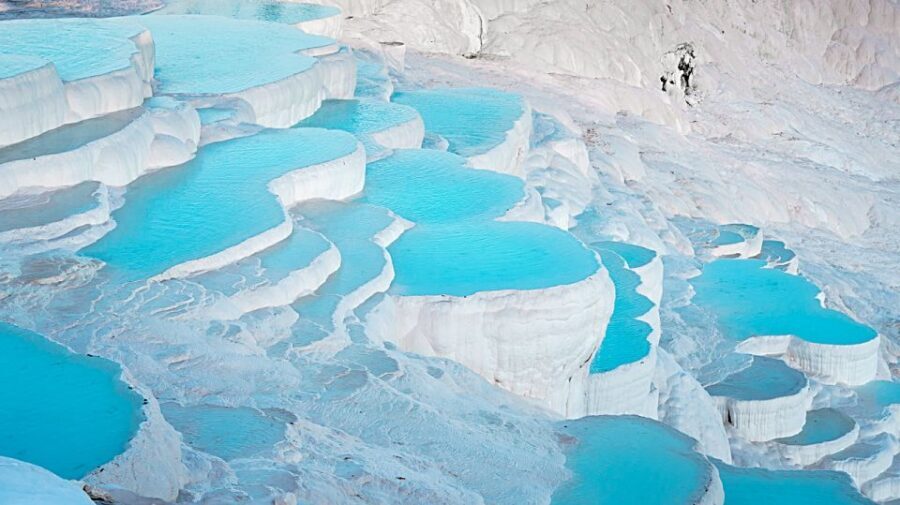
Then comes the natural side. You’ll take a short walk from the ancient sections toward the warm water terraces—formed by running warm water rich in calcium. This shift—from stone walls and gates to steaming mineral formations—is one of the best “mental reset” moments of the entire tour.
Practical note: the terrain can be uneven, and you’ll likely mix walking with time on surfaces near water. If you’re dealing with back issues or other limitations the operator flags as not suitable, this portion can feel harder than you expect.
Pamukkale’s white terraces: the Sacred Pool moment
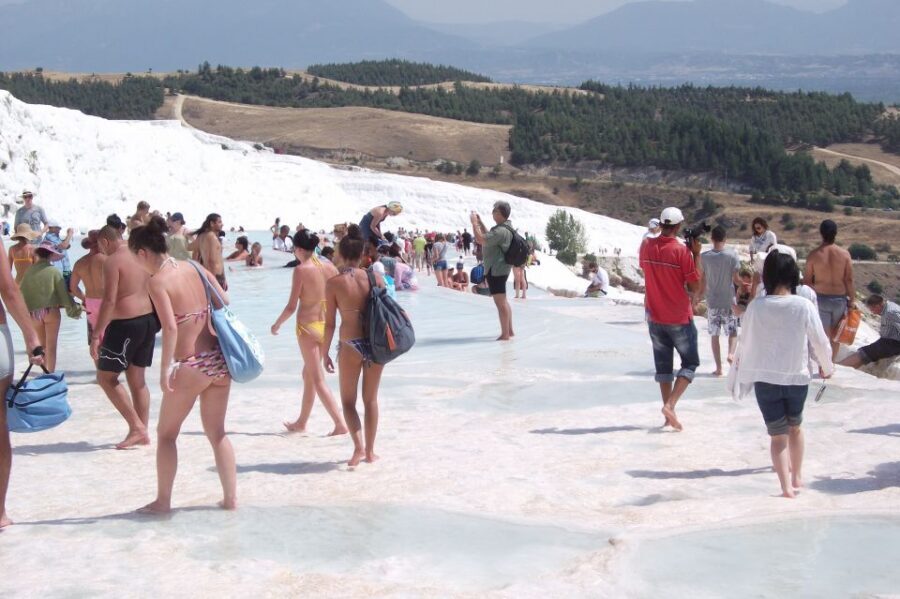
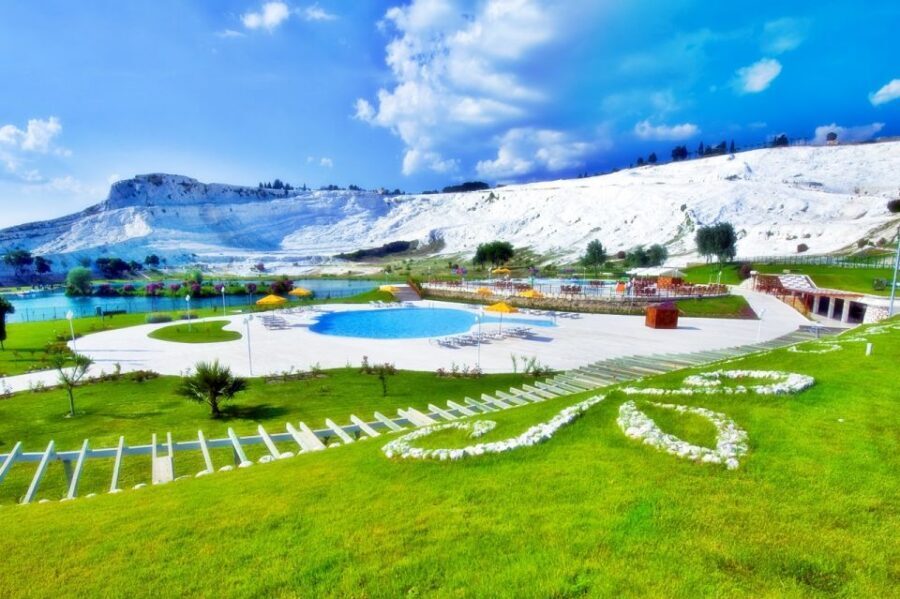
Pamukkale’s calcium terraces are the headline, but the best experience usually comes from how you use your time. The tour is built around both terrace exploring and a top pool stop: the Sacred Pool, where you can swim in the effervescent warm waters.
The water composition is part of the mystique: it’s described as having high natural radioactivity and a mineral mix including calcium bicarbonate, calcium sulfate, magnesium, and carbon dioxide. The advice is simple and very practical: after your swim, dry off and let the minerals do their thing.
What you’re paying for (beyond the admission and logistics) is guidance on what to focus on. A strong English guide helps you recognize which terrace areas are most photogenic and where the water access makes the most sense—so you’re not wandering around looking for the best angle after you’ve already tired yourself out.
Cleopatra’s Antique Pool add-on: worth the extra 6 Euro?
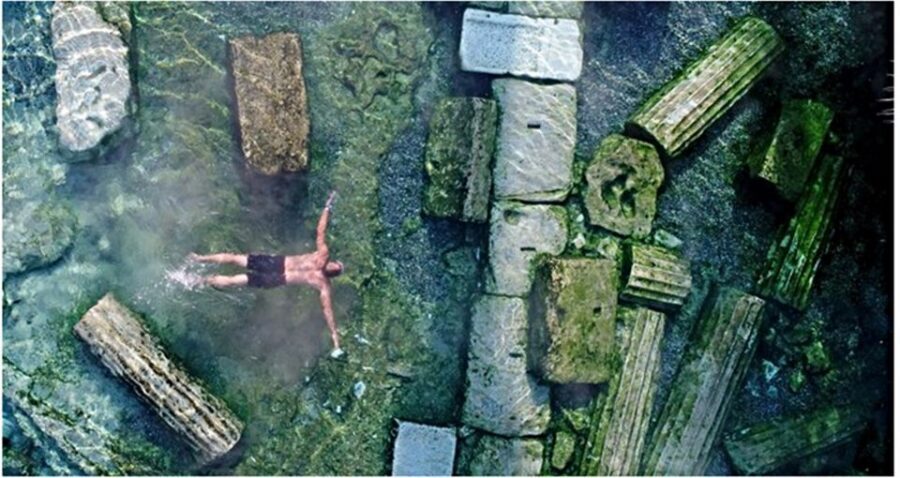
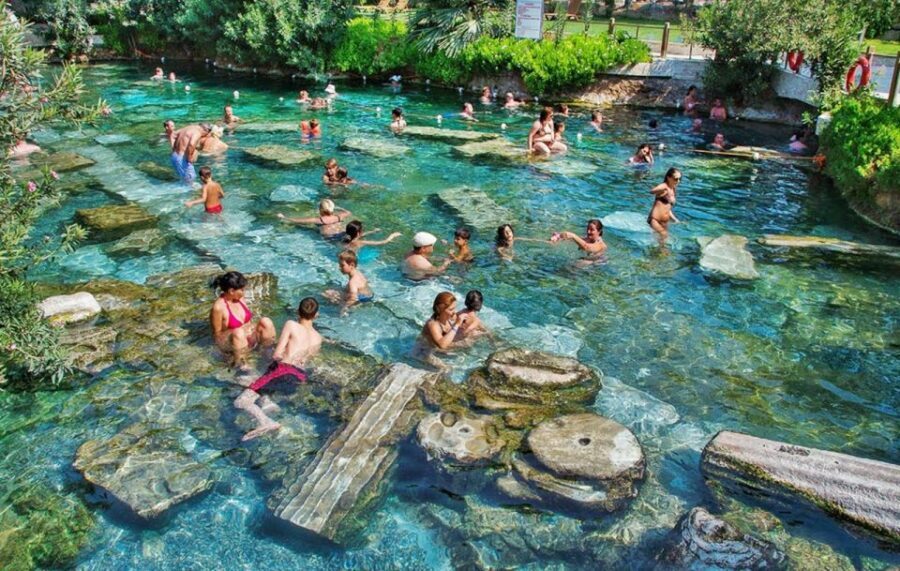
You can include access to Cleopatra’s Antique Pool for an additional 6 Euro. The tour explicitly calls this out as optional, which is helpful because not everyone wants to spend extra time in a deeper pool setting.
In real-world terms, this add-on is best for you if:
- you’re in Pamukkale for a first visit and want the signature swim people talk about,
- you’re comfortable in water and plan to use the time right.
If you’re more interested in the terrace walk and less interested in paid pool access, you can still enjoy Pamukkale’s main texture and color without feeling like you missed the big thing. The decision mostly comes down to how you like to spend time: photos and walking, or longer time in the water.


Lunch, breaks, and the rhythm of the day
Lunch is included, and it’s a real plus for value. You’ll get about 80 minutes for lunch, which is long enough to eat without rushing and still return to the day feeling human.
The bigger rhythm point is how the tour balances structured viewing and free time. You’ll have guided viewing in Hierapolis, then free time at Pamukkale to explore at your own pace and do your swim and snorkeling.
That balance is why the tour works for different travel styles. If you like having someone explain what you’re seeing, the live English commentary helps a lot. If you prefer freedom, the free time lets you repeat the terrace view from different angles or linger where the light looks better.
One pacing reality to remember: because this is a full circuit (and driving takes time), your free time is not designed for marathon exploring. You’ll want your priorities ready when you arrive.
The photography advantage: where you’ll actually get good shots
Pamukkale and Hierapolis are made for photos, but good results depend on timing and access. This tour’s advantage is that you’re given structured stops and enough freedom to take the classic terrace shots without turning it into a frantic search.
A few practical tips that will make your photos better:
- Plan to photograph the terraces first, then swim. Your camera (and your brain) will thank you later.
- Bring sunglasses and sun protection. Bright glare off white terraces can mess with both comfort and phone screens.
- Wear comfortable shoes. You’re walking on ancient, often slippery-feeling surfaces, and you’ll move faster when you’re not worrying about footing.
If you love detail shots—textures, mineral patterns, gate stones—your guided time helps you know what’s worth close-up attention rather than taking the same wide terrace shot over and over.
What to bring: your checklist for terraces and warm water
For a day like this, packing smart is half the success.
Bring:
- Comfortable shoes
- Sunglasses and sun hat
- Swimwear, plus a towel
- Sunscreen and beachwear
Also keep in mind the tour rules: drones and tripods aren’t allowed. If you’re tempted to bring photo gear, keep it lightweight and simple.
If you plan on the optional pool, your swimwear and towel become non-negotiable. Even if you decide not to swim, the heat and mineral water areas can still mean you’ll get mist or splash. Dry off matters.
Small group and guide style: what you can expect from English commentary

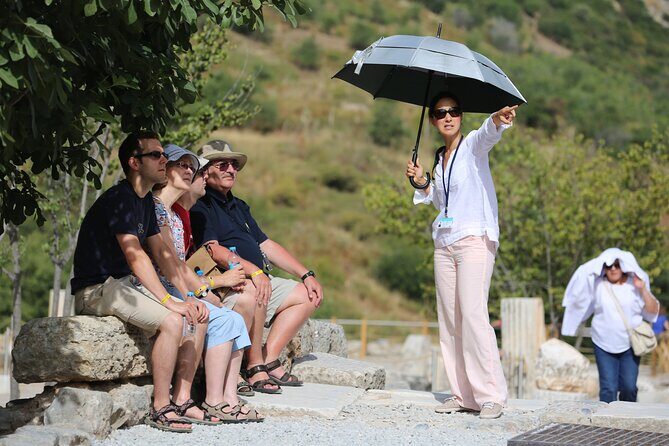
This tour runs as a small group limited to 14 participants, and that’s a big deal. You move faster between key sights, and you’re more likely to feel like the guide can manage the group without turning into a shouting match.
You’ll also get live tour commentary in English. In recent experiences, guides have included names like Yetkin, Mustafa, Harun, Ali, and Resit Yildirim. What matters for you is the style: guidance that explains what you’re seeing without drowning you in lectures.
It’s also the kind of day where good guidance makes the difference between feeling rushed and feeling oriented. A guide who points out what to look for at gates, streets, and the terrace water access saves you time and helps you enjoy both ancient stone and mineral magic.
Price and value: is $118 a good deal for Pamukkale and Hierapolis?
At $118 per person for a 10.5-hour day, the value comes from what’s bundled. You’re paying for:
- Guided tour of both Pamukkale and Hierapolis
- Admission fees
- Lunch
- Roundtrip transportation from most Kuşadası and Selçuk hotels
- English live commentary
- Skip-the-ticket-line service
The main extras are drinks and Cleopatra’s Antique Pool (6 Euro). If you plan to swim in the Cleopatra access pool, budget that add-on into your true cost.
So is it worth it? For most people, yes—especially if you don’t want to negotiate transport on your own and you want someone to help you get the most out of limited site time. If you’re a solo adventurer who enjoys DIY travel planning, you might be able to build a cheaper route. But the bundled day is designed for convenience and a clear order: Hierapolis first, then Pamukkale.
Who should book this tour (and who should skip it)
This experience is a strong fit if:
- you want one-day access to both Hierapolis and Pamukkale,
- you like guided context but still want free time to explore,
- you care about great photo chances without turning it into a whole-day research project.
It’s not a good fit if:
- you have back problems,
- you have respiratory issues,
- you have pre-existing medical conditions,
- you’ve had recent surgeries.
Wheelchair accessibility is listed as available, which can make a difference for mobility planning, but you should still consider the real walking and water-area movement involved.
If you’re traveling with kids, there’s a policy detail to know: children under 5 are complimentary, and children 12 and under must be accompanied by an adult.
Should you book? My practical call
I’d book this tour if you want a structured, time-efficient day that still leaves room for your own pace at Pamukkale. The pairing of UNESCO Hierapolis + the white calcium terraces is exactly the sort of “two icons in one day” value that saves you energy and planning time.
Skip it if you’re hoping for a slow, lingering thermal-therapy experience or you’re not comfortable with the walking surfaces and full-day schedule. With only about 1 hour at Hierapolis and 2 hours at Pamukkale, you’ll want to use your time intentionally.
If you do book, pack for sun and water, pick your swim plan early, and let the guide set the pace in the ancient sections—then enjoy the terraces at your own speed.
FAQ
How long is the Pamukkale and Hierapolis tour from Kuşadası and Selçuk?
The total duration is about 10.5 hours.
What does the tour include in the price?
You get a guided tour of Pamukkale and Hierapolis, admission fees, lunch, roundtrip transportation from most Kuşadası and Selçuk hotels, and live English commentary.
Is lunch included, and what kind of break do you get?
Lunch is included, and you’ll have about 80 minutes for lunch during the day.
Do I have to pay extra for Cleopatra’s Antique Pool?
Yes. Cleopatra’s Antique Pool costs an additional 6 Euro and is not included in the base price.
Is swimming allowed at Pamukkale?
You’ll have time for swimming in the Pamukkale pool areas, and you can also include the optional Cleopatra’s Antique Pool access for the additional fee.
Where are the pickup and drop-off points?
Pickup includes Kuşadası, Selçuk, and a Kirazlı location, and drop-off also includes those same areas.
What should I bring for the day?
Bring comfortable shoes, sunglasses, a sun hat, swimwear, a towel, sunscreen, and beachwear.
Is the tour wheelchair accessible?
Yes, wheelchair accessibility is listed.
Are drones and tripods allowed?
No. Drones and tripods are not allowed.
Who should not join this tour?
It is not suitable for people with back problems, respiratory issues, pre-existing medical conditions, or those who’ve had recent surgeries.