REVIEW · KUSADASI
Ephesus Small Group Day Tour from Kusadasi
Book on Viator →Operated by Alaturca Ephesus · Bookable on Viator
Ephesus in one long, focused morning. This small-group day trip packs the UNESCO sights you came for—Ephesus ruins, the House of the Virgin Mary, and a Selçuk architecture stop—plus hotel pickup and a guided route you can follow without stressing.
I especially like the balance of big monuments and street-level details, like the marble Arcadian Way and glimpses into the ancient city’s everyday life. The other clear win for me is value: you get a guided day that includes lunch, entrance fees, and transportation rather than a pile of add-ons.
One thing to weigh: this kind of tour can include extra retail stops for carpets and leather, and if you strongly dislike sales pressure, you’ll want a simple plan for how you’ll handle those stops.
In This Review
- Key things I’d watch for on this Ephesus day tour
- Morning pickup, air-conditioned comfort, and why the group size matters
- Entering Ephesus: Celsus, Theatre views, and the Roman city details that stick
- The Great Theatre (and why its scale hits hard)
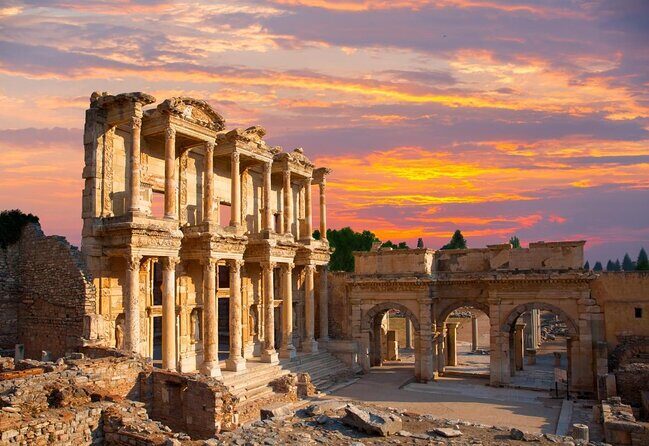
- Celsus Library: the facade trick and the Four Virtues
- Odeion and Temple of Hadrian: smaller spaces with big meaning
- Arcadian Way, agora, baths, and everyday urban life
- Temple of Artemis: the quick stop that still teaches you scale
- Meryemana (House of the Virgin Mary): faith, views from Bulbul Mountain, and that special spring
- Isabey Mosque in Selçuk: a break from ruins with real Seljuk character
- Lunch buffet and the practical pacing that keeps the day doable
- Shopping stops: how to protect your schedule and your budget
- Price and what you’re really getting for $174.60
- Who this tour suits best (and who might want a different style)
- Should you book the Ephesus Small Group Day Tour from Kusadasi?
- FAQ
- What time does the tour start?
- Where does pickup happen?
- How big is the group?
- What’s included in the price?
- Are entrance tickets included for the sites?
- Is lunch included, and what about drinks?
- How long is the tour?
- What language is the tour offered in?
- Which major stops are part of the day?
- What is the cancellation policy?
Key things I’d watch for on this Ephesus day tour
- Max 15 people keeps the pace easier than large buses
- Hotel pickup and drop-off from Kusadasi (and Selçuk) reduces hassle
- Admission tickets included at every major stop means fewer ticket lines
- Celsus Library + Great Theatre are timed well for first-time Ephesus visits
- Meryemana (House of the Virgin Mary) adds a quieter, faith-and-views moment
- Shopping stops may feel pushy if you want pure ruins only
Morning pickup, air-conditioned comfort, and why the group size matters
The day starts early, with a pickup window usually between 8:00 and 9:00 AM in Kusadasi and 9:00 and 9:30 AM if you’re staying in Selçuk. The scheduled start time is 8:30 AM, but your exact pickup time can shift based on where you’re picked up and how many other stops the van needs to make—so contact the pickup operator so you’re not left guessing.
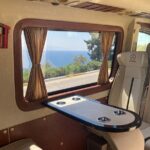
For the drive toward Ephesus, you’ll be in an air-conditioned vehicle, and your guide typically uses that travel time to set the stage. That matters more than it sounds. When your first view of Ephesus happens, it’s easier to connect what you’re seeing—marble streets, layered Roman buildings, and massive public structures—to the stories your guide is telling.
With a limit of 15 travelers, you’re not competing for attention or struggling to hear over a crowd. Even if the group is small, the day stays structured: you get stops, guided time, and enough breaks to keep it from feeling like nonstop walking.
You can also read our reviews of more tours and experiences in Kusadasi.
Entering Ephesus: Celsus, Theatre views, and the Roman city details that stick
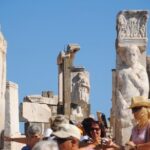
Ephesus is one of those places where the ruins feel like a whole town, not just a sightseeing stop. Once you arrive, you follow your guide through the UNESCO-listed site, and you’re given the bigger picture before you get lost in the marble.
You’ll spend about 2 hours in the ancient city area, and the route hits the classics. Here are the highlights and why each one is worth your time:
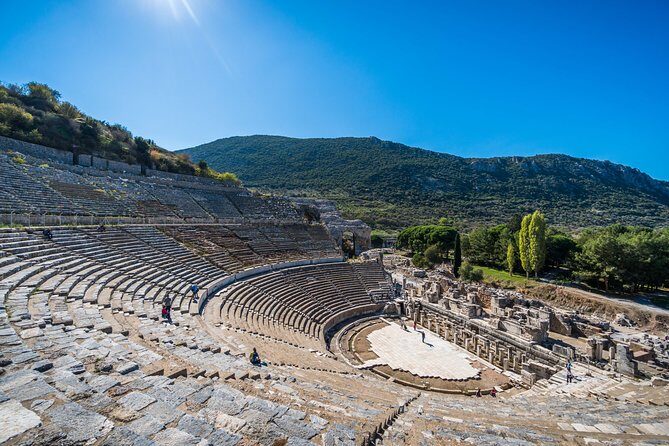
The Great Theatre (and why its scale hits hard)
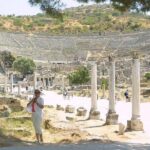
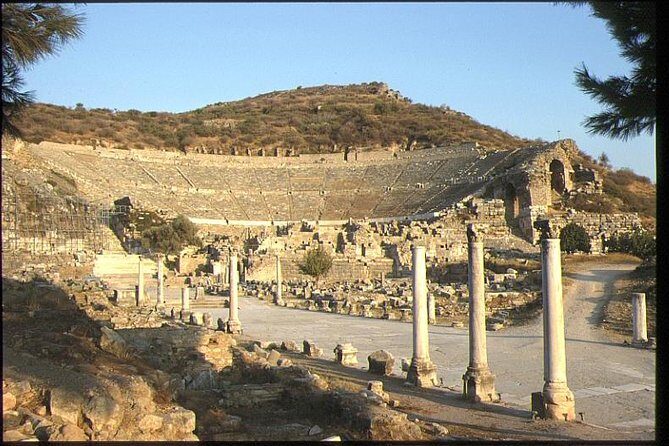
You’ll get a dedicated stop at the theatre area, where it’s easy to picture the crowds. This marble-built theatre was designed for up to 24,000 spectators, and the structure’s size still reads even after centuries.
This stop is short—about 20 minutes—but it’s a smart use of time. You don’t need a long lecture to appreciate what a community could gather for: performances, civic events, and public life.
Celsus Library: the facade trick and the Four Virtues
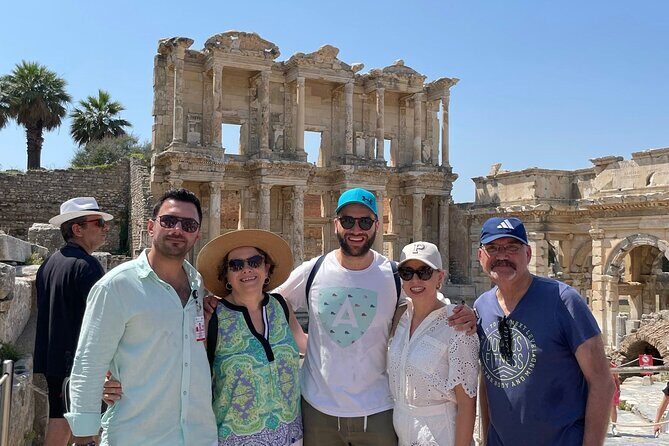
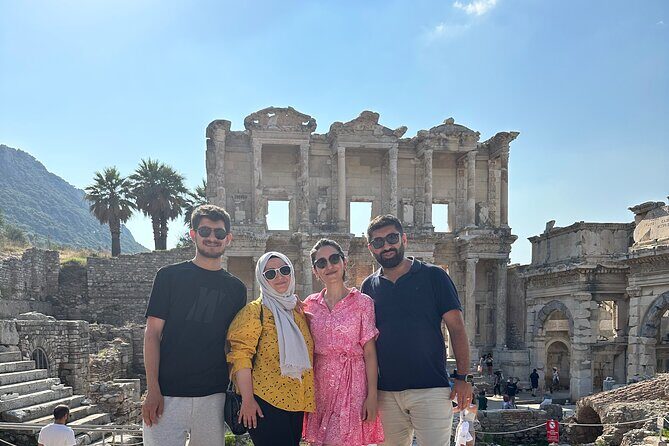
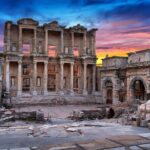
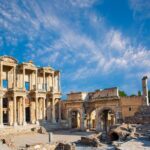
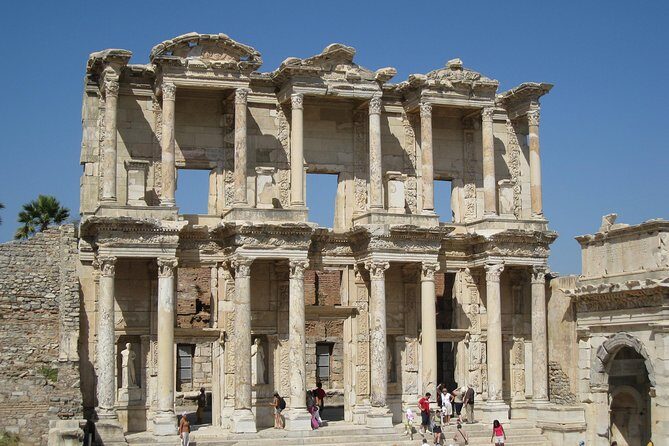
The Library of Celsus is the star monument most people want a photo of, but what makes it special is how it works visually. The building’s restored facade uses optical tricks, including a convex layout that makes the central parts look larger, plus proportions that make the middle columns and capitals seem bigger than the ends.
And if your guide mentions the symbolic statues in the niches, you’ll notice it’s not random decoration. Replicas represent four virtues: Sophia (Wisdom), Arete (Goodness), Ennoia (Thought), and Episteme (Knowledge).
You’ll spend about 20 minutes here. In that time, try to look beyond the front. Step back and see how the facade dominates the street. It’s one of those structures where the architecture does the storytelling.
Odeion and Temple of Hadrian: smaller spaces with big meaning
Not every Roman-era building at Ephesus is meant for thousands. The Odeion is a smaller, semi-circular venue (about 15 minutes in your schedule) originally from the 2nd century AD. It’s been associated with political meetings, social events, concerts, and performances.
Then there’s the Temple of Hadrian, on Curetes Street, built in the early 2nd century AD by P. Quintilius to celebrate Hadrian’s visit from Athens. This is another short stop (about 15 minutes), but it helps you feel how Ephesus functioned like a civic and religious center, not only a trading hub.
Arcadian Way, agora, baths, and everyday urban life
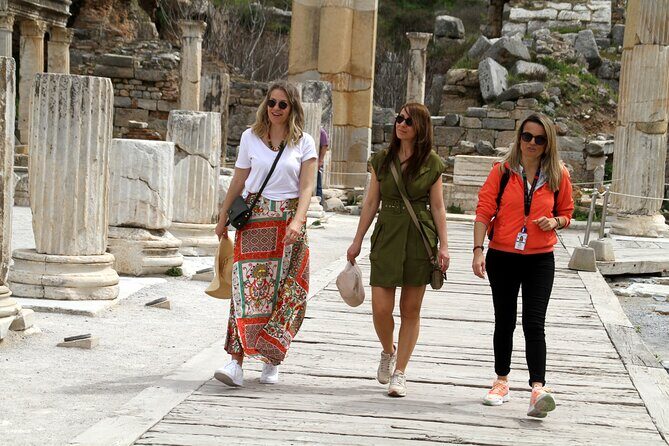
Between the big-photo stops, your guide leads you along the parts that make Ephesus feel lived-in: the marble-paved Arcadian Way, the Agora, and glimpses into the Public Latrines and Roman Baths. If you want to understand the day-to-day, these are the spots where the ruins stop being abstract.
This is also where a small group can help. You’re more likely to hear details without a guide shouting over a mass of people.
Temple of Artemis: the quick stop that still teaches you scale
After lunch and the Mary House, the day wraps with a visit to the Temple of Artemis (Artemision). This is one of the Seven Wonders of the Ancient World, but here’s the honest reality: what remains on-site is a reconstructed pillar in an empty field.
You’ll have about 20 minutes. That might sound short, but it’s the right length for a stop that’s mostly about context and imagination. Artemis was once a forest of columns—127 columns at its zenith, according to the information shared on the route—and seeing only one pillar is exactly why the stop matters. It teaches scale through absence.
Meryemana (House of the Virgin Mary): faith, views from Bulbul Mountain, and that special spring
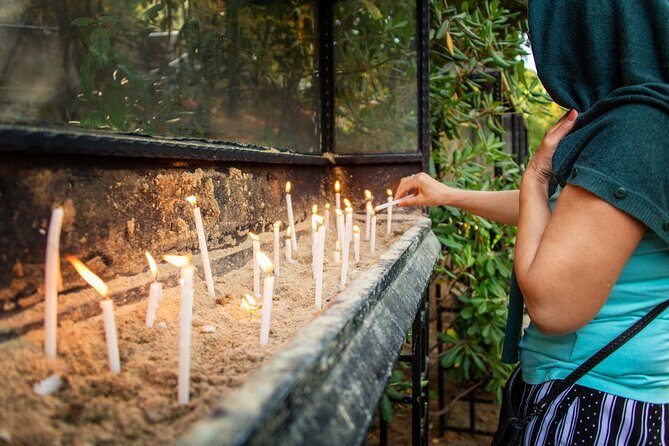
The morning’s main spiritual stop is the House of the Virgin Mary, known as Meryemana or Meryem Ana Evi. The schedule sets aside about 45 minutes, and you’ll visit the shrine area.
This is a place tied to belief: many traditions say Mary spent her final years in Ephesus with St. John, often dated to 37–45 CE. Whether you approach it as faith, culture, or both, the location adds a lot. It sits on Bulbul Mountain, so you’re not just walking through a shrine—you’re looking out from a hilltop setting.
Inside, you can see the shrine connected with the Virgin Mary, and your guide may mention the spring believed to have healing qualities. That detail is optional in how seriously you take it, but it gives the site a sense of ongoing meaning, not just a museum label.
Isabey Mosque in Selçuk: a break from ruins with real Seljuk character
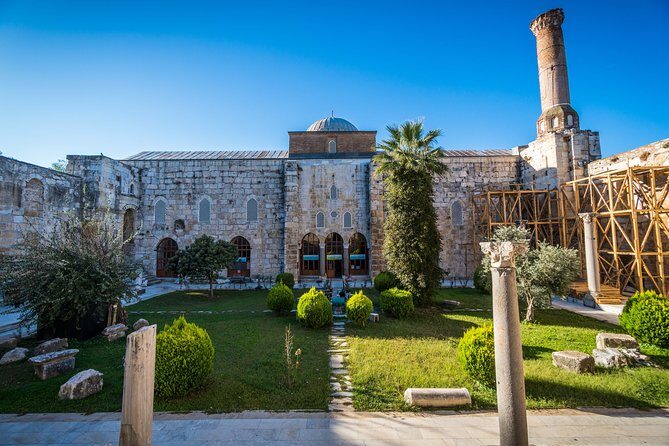
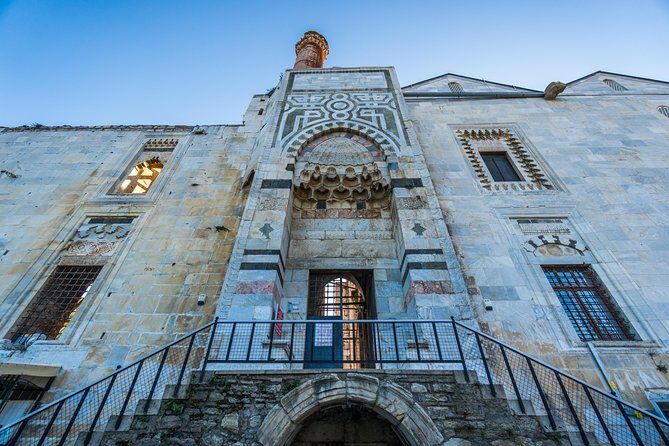
After the long Ephesus portion, the stop in Selçuk helps reset your eyes and your brain. The Isabey Mosque is built in a post-Seljuk/pre-Ottoman transitional style, linked to the period when Selçuk was the capital of the Aydin Emirate.
You’ll spend about 20 minutes here. One practical detail to look for: there’s an Arabic inscription above the main entrance that states it was built in 1375. That small fact turns the visit from a quick photo stop into something you can place on a timeline.
Even if your real reason for booking is Ephesus, this mosque stop is a good reminder that the region isn’t frozen in ancient time. The layers of history keep going.
Lunch buffet and the practical pacing that keeps the day doable
Lunch is included, typically as a buffet at a local restaurant. The day is about 7 hours (approx.), and this included meal is what keeps you from making expensive decisions on the spot. Still, plan like drinks aren’t part of the package: drinks are not included.
Because the schedule concentrates major sites into a single day, your best move is to keep your energy steady. I’d recommend bringing a little extra water patience (even if you buy it once you’re there), wearing shoes you can handle on uneven stone, and carrying sun protection. The ruins in Ephesus can feel bright and exposed.
Also, don’t underestimate the effect of early pickup. By the time you leave Kusadasi, it feels like you’ve been awake forever. Lunch is your anchor point—use it to reset before the final stops.
Shopping stops: how to protect your schedule and your budget
This tour may include additional stops tied to arts-and-crafts style manufacturing and retail, such as carpet and leather showrooms. Some people love these as a cultural add-on; others experience them as interruptions—and the more important detail is that you can feel pressure to buy expensive items.
If you’re the type who wants a pure ruins day, go in with a plan:
- Decide in advance what you’re willing to spend, if anything.
- If you’re not buying, keep your answers simple and calm.
- Remember you’re there for Ephesus, the Mary House, and the mosque—shopping is optional in your mindset even if it’s on the route.
The good news: these stops come after the main Ephesus concentration, so your “core day” is still strong.
Price and what you’re really getting for $174.60
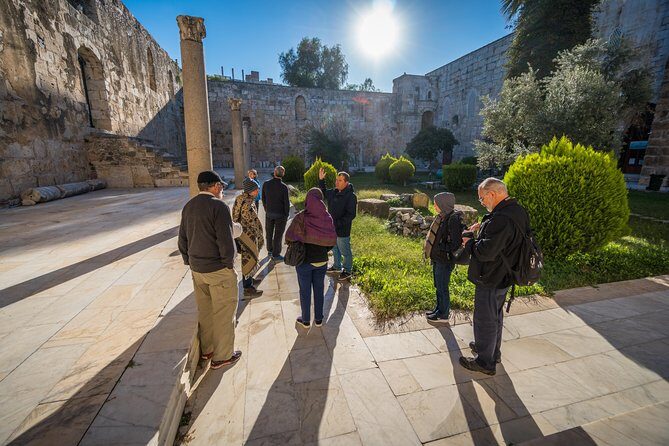
At $174.60 per person for about 7 hours, this tour is in the mid-range for a full-day Ephesus outing from Kusadasi. Here’s what justifies that price when you look at it item by item:
- Hotel/port pickup and drop-off: you’re not coordinating your own transport
- Air-conditioned vehicle: important for a long day drive
- Local guide: you’re getting context at each ruin and site
- Entrance fees and all fees/taxes included: so you’re not budgeting surprise ticket costs
- Lunch buffet included: food is handled
- Small group limit of 15: less crowding at the monuments
The one thing you’ll likely still spend on is drinks, since those aren’t included. If you also avoid shopping stops, you’ll keep your total day cost close to what you expect.
If you’re traveling with family or want a guided structure without committing to a private guide, this pricing can feel fair—especially because Ephesus is huge and easy to understand incorrectly if you’re walking alone.
Who this tour suits best (and who might want a different style)
This is a strong match if you want:
- A first-time Ephesus visit with the major monuments organized into a route
- A small-group day with guided explanations
- A combined day that includes the House of the Virgin Mary plus Selçuk landmarks
It may be less perfect if:
- You hate retail interruptions and don’t want any sales pressure
- You prefer a lighter, more humorous guide style rather than a structured lecture pace
- You want extra free time to wander without a set route
On the plus side, the tour design gives enough variety—big theatre scale, iconic library facade, hilltop shrine atmosphere, and a mosque stop that’s separate from the ancient ruins world.
Should you book the Ephesus Small Group Day Tour from Kusadasi?
I’d book it if you want a guided, organized day where entrance fees, lunch, and transportation are handled, and you care about seeing Ephesus highlights in a group that stays small. The combo of Ephesus plus Meryemana and Isabey Mosque is a practical way to cover more than one “side” of the region in a single trip day.
I’d think twice if your ideal day is no sales stops at all. If you can stay in control at the carpet/leather type stops, you’ll likely enjoy the day for what it delivers: a structured path through Ephesus’s most recognizable ruins and a quieter, hilltop pause at the Virgin Mary’s House.
FAQ
What time does the tour start?
The tour start time is 8:30 AM.
Where does pickup happen?
Pickup is offered from central Kusadasi hotels (usually between 8:00 and 9:00 AM). If you’re in Selçuk, pickup is usually between 9:00 and 9:30 AM.
How big is the group?
This tour has a maximum of 15 travelers.
What’s included in the price?
Included are hotel/port pickup and drop-off, an air-conditioned vehicle, a local guide, lunch buffet, all fees and taxes, and entrance tickets.
Are entrance tickets included for the sites?
Yes. Admission tickets are included at the key stops listed on the schedule.
Is lunch included, and what about drinks?
Lunch is included as a buffet lunch. Drinks are not included.
How long is the tour?
It’s about 7 hours (approx.).
What language is the tour offered in?
The tour is offered in English.
Which major stops are part of the day?
You’ll visit Meryemana (House of the Virgin Mary), the Ancient City of Ephesus (including major monuments), the Temple of Artemis, and the Isabey Mosque in Selçuk.
What is the cancellation policy?
You can cancel for a full refund up to 24 hours in advance of the experience’s start time.