REVIEW · KUSADASI
Ephesus: Private Full-Day Tour From Kusadası
Book on GetYourGuide →Operated by Ephesus Tour Company · Bookable on GetYourGuide
Ephesus feels like a time portal. This private full-day tour from Kuşadası is built for seeing the big hitters fast: the Library of Celsus façade, the Temple of Hadrian, the Great Theatre, and then the House of the Virgin Mary just outside the city. I also like the comfort factor—an air-conditioned VIP van and door-to-door pickup—so you spend less time wrangling transport and more time looking at stone that’s been standing for centuries.
Two things I especially appreciate: the guided pacing through Ephesus’ core monuments, and the fact that you don’t get stuck in a crowded-group shuffle. One possible drawback: you may be taken to a carpet-weaving workshop and jewelry sales stop that wasn’t expected on some guests’ plans. If you prefer strict archaeology and religious-historic sites only, I’d ask what additional stops are planned before you go.
In This Review
- Quick take: the key reasons this tour works
- Kuşadası pickup and the VIP van advantage
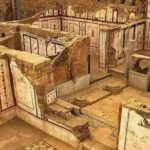
- Ephesus in about two hours: what you’ll really see
- Temple of Hadrian: the monument that sets the tone
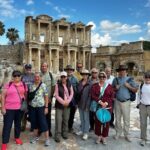
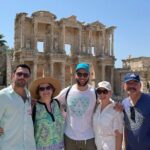
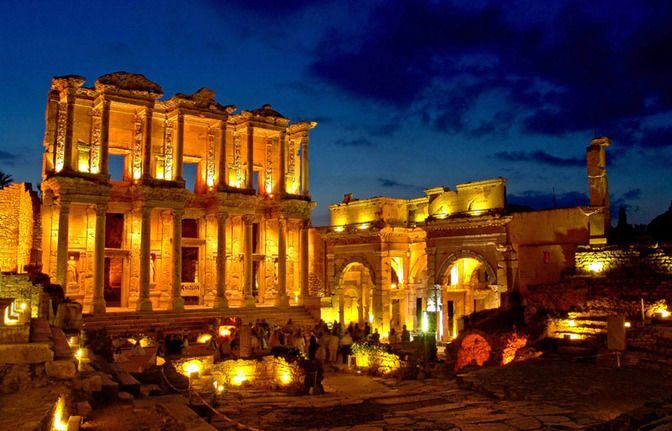
- Library of Celsus: the façade you’ll want to pause for
- Great Theatre: where the city felt alive
- Temple of Artemis: seeing the legacy even in ruins
- The House of the Virgin Mary outside Ephesus
- Price and value: what $96 per person buys you
- Guide quality and languages: getting more out of the ruins
- Potential curveballs: carpet-weaving stops and how to handle them
- Who should book this Ephesus private tour from Kuşadası?
- Should you book this tour?
- FAQ
- How long is the Ephesus private full-day tour from Kuşadası?
- Where do you get picked up in Kuşadası?
- Is this tour private or shared?
- What language is the live guide available in?
- Do I need to pay entrance fees separately?
- Is lunch included?
- Is there a way to skip lines for tickets?
- Is the House of the Virgin Mary part of the tour?
- Is it wheelchair accessible?
Quick take: the key reasons this tour works
- Private VIP van pickup from Kuşadası hotel or cruise port, so the day starts smoothly
- Skip-the-ticket-line so you lose less time at the entrance gates
- Ephesus guided walk (~2 hours) focused on the most famous monuments
- House of the Virgin Mary visit just outside the city, tied to Christian tradition
- Small, private group format that makes it easier to ask questions and move at a human pace
Kuşadası pickup and the VIP van advantage
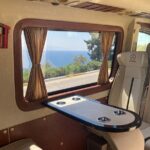
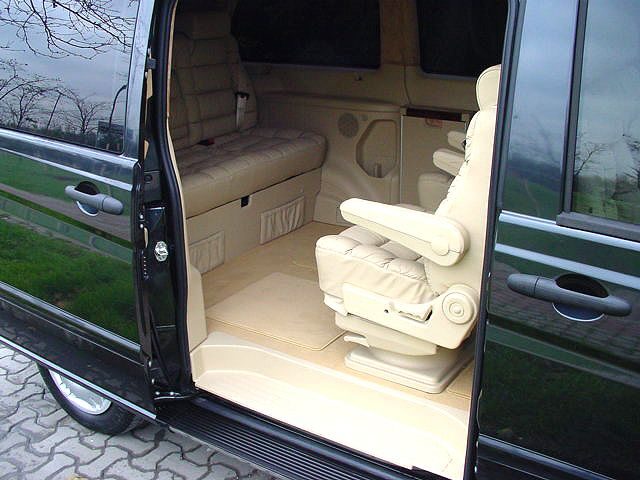
The best part of a trip like this is how you start it. You get picked up from Kuşadası (either a hotel or the cruise port), then you ride in an air-conditioned, VIP van. In plain terms: it’s less stressful, especially if you’re on a cruise schedule where you can’t afford delays or long walks to shuttle buses.
This tour is set up as a private group. That matters because Ephesus is a site where everyone tends to drift toward the same highlights—columns, grand façades, theater seats—and a private format usually means you aren’t constantly waiting while a big group regroups. You’re also guaranteed to return to Kuşadası on time, without the panicky feeling of being rushed out the door.
One practical note: entrance fees and lunch are not included. So while skip-the-ticket-line helps with timing, you’ll still want to budget for site entry once you’re there. If you pack a light snack for later, you’ll be happier when the lunch window doesn’t fit your hunger level.
You can also read our reviews of more private tours in Kusadasi
Ephesus in about two hours: what you’ll really see
Ephesus is huge, and it’s not the kind of place where you can do everything justice if you only have a short window. That’s exactly why this tour is designed the way it is: you get a guided tour through Ephesus focused on the most iconic remains, with about 2 hours in the city.
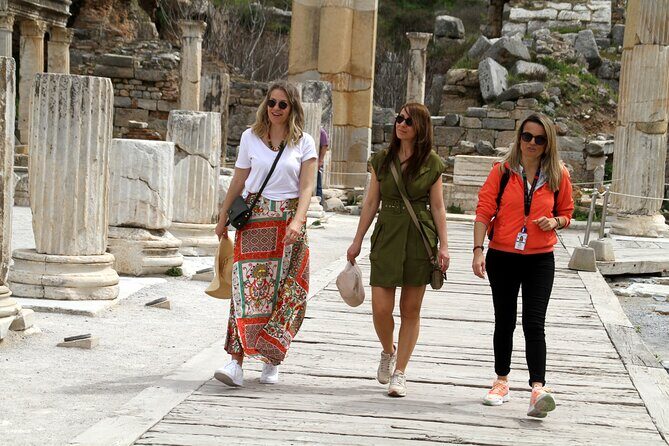
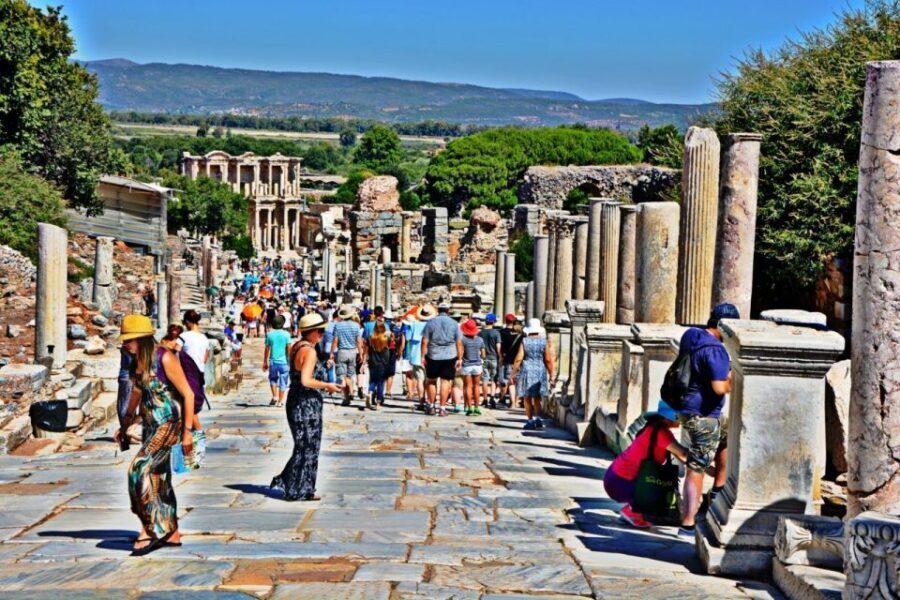
With a good guide, those two hours can feel surprisingly complete. You’ll walk along well-preserved marble streets—plus the Roman-style columns, temples, and fountains that line the area. Your guide’s job is to connect the stones in front of you to what you’d read in a book: how a Roman-era city functioned, what public life looked like, and why certain buildings became such major landmarks.
Still, keep expectations realistic. Two hours is enough to understand the layout and appreciate the top monuments. It’s not enough to stroll every side street or read every inscription carefully. If you’re the type who wants to slow down and linger at every detail, you might prefer adding extra time on your own after the guided portion.
Temple of Hadrian: the monument that sets the tone
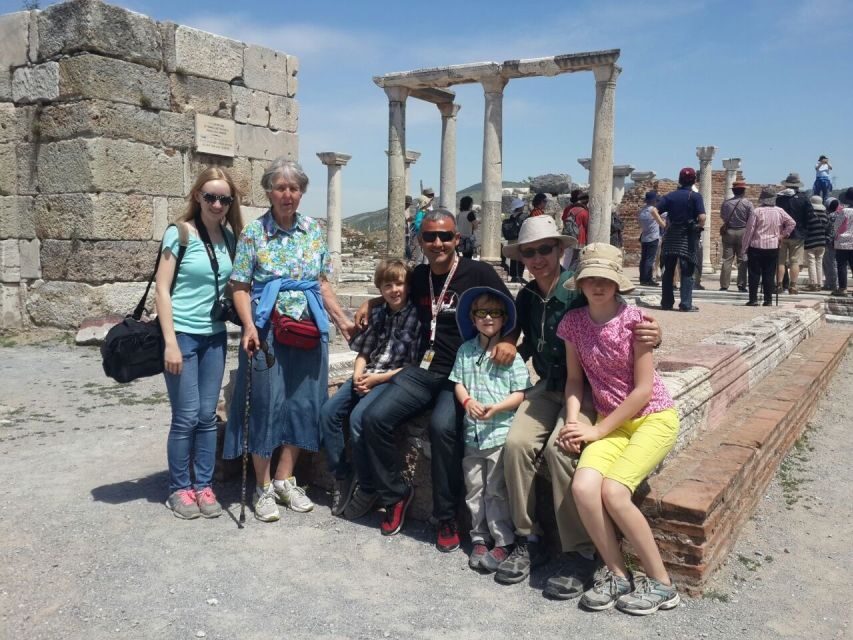
One of the stated highlights is the Temple of Hadrian, and I like including it for a simple reason: it helps you anchor the visit. When you see a major Roman-era structure early, the rest of the city makes more sense. Instead of treating each building like a random photo stop, you start noticing how authority and public life were expressed in stone.
At Ephesus, your guide can help you interpret what you’re looking at—how the city’s monumental space was designed for visitors and citizens, and how religious and civic life blended. The Temple of Hadrian also acts like a “checkpoint” building. Once you’ve seen it, the big façades and the theater feel less chaotic and more intentional.
The drawback here is usually not the site—it’s time. If you want extra photos or extra explanation at Hadrian’s Temple, you’ll want to lean into asking your guide questions as you walk. Private groups make that easier.
Library of Celsus: the façade you’ll want to pause for
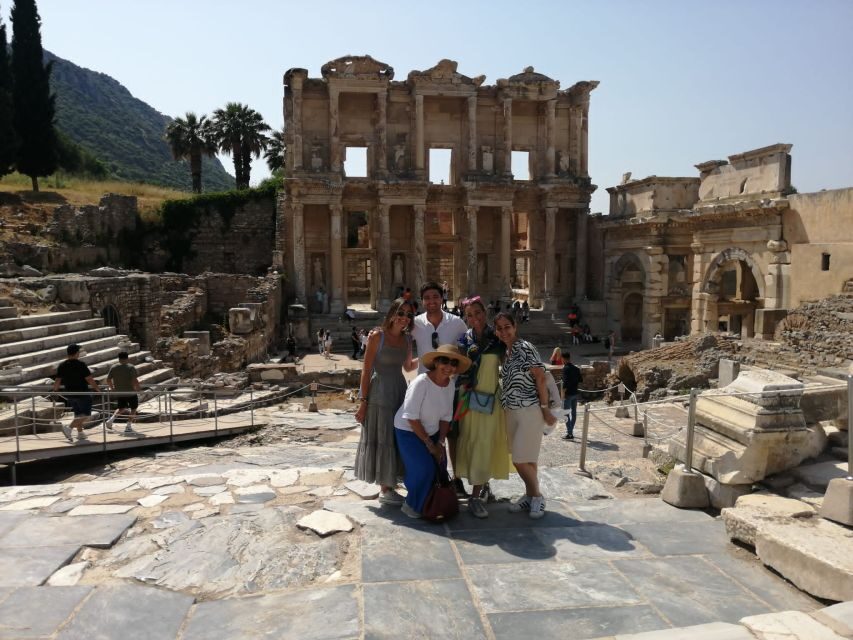
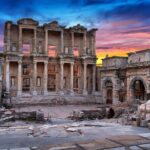
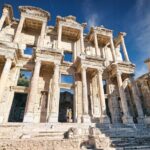
The Library of Celsus is all about the façade. Even if you’ve seen pictures before, seeing it in person tends to change the scale. It’s one of those monuments where your instinct is to stop, look longer, and then look again from a slightly different angle.
Why it’s worth prioritizing: a library isn’t just a building. In a city like Ephesus, it signals public investment in learning, status, and culture. So while you’re admiring the stonework, you’re also getting a snapshot of what Roman-era public buildings were meant to communicate.
Practical tip: give yourself a couple of minutes to step back and reframe your shots. The façade can look different depending on where you stand relative to the main path. A guide can also point out what to pay attention to beyond the obvious visuals.
Great Theatre: where the city felt alive
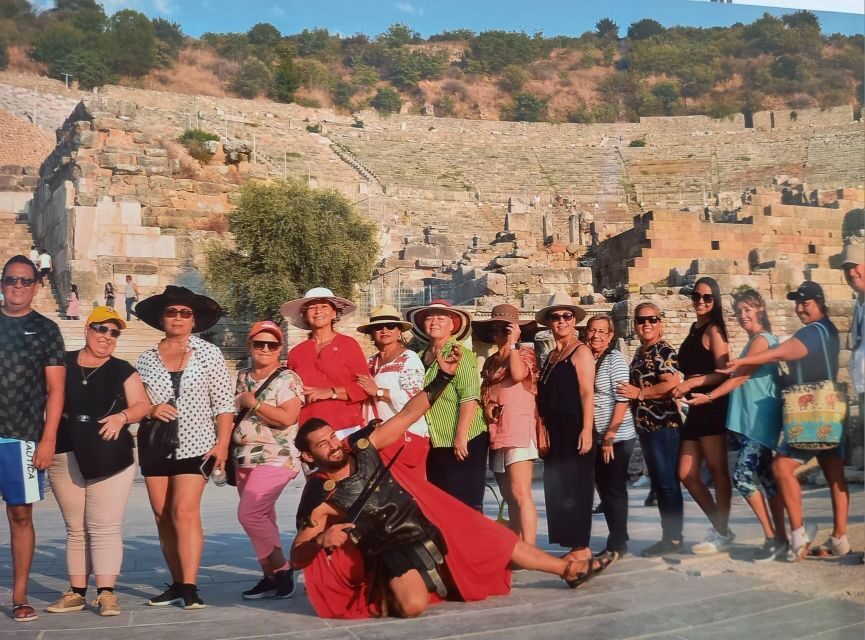
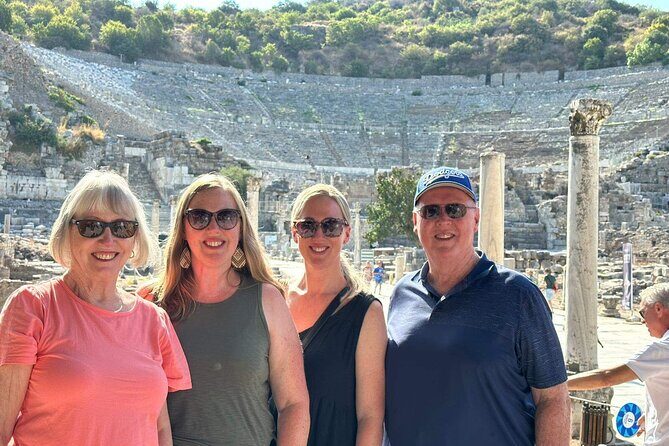
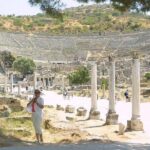
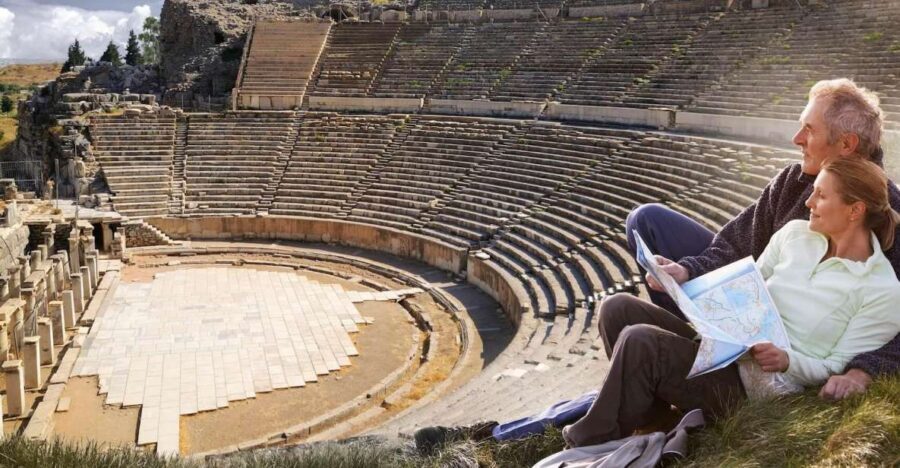
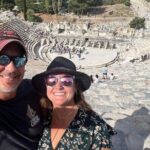
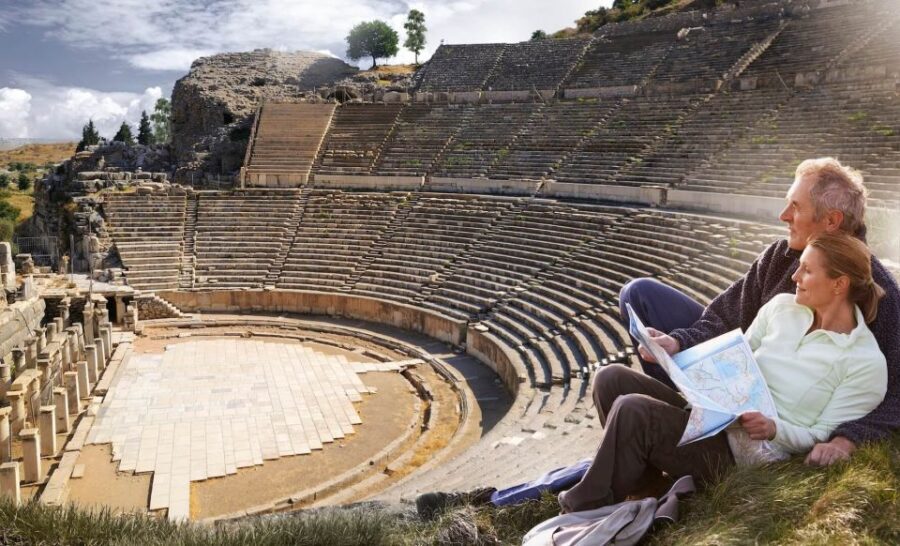
Ephesus’ Great Theatre is another highlight that deserves your full attention. This is where you can start picturing how people gathered for major events. Even without getting lost in details, the sheer sense of scale does a lot of work for your imagination.
This tour includes a visit to the last Great Theatre, and that phrasing matters: it reinforces that Ephesus isn’t one single era frozen in place. You’re seeing evidence of how the city evolved and how public spaces could be used over time. A guide’s interpretation helps you connect the structure to the everyday experience of Roman life—crowds, announcements, community events.
The only caution is simple: if you’re sensitive to heat or you’re visiting during warm months, plan for breaks. The theatre area can feel exposed. Comfortable shoes help too, because you’ll be doing a fair bit of walking through historic surfaces.
You can also read our reviews of more tours and experiences in Kusadasi

Temple of Artemis: seeing the legacy even in ruins
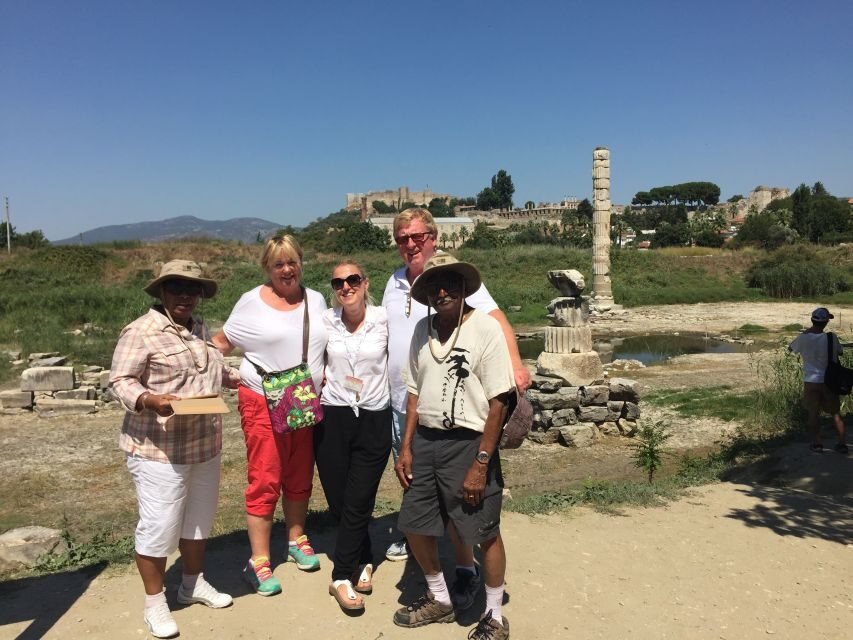
Another key highlight is the Temple of Artemis. Even when parts are in ruins, this is still a monument with gravity. It’s one of those names that carries big cultural weight, and seeing it in the Ephesus area gives you a physical sense of why this site mattered.
Because the tour focuses on multiple landmarks, you won’t spend a long, slow hour there. You’ll typically see the remains, absorb the context from your guide, and then move on. For most people, that’s the right rhythm: you get the big-name landmark without losing the thread of the overall route.
If you’re especially drawn to Artemis specifically—artemision themes, worship practices, or how the cult tied into civic identity—ask your guide what stands out most in the Ephesus setting. With a private setup, you can steer the conversation a bit.
The House of the Virgin Mary outside Ephesus
After Ephesus, you continue just outside the city to the House of the Virgin Mary. This stop is the spiritual and historic counterpart to the Roman monuments. According to Christian tradition—and recognized by the Vatican—Mary was brought there by the Apostle John after the Resurrection of Christ and lived her final days in this house.
I like this sequence because it changes the tone of the day. You go from marble streets and civic monuments to a quieter place where the story is more personal and reflective. Even if you’re not deeply religious, the site can feel meaningful because it’s tied to a specific narrative and recognized tradition.
What to expect in practice: you’ll be guided to the house area and shown the key aspects of the visit, then you’ll have time to absorb the setting. The tour framing also calls out the final resting place of the Virgin Mary, so your guide should connect what you see to that tradition.
If you want a calm moment, this is usually where you get it. The earlier monuments can pull your attention in every direction. The House of the Virgin Mary tends to slow you down.
Price and value: what $96 per person buys you
At $96 per person for a roughly 6-hour outing, the value comes from the structure. You’re paying for:
- private, door-to-door pickup and drop-off in Kuşadası
- an air-conditioned VIP van
- a professional local guide
- a private group format
- skip-the-ticket-line convenience
The tour is also described as cheaper than most cruise company standard excursions, which are often built around large groups. That’s the key value argument here: you get a more controlled experience without the big-coach chaos.
What’s not included affects your total budget. Entrance fees and lunch are extra. So the best way to think about the price is: the tour cost covers the guide and logistics; you’ll still need to pay for site entry and food on the day.
If you’re deciding between this and a standard group excursion, ask yourself what you care about most. If you want comfort plus a guide who can tailor the pacing, private usually wins. If your top priority is minimizing cost at all costs, then a group tour might still be the cheaper route—but it’s less comfortable and usually less flexible.
Guide quality and languages: getting more out of the ruins
You’ll travel with an expert local guide, and the tour is offered in Spanish and English. That’s important because Ephesus is packed with symbols and architectural cues. Without guidance, it’s easy to see beautiful stones and miss the logic behind them.
One of the strongest signals from a recent experience is about guide Saadet. The feedback praised Saadet for enormous historical knowledge and for leading the excavation site in a way that felt clear and focused. That matters because Ephesus isn’t just a photo set. With a guide who can explain what you’re looking at, you get better understanding per minute.
Since it’s a private group, you also get more chance to ask questions that fit your interests, whether that’s Roman public life, the theatre, or the shift from Ephesus to the House of the Virgin Mary.
Potential curveballs: carpet-weaving stops and how to handle them
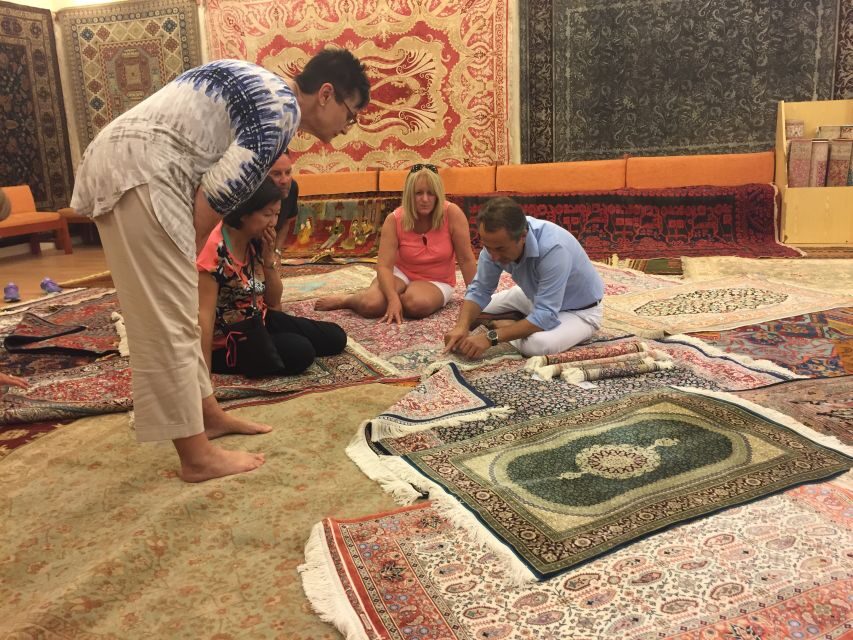
Here’s the one concern I’d take seriously. One experience described an added carpet-weaving stop with jewelry sales that wasn’t on the expected tour plan. Even if it’s presented as informative, a shopping-focused detour can feel like an unwanted distraction when your day is built around specific monuments.
How to manage this: when you confirm your pickup time, ask plainly whether there are any shopping or workshop stops included beyond the Ephesus sites and the House of the Virgin Mary. If your goal is archaeology and historical sites only, you’ll want that clarity upfront.
Also, keep your expectations lined up with the time window. This is a 6-hour tour, and Ephesus alone is only about two guided hours. If you add shopping stops, you can feel the squeeze. That’s why it’s worth confirming the full flow.
Who should book this Ephesus private tour from Kuşadası?
This fits best if you:
- want a private, guide-led day and prefer not to herd with big groups
- care about the main Ephesus monuments rather than doing every corner at your own pace
- like a mix of Roman and Christian historic themes in one day
- are on a cruise and want a clear return-to-ship plan without feeling rushed
It may be less ideal if you’re someone who needs long, unhurried time in each stop and is sensitive to schedule changes.
One more point to check before you commit: wheelchair accessibility is mentioned, but the activity also notes it isn’t suitable for people with mobility impairments. Because that’s conflicting, the responsible move is to contact the provider and explain your needs so you’re not surprised on the day.
Should you book this tour?
I’d book this if you want the best-known Ephesus monuments with a guide, plus the House of the Virgin Mary, all arranged from Kuşadası with comfortable transport. The value is strongest for people who’d otherwise pay for cruise excursions yet still want a more personal experience. The “skip the ticket line” detail also helps you start sightseeing sooner.
I would not book blindly if you dislike any shopping or workshop detours. Ask what stops are included beyond the headline sites, then decide. If you confirm the itinerary matches what you want, this is a smart way to get a high-impact day in a limited window.
FAQ
How long is the Ephesus private full-day tour from Kuşadası?
The duration is listed as 6 hours.
Where do you get picked up in Kuşadası?
Pickup is included from the Kuşadası cruise port or from a Kuşadası hotel.
Is this tour private or shared?
It’s a private group tour.
What language is the live guide available in?
The live tour guide is available in Spanish and English.
Do I need to pay entrance fees separately?
Yes. Entrance fees are not included.
Is lunch included?
No. Lunch isn’t included.
Is there a way to skip lines for tickets?
Yes, the tour includes skip the ticket line.
Is the House of the Virgin Mary part of the tour?
Yes. You visit the House of the Virgin Mary just outside Ephesus, based on Christian tradition.
Is it wheelchair accessible?
Wheelchair accessibility is mentioned, but it also states it is not suitable for people with mobility impairments. You should confirm your specific needs with the provider.