REVIEW · KUSADASI
Ancient Ephesus and Pamukkale Tour from-to Kusadasi or Selcuk
Book on Viator →Operated by Tour Altinkum Travel · Bookable on Viator
Two UNESCO sites, one long day. I love how your guide brings skip-the-line ticket handling so you spend less time waiting, and I love the door-to-door private pickup that keeps the day from feeling like a bus tour. The catch is that entrance fees for Ephesus and Pamukkale/Hierapolis are extra.
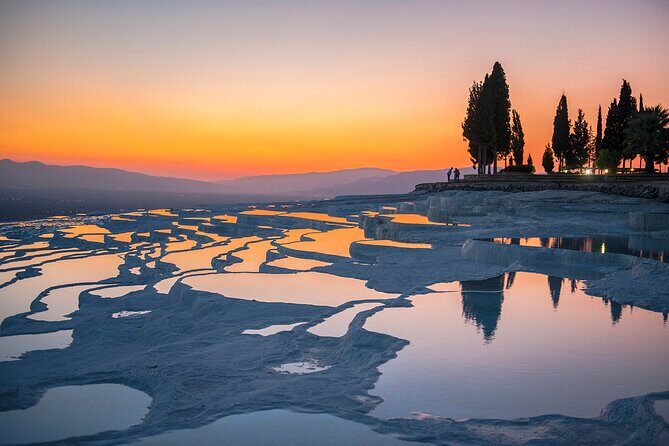
The best part is the sudden switch from stone streets to the travertines at Pamukkale—white terraces that look almost unreal. If you dislike long days, go in knowing this is a 14-hour schedule with a fairly brisk pace between stops.
In This Review
- Key Things I’d Put on Your Radar
- One Day to Match: Ancient Ephesus, Pamukkale, and Hierapolis
- 8:00 AM Pickup and the Value of a Private Door-to-Door Day
- Ancient Ephesus: Where the City Was a Marketplace of the World
- The Ephesus sights you’ll focus on
- Ephesus drawback to plan around
- Pamukkale Thermal Terraces: White Steps, Warm Water, Big Chemistry
- What you do in the scheduled Pamukkale/Hierapolis block
- Consideration: renovation can affect pool time
- Hierapolis Ruins: Greco-Roman Drama in Stone Form
- Lunch in a Local Restaurant: A Real Break from Monuments
- Price and What You’re Really Paying For (and Not Paying For)
- Is $280 worth it for you?
- Walking, Timing, and Photo Tips That Make the Day Feel Easier
- About the guides and how that affects your experience
- Who This Private Ephesus and Pamukkale Day Tour Is Best For
- Should You Book This Tour?
- FAQ
- What time does the tour start?
- Where does hotel pickup happen?
- Is this tour private?
- What is included in the $280 price?
- Are entrance fees included?
- Are kids’ tickets free?
- Can I cancel for free?
Key Things I’d Put on Your Radar
- Private door-to-door transfers from Kusadasi or Selcuk
- Pre-paid skip-the-line tickets handled by your guide; entrance fees paid in cash
- Two UNESCO stops in one day: Ancient Ephesus, Pamukkale, and Hierapolis
- Lunch in a local restaurant included, so you’re not timing snacks all day
- Photo moments built into the route (Library of Celsus and sunken-column areas)
- Time is tight at each site, so go for the big sights rather than a slow wander
One Day to Match: Ancient Ephesus, Pamukkale, and Hierapolis
This tour is built for people who want two UNESCO sites without flying, ferrying, or adding a second day. You start with the scale of Ancient Ephesus, then head for the odd, beautiful mineral terraces of Pamukkale, and finish inside the Greco-Roman world of Hierapolis. It’s a full-day snapshot, not a relaxed two-week slow travel plan.
I like that the day has clear “anchor points” for your brain: St. Paul’s footsteps in Ephesus, the Library of Celsus photo area, then the sunken columns and travertine pools at Pamukkale. Your guide’s job is to help you connect those dots fast, so you don’t just see ruins—you understand why they matter.
The main trade-off is time. You’ll have only a couple hours in Ephesus and about three hours in the Pamukkale/Hierapolis area. That can feel perfect if you’re focused on the big highlights, and it can feel short if you want to linger by the water.
You can also read our reviews of more tours and experiences in Kusadasi.

8:00 AM Pickup and the Value of a Private Door-to-Door Day
Pickup starts at 8:00 am, with hotel transfers from either Kusadasi or Selcuk. Because it’s private, you’re not stuck waiting for a long pickup circuit or squeezed into a crowded vehicle where every stop turns into a debate about timing. You get a cleaner flow: ride, sights, lunch, ride, sights, back.
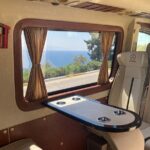
The transport is an air-conditioned non-smoking vehicle, which is a real quality-of-life upgrade in Turkey’s warmer months. And because the tour includes the guide and the scheduled sightseeing blocks, you’re not trying to juggle local transit while also figuring out museum entry timing.
One practical point: skip-the-line doesn’t mean “no lines ever.” It means your guide can handle the ticket process quickly with pre-paid access so you lose less time at entrances. That matters on a day like this where you’re stacking multiple sites.
Ancient Ephesus: Where the City Was a Marketplace of the World
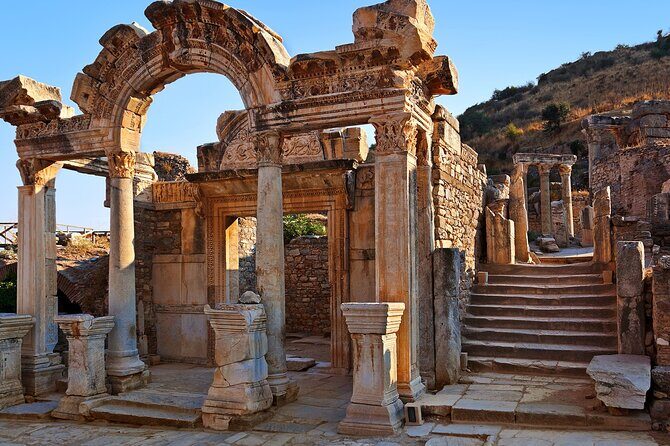
Ancient Ephesus is the kind of place where the “wow” hits in waves. You’ll see marble and streets, but you’ll also feel the city’s role as a trading hub and a crossroads between cultures. This wasn’t a sleepy backwater—during the 1st century AD, Ephesus was described as the second-largest city after Rome, with a population said to be over 250,000.
You’ll also hear the city’s strategic geography: Ephesus functioned as a gateway between East and West, and it had a major harbor that helped drive commerce. That context makes the ruins easier to read. You start seeing the architecture as infrastructure, not just scenery.
The Ephesus sights you’ll focus on
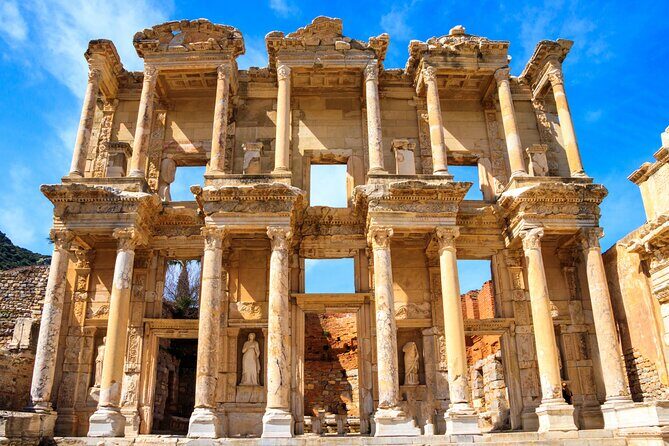
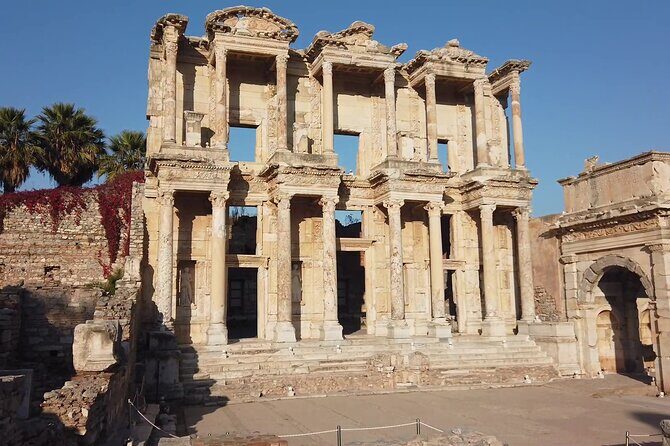
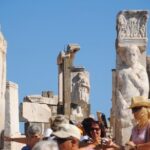
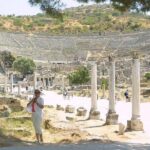
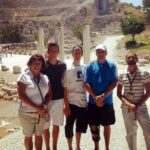
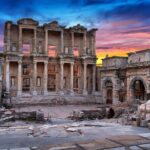
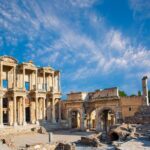
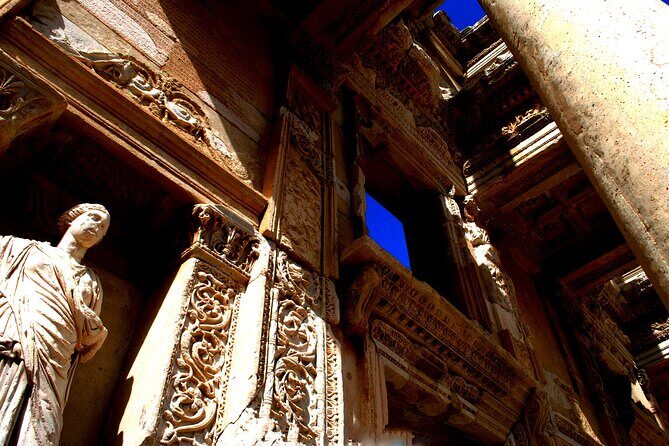
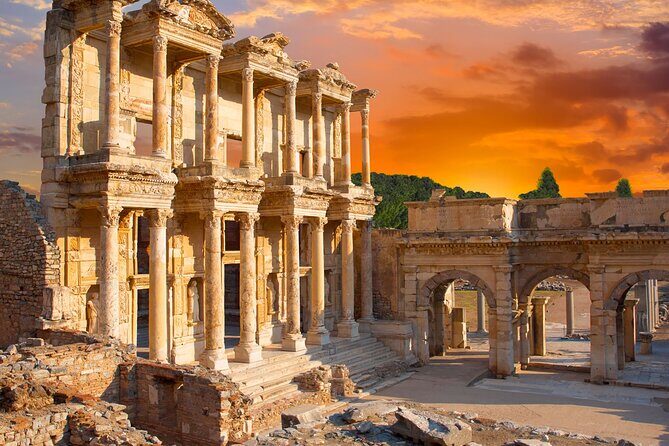
Your scheduled time is about 2 hours at the Ancient City of Ephesus, with the big monuments and photo opportunities front and center. The tour specifically sets you up for the moment around the Library of Celsus, which is one of the most recognizable views in the area. If you like taking photos that show scale, this stop delivers.
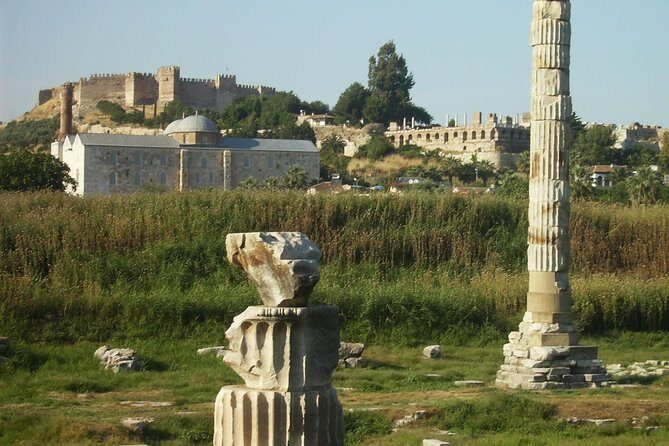
Ephesus is also famously linked to early Christianity and St. Paul’s journeys, which gives the day an extra layer beyond sightseeing. And if you’re into myth and legend, you’ll hear the story of the Temple of Artemis, famous as one of the seven wonders of the ancient world.
Ephesus drawback to plan around
Two hours is enough to see the essentials, but it isn’t enough to “wander until your legs beg you to stop.” If you’re the type who reads every plaque and wants to chase every side street, you’ll likely feel rushed. The fix is simple: go into the visit with a short mental list—Library of Celsus area, the main avenues, and a few key structures—then let the rest be bonus.


Pamukkale Thermal Terraces: White Steps, Warm Water, Big Chemistry
Pamukkale is one of those places that makes your brain argue with your eyes. How can water create these stair-like terraces, and why do they look so white?
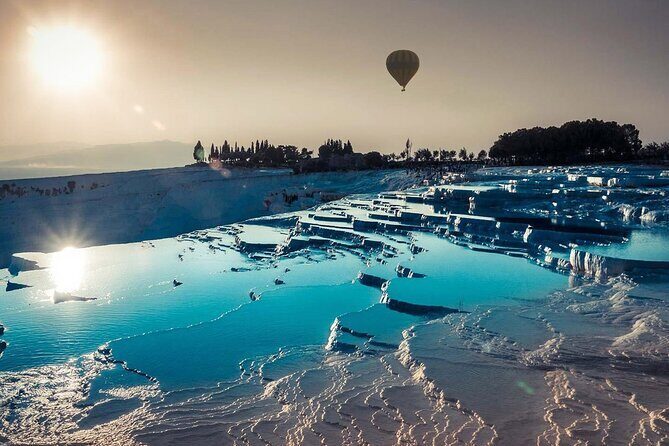
Here’s what makes Pamukkale special in tour terms: the terraces were formed by warm spring water running down the hillside at around 35°C, and the water contains minerals like calcium bicarbonate. Those minerals build up over time, creating the signature travertine look.
The area is UNESCO-listed, and it’s often called an early spa site because people traveled long distances to seek healing from the thermal springs. Even if you don’t plan to do anything with the water, the “spa city” story gives the landscape meaning.
What you do in the scheduled Pamukkale/Hierapolis block
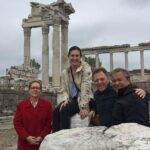
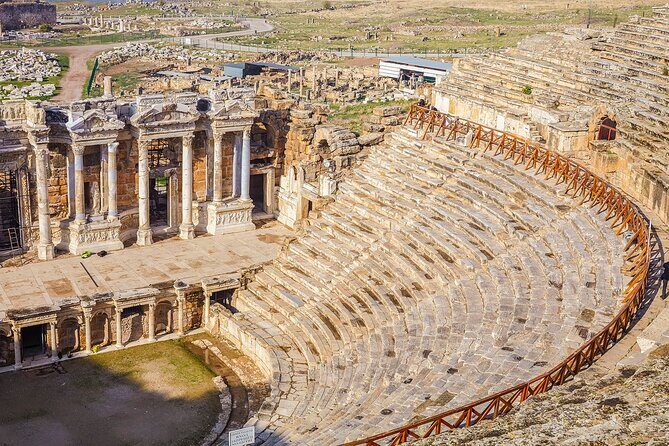
You’ll spend about 3 hours at Hierapolis and Pamukkale together. This is where the tour earns its best photos: the travertine pools and the famous sunken, column-like ruins. If you like scenes where the ruins feel half swallowed by the earth, you’ll likely enjoy this segment.
One detail from a previous guide’s advice is worth noting: someone was told to use the mineral content to gently scrub the skin. That’s not a requirement of the tour, but it’s a good reminder that locals treat this place as more than a postcard.
Consideration: renovation can affect pool time
Pamukkale can include closures for restoration at times. One person’s experience flagged that the pool area was under renovation, which can reduce how long you can linger at the water edge. If your dream is lots of time right in the pools, build in flexibility—and if you arrive during maintenance, focus on views and photo angles first.
Hierapolis Ruins: Greco-Roman Drama in Stone Form
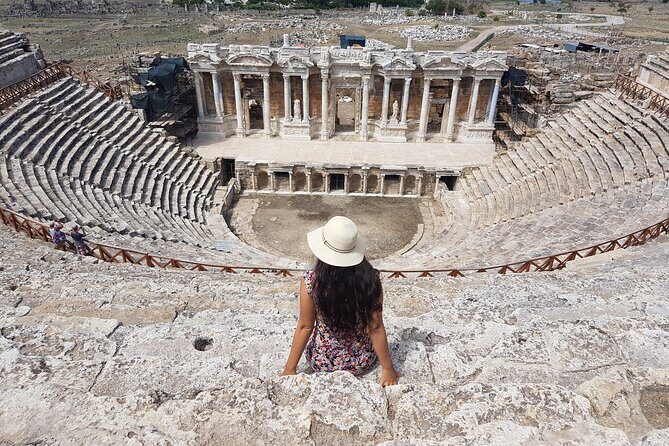
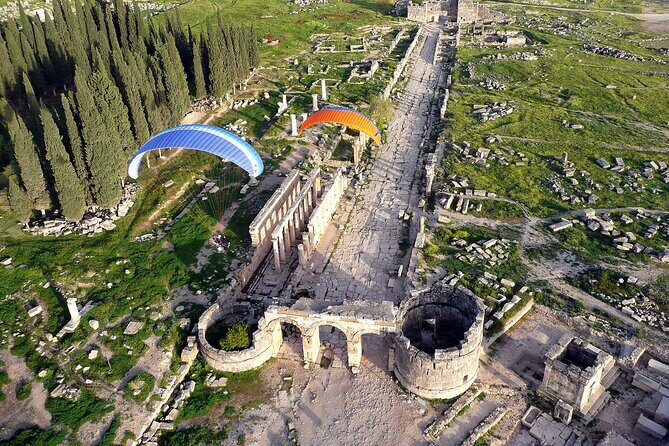
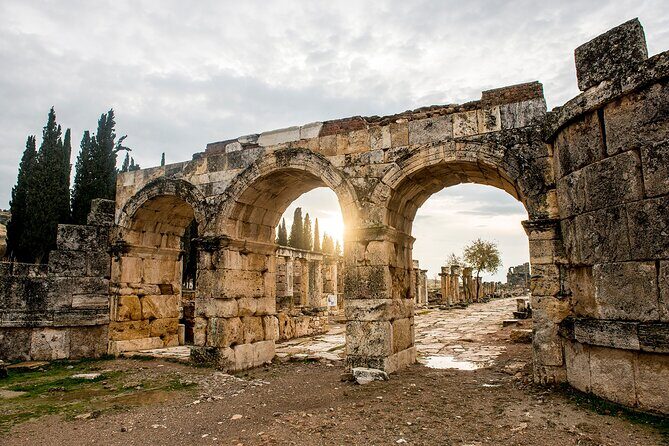
Hierapolis sits next to Pamukkale and feels like a different chapter of the same story. You get the Greco-Roman setting: remains laid out with the logic of a planned city, where streets and monuments reflect a world that valued public space.
The tour’s schedule pairs Hierapolis with Pamukkale, so you don’t have to choose between “white terraces” and “ruins that explain the area’s history.” You get both, even if each has limited time.
What I like about combining them is that the ruins help you see the whole place as a thermal destination that also mattered politically and culturally. It turns Pamukkale from just a spa story into a lived-in city story.
Lunch in a Local Restaurant: A Real Break from Monuments
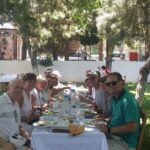
You’ll have lunch included at a local restaurant. On a day like this, that’s a big deal. Otherwise you’re stuck making decisions on the fly while you’re still traveling between major sites.
The tour includes lunch, but beverages aren’t included, so plan to cover drinks separately. This is also a good moment to reset—use it to refill water, check your phone camera settings, and decide what photos you still want before the final return ride.
Price and What You’re Really Paying For (and Not Paying For)
The tour is listed at $280 per person and runs about 14 hours. For a private, full-day UNESCO double, that price can feel fair because you’re not just buying entry tickets—you’re buying the logistics: licensed guiding, private transport, a built-in lunch, and ticket handling that reduces time at entrances.
Here’s what you should budget separately: entrance fees for Ancient City of Ephesus and Hierapolis & Pamukkale. Your guide has pre-paid skip-the-line tickets, but you still pay the entrance fees to the guide in cash (Dollars, Euro, or Turkish lira are accepted). That’s a key practical point for value: you’re paying less time-cost, but you still need cash on hand for admissions.
Also note what’s not included: personal expenses and beverages with meals. So if you like ordering drinks or small extras, it’s smart to keep some flexibility in your budget.
Is $280 worth it for you?
It tends to be a good value if you want:
- A guide to explain what you’re seeing, especially at Ephesus and Hierapolis
- Door-to-door convenience from Kusadasi or Selcuk
- A day schedule that doesn’t collapse into logistics chaos
It may be less worth it if you:
- Want a slow, lingering visit with lots of downtime at each site
- Would rather handle tickets and transport on your own
Walking, Timing, and Photo Tips That Make the Day Feel Easier
This is a long day. Even if the pace is managed well, you’ll cover a lot of ground and spend time outdoors at both Ephesus and Pamukkale.
A few practical notes that help:
- Wear comfortable shoes with good grip. Pamukkale travertine areas can be uneven.
- Bring sun protection. You’ll be outside for long stretches.
- Use the guide’s timing for photos. The tour is designed so you hit the famous photo zones during workable daylight.
- If you’re photo-focused, tell your guide early. Past experiences with guides like Ali highlighted that picture requests can get worked in without turning the schedule into a mess.
About the guides and how that affects your experience
You’ll be with a professional licensed tour guide, and this tour has run with guides such as Serge, Izik/Iśik, and Ali. People have credited them with clear explanations and professional timing, plus patience during slower photo moments. Driver quality also matters on a day like this, and Nikko has been noted for keeping the day running smoothly.
The practical takeaway: the guide isn’t a background voice. They’re part of the time-saving plan and the interpretation plan.
Who This Private Ephesus and Pamukkale Day Tour Is Best For
This tour fits best if you want a single-day plan that still feels personal. It’s private, with only your group in the vehicle, and that helps if you’re traveling as a couple, with friends, or with family who doesn’t want to wait around for strangers.
It’s also a strong match if:
- You’re visiting from a cruise stop or have limited time in the region
- You want two UNESCO sites but don’t want to split them across two days
- You value having someone explain St. Paul’s connection and how ancient Ephesus worked
You might consider skipping this format if:
- You’re not into fast pacing and prefer quiet, extended exploring
- You’re very sensitive to long travel days
- You’re hoping for lots of pool time at Pamukkale, especially if renovation limits access
Should You Book This Tour?
If your goal is to see Ancient Ephesus + Pamukkale + Hierapolis in one clean, guided day, this is a smart way to do it. The private pickup, lunch, and guide-run ticket handling make the day feel organized, and the photo targets like the Library of Celsus and the Pamukkale ruins deliver what most people come for.
Book it if you’re okay with the trade-off: extra entrance fees and a pace that’s designed to hit highlights, not to linger forever.
FAQ
What time does the tour start?
The tour start time is 8:00 am.
Where does hotel pickup happen?
Pickup and transfers are available from hotels in Kusadasi or Selcuk.
Is this tour private?
Yes. It’s a private tour/activity, and only your group participates.
What is included in the $280 price?
The price includes a professional licensed tour guide, lunch in a local restaurant, and land transportation by an air-conditioned non-smoking vehicle. Sightseeing stops listed in the itinerary are also included.
Are entrance fees included?
No. Entrance fees are not included. The guide has pre-paid skip-the-line tickets, and you pay the entrance fees to the guide in cash in USD, Euro, or Turkish lira.
Are kids’ tickets free?
Yes. Kids aged 8 and below have free entry. You should take a passport for children.
Can I cancel for free?
Yes. You can cancel for a full refund if you cancel up to 24 hours in advance of the experience’s start time.