REVIEW · KUSADASI
Private Ephesus, Terrace Houses, St. John’s Basilica/grp opt
Book on GetYourGuide →Operated by Ephesus Shuttle Private and Small group · Bookable on GetYourGuide
Four hours in Ephesus beats the usual slog. You get a private guide and skip-the-line entrance tickets bundled into the price, so you spend your time walking ancient streets instead of waiting in line. This is built for families and friends who want the classics—Ephesus, Terrace Houses, St. John’s Basilica, and a stop at Artemis Temple—without extra add-ons.
I especially like the way the tour is laid out to keep things smooth: private A/C transportation from the cruise port area, plus entrances that are handled for you. One thing to consider is that Terrace Houses involves lots of steps between levels, so plan accordingly if you want an easier pace.
You’ll meet your guide at Kusadasi Cruise Terminal with a sign showing your name, then take a short walk to the meeting point and head out. In the guides’ world, names like Oz and Nedj have shown up as standouts, and the best part is how that kind of guidance helps you move through big sites without feeling rushed.
In This Review
- Key things that make this tour worth your time
- Kusadasi Cruise Terminal pickup: easy meet-up, less wasted time
- The 20-minute drive that sets the tone for the day
- Entering Ephesus the smart way: marble streets and the big “wow” buildings
- Library of Celsus: built as a memorial, not just decoration
- Grand Theatre: the scale is the point
- Temple of Hadrian and the idea of a living city
- Terrace Houses: frescoes, mosaics, and the stairs you should plan for
- What makes this stop special
- The trade-off: lots of steps
- Basilica of St. John: a quieter stop with a strong tradition
- Artemis Temple: the Seven Wonders connection, with a last-stop rhythm
- Price and value: what $140 per person actually covers
- Who should book this private Ephesus tour
- Should you book it or choose something else?
- FAQ
- FAQ
- Where does the guide meet us?
- How do I know the pickup time?
- Is transportation included?
- Are entrance fees included?
- How long is the tour?
- What are the main stops during the tour?
- Are there any extra costs once the tour starts?
- What’s the cancellation policy?
- What language is the guide?
Key things that make this tour worth your time
- Skip-the-line tickets included so your visit starts quickly
- Private guide for easier crowd navigation and a pace that fits your group
- Terrace Houses access for wall frescoes and floor mosaics in wealthy Roman-era homes
- St. John’s Basilica stop tied to the tradition of St. John’s last years near Ephesus
- Artemis Temple final photo stop at the legendary site of one of the ancient Wonders
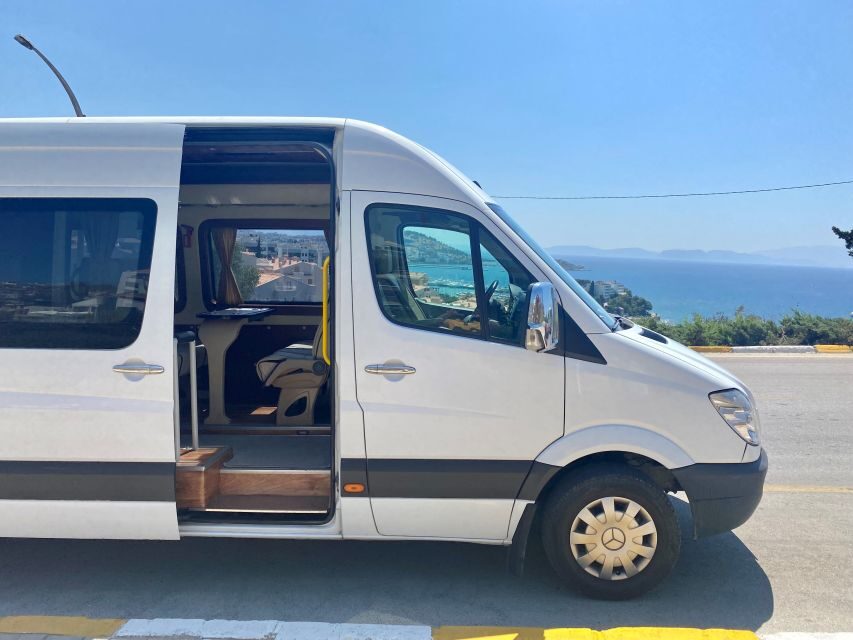
- A/C private transportation to cut down on cruise-day stress
Kusadasi Cruise Terminal pickup: easy meet-up, less wasted time
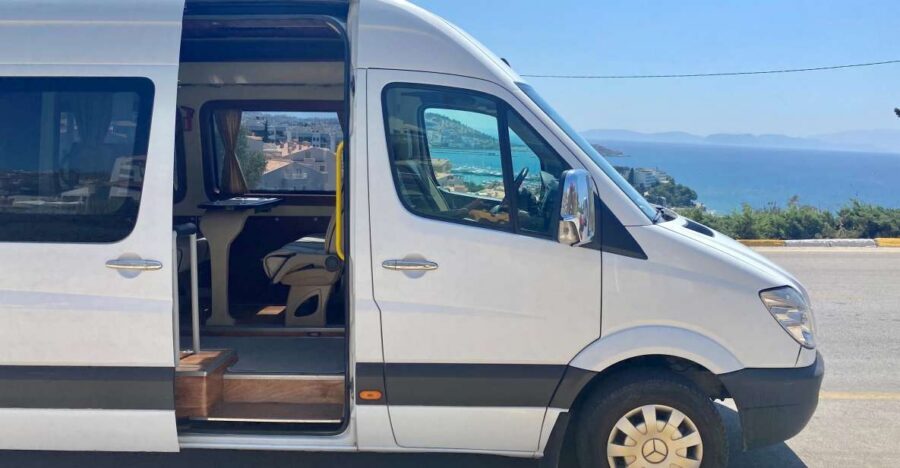
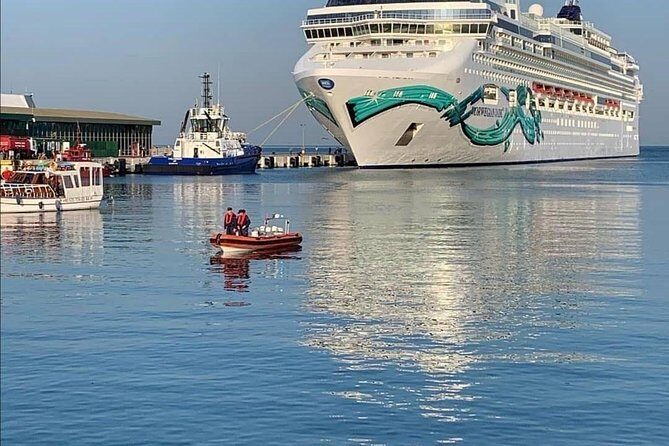
The tour starts where cruise days can get tricky: at Kusadasi port. Your guide meets you at the cruise terminal with a sign showing your name, and you’ll walk about 100 meters from your cruise to the meeting spot. After you pass through the customs area, the sign should be right in front of you.
Pickup time is typically around 30 minutes after your cruise arrival, and it’s emailed within 24 hours of your reservation. If you don’t see that message, contact the provider for the correct pickup time—don’t assume. That one step keeps the start from turning into a search-and-wait situation.
What this means for you in real terms: you get a clean handoff from ship to car, which matters a lot when Ephesus gets busy and you want to be in the right place at the right moment.
You can also read our reviews of more private tours in Kusadasi
The 20-minute drive that sets the tone for the day

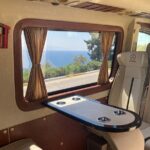
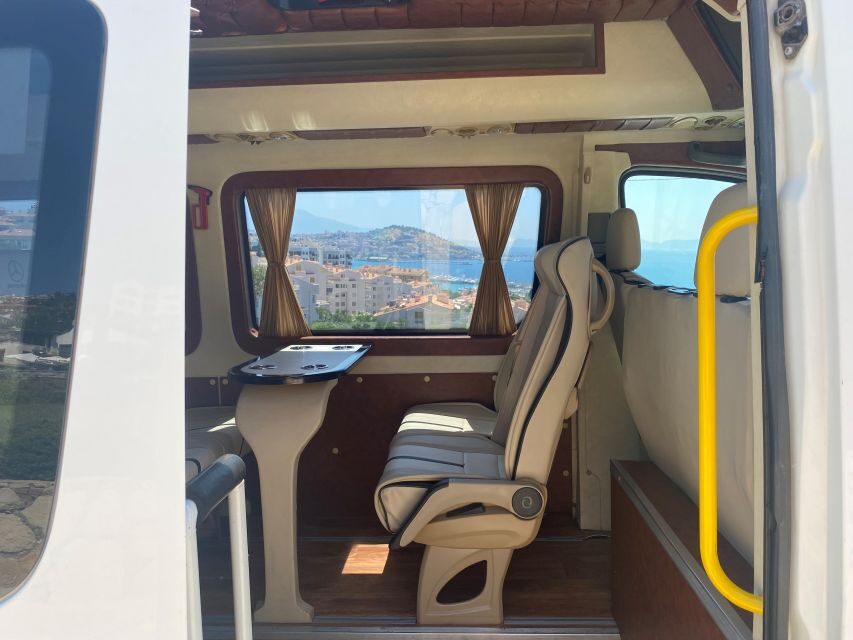
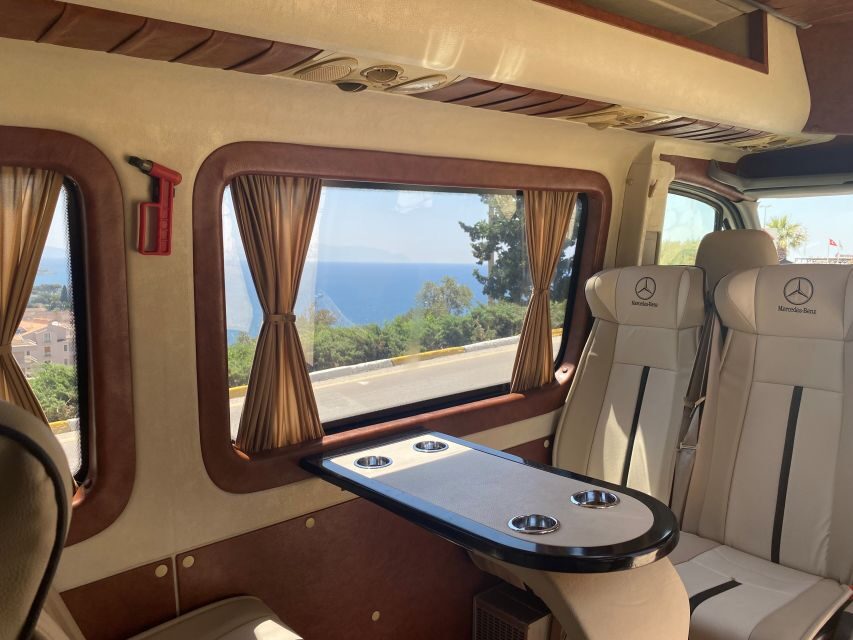
Once you’re headed out, you’re in an A/C vehicle and the drive to the Ephesus area is about 20 minutes. It’s not a long ride, so you’re not stuck traveling forever before the fun begins.
This short transfer also helps with pacing. You’ll arrive with enough energy to start walking immediately, and your guide can set expectations for the route—what to see first, where the steps are, and how long to spend at each stop without feeling like you’re speed-running history.
Entering Ephesus the smart way: marble streets and the big “wow” buildings
Ephesus is one of those places where first-time visitors often feel torn: do you rush to the famous ruins, or do you slow down and absorb the city layout? With a private guide, you can do both—without the crowd pressure.
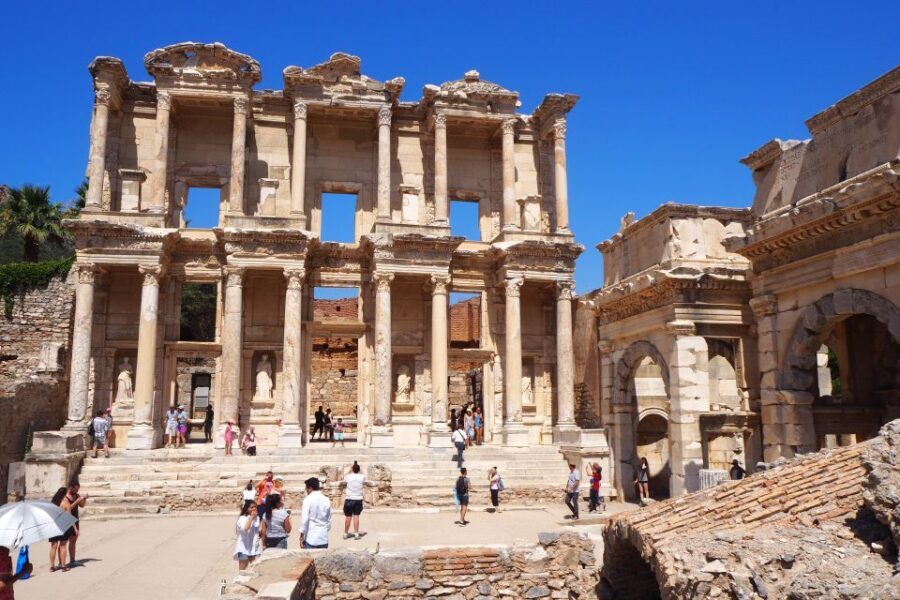
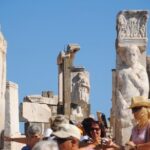
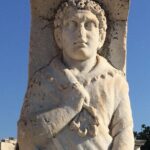
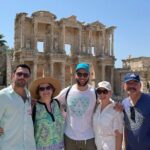
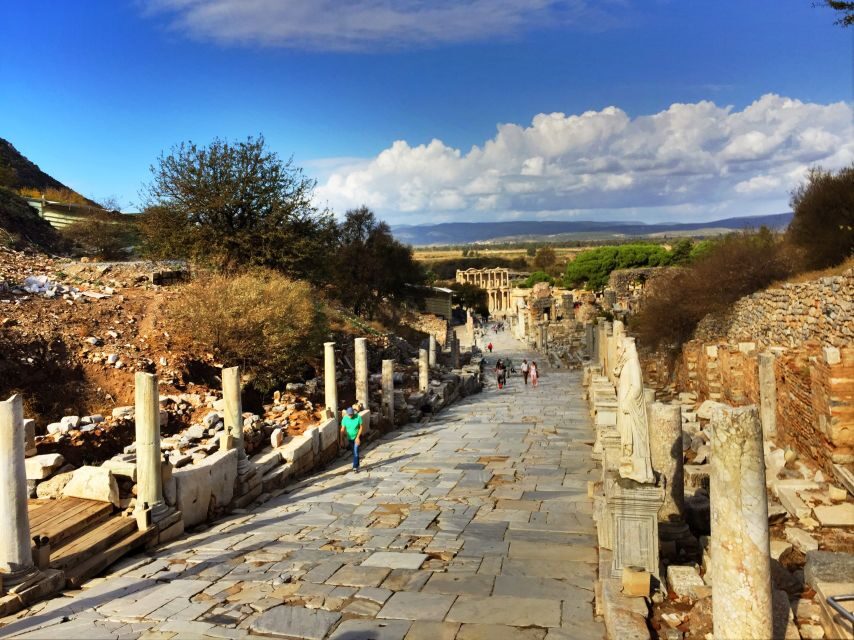
You’ll walk along marble streets lined with major public buildings. Among the highlights are the Baths of Scholastica, the Library of Celsus, the Temple of Hadrian, and the Grand Theatre.
Library of Celsus: built as a memorial, not just decoration
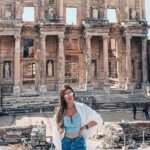
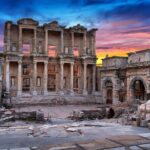
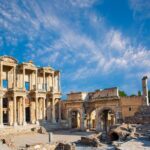
The Library of Celsus is one of the stars. It was built at the beginning of the 2nd century A.D. by Gaius Julius Aquila to honor his father, Gaius Julius Celsus Polemanus, who was proconsul of the Province of Asia. That detail matters because it reframes the building: it’s not only a museum-like ruin, it’s a family memorial from the political world of Roman Asia Minor.
Grand Theatre: the scale is the point
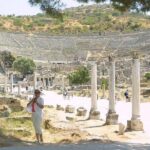
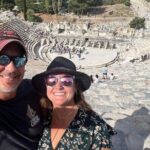
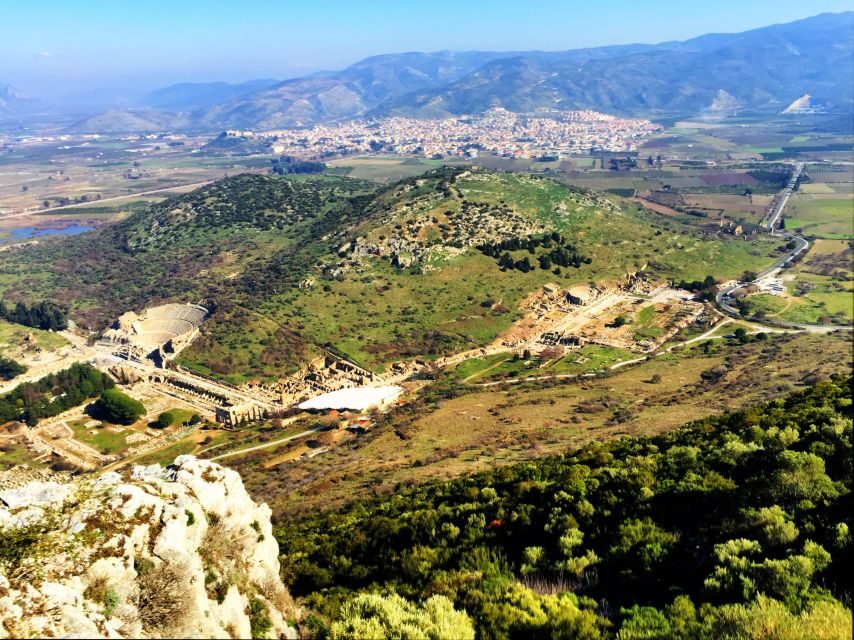
The Grand Theatre was built in the 3rd century B.C., then expanded by the Romans to hold about 24,000 spectators in the 1st century A.D. When you stand in or near the theatre space, it helps to look at it as an engineered machine for public life—performance, politics, announcements, all of it tied to mass gathering.
Temple of Hadrian and the idea of a living city
The Temple of Hadrian (and the surrounding civic buildings) gives you a sense that Ephesus wasn’t a dead collection of stones. It was a functioning urban hub, with religious and public architecture sitting side by side.
Practical tip: wear shoes you can walk in comfortably and keep water handy. Even for a 4-hour tour, Ephesus adds up quickly once you’re on marble ground under the sun.
Terrace Houses: frescoes, mosaics, and the stairs you should plan for
Terrace Houses sit on the skirt of Mount Pion. You’ll view a complex of six residential units built on three man-made terraces, originally belonging to wealthy citizens of Ephesus. This stop is popular for one reason: the homes are fancy in a way ruins sometimes fail to be. You’re looking at wall frescoes and floor mosaics—details that help you imagine daily life inside the city’s elite circles.
What makes this stop special
This is where the tour shifts from “large public monuments” to “private rooms.” The step layout forces you to move through levels, so you start to understand how the housing fit the slope of the mountain and how people at different heights lived with different views and light.
The trade-off: lots of steps
There are many steps to ascend from lower to higher levels. That’s the main consideration here. If you’re traveling with anyone who needs frequent breaks or has limited mobility, you’ll want to ask your guide to help set a slower rhythm and choose photo moments that don’t require sprinting between levels.
The private format is a real advantage on this stop because your guide can pace the group and help you keep your attention on the fresco and mosaic details rather than rushing to make up time.
Basilica of St. John: a quieter stop with a strong tradition
After Ephesus and Terrace Houses, you drive to the Basilica of St. John. The tour centers on a tradition: the evangelist St. John spent his last years in the region around Ephesus, and he is believed to be buried on the southern slope of Ayasolug Hill.
Even if you’re not religious, the value is still there. This stop connects the archaeological site to a broader cultural story—how later communities remembered, honored, and built around religious figures tied to the Ephesus area. It’s the kind of contrast that makes a short tour feel complete: you go from civic Roman spaces to elite domestic life, then to a site associated with spiritual memory.
One practical note: depending on the time of day and the light, this is sometimes a better “slow down” moment than the louder theatre and library sections. Your guide can help you take in the setting without making it feel rushed.
Artemis Temple: the Seven Wonders connection, with a last-stop rhythm
Artemis Temple is your final major ancient-world stop before returning toward Kusadasi town center and the port. This temple used to be one of the seven wonders of the ancient world, and even with the ruins and reconstruction limits, the site still carries major star power.
In a 4-hour tour, Artemis works as a strong closer because you can:
- take photos as the day winds down,
- connect what you’ve seen in Ephesus to the larger reputation of the region,
- and transition back to your ship without feeling like you’re cutting it too close.
It’s not a stop where you should expect long, wandering exploration. Think of it as a focused, meaningful final chapter—especially when you’ve already walked the big urban core.
Price and value: what $140 per person actually covers
At $140 per person for a 4-hour private tour, the value depends on what you compare it to. Here’s what you’re getting from the start:
Included:
- professional licensed tour guide
- private transportation in A/C vehicles
- entrance fees with skip-the-line tickets
- parking fees
- local taxes
Not included:
- meals (not mentioned in the itinerary)
So you’re not just paying for a guide and a car. You’re also paying for the friction you’d otherwise deal with on your own: entry lines, ticket handling, and on-the-ground logistics like parking. That matters most on cruise days when timing is tight.
If you’re traveling as a small group, private also becomes less about “luxury” and more about control. You’re less trapped by other people’s schedules, and your guide can adjust the route to your comfort level, especially on the Terrace Houses stairs.
Who should book this private Ephesus tour
This tour is a strong fit if you:
- want a private experience from Kusadasi port rather than squeezing into a larger bus group
- care about skipping the ticket line and keeping the day moving
- like a mix of public Ephesus monuments plus elite domestic details at Terrace Houses
- want someone to help navigate big ruins at a human pace
It’s not as ideal if your group needs very low step counts. Terrace Houses has plenty of stairs, and that’s the part of the day most likely to slow things down.
Should you book it or choose something else?
If your goal is a focused, efficient Ephesus highlights route in about 4 hours, this private tour is an easy “yes.” The biggest wins are skip-the-line entrance tickets included, the private guide format, and the practical transport from the cruise terminal.
If you’re hoping for a longer, unhurried day with deeper exploration of smaller corners, you might feel the time limit. But for most cruise travelers, the trade-off is worth it: you leave with the major sights covered and far less stress than self-guided touring.
My call: book it if you want the classics done well, with fewer headaches and a guide to keep the story making sense while you walk.
FAQ
FAQ
Where does the guide meet us?
Your guide meets you at Kusadasi Cruise Terminal with a sign showing your name. You’ll walk about 100 meters from your cruise to the meeting point after passing through customs.
How do I know the pickup time?
Pickup time is typically about 30 minutes after your cruise arrival, and it’s emailed within 24 hours after your reservation. If you miss the email, contact the provider for the correct pickup time.
Is transportation included?
Yes. Private transportation in A/C vehicles is included.
Are entrance fees included?
Yes. Entrance fees are included, and the tickets are described as skip-the-line.
How long is the tour?
The duration is 4 hours.
What are the main stops during the tour?
The tour covers Ephesus, Terrace Houses, Artemis Temple, and the Basilica of St. John.
Are there any extra costs once the tour starts?
The tour states there are no hidden costs, and entrance fees are included. Parking fees and local taxes are included as well. Meals are not mentioned.
What’s the cancellation policy?
Free cancellation is offered up to 24 hours in advance for a full refund.
What language is the guide?
The tour guide is English-speaking.