REVIEW · KUSADASI
Priene, Miletus, and Didyma Day Tour from Kusadasi
Book on Viator →Operated by Apasas travel · Bookable on Viator
Ancient ruins, three stops, one day. This full-day outing from Kusadasi (or the Selçuk area) strings together three Ionian powerhouses with the help of an art historian, so the sites feel connected instead of like a checklist. You ride by minibus, learn what you’re looking at, then return to your hotel with lunch and logistics handled.
Two things I especially like: the small-group feel (max 14) that keeps questions from getting lost, and the way Didyma turns myth into something visual. Guides such as Gul, Mehmet, and Melike are called out for keeping the day clear, human, and easy to follow, even when the stories get big.
One thing to keep in mind: it’s a long day on the move, and while some admissions are listed as free by stop, entrance fees aren’t universally included, so check what you’ll need to pay at Priene.
In This Review
- Key things that make this tour worth your time
- A smart way to link three Ionian cities
- How the minibus day feels in real life
- Didyma’s Temple of Apollo: the oracle made stone
- Miletus: a major city with a port-side mindset
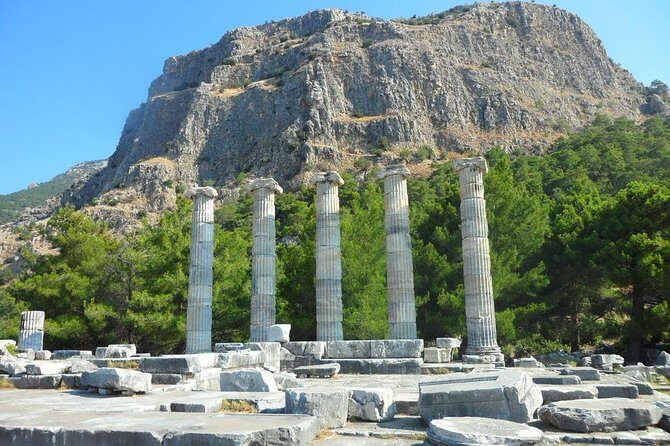
- Priene: theatre, Athena, and an unusually planned city
- Lunch, timing, and what you should budget for
- Guides make or break ancient sites
- Price and value: what you’re paying for
- Who this tour suits best
- Should you book this Priene, Miletus, and Didyma day tour?
- FAQ
- How long is the Priene, Miletus, and Didyma day tour?
- What time does the tour start, and where do they pick you up?
- Is lunch included, and are drinks included?
- Is the tour offered in English?
- How big is the group on this tour?
- Are entrance fees included?
- Is there a vegetarian lunch option?
- Will I get a mobile ticket?
- How soon will I get confirmation after booking?
- What is the cancellation rule for a full refund?
Key things that make this tour worth your time
- Max 14 people for a calmer pace and more back-and-forth with your guide
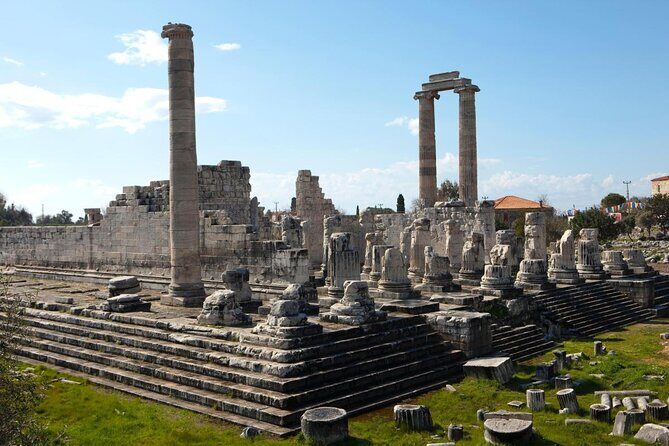
- Didyma’s Apollo Temple ruins with that dramatic stone Medusa’s head and stepped base
- Miletus beyond the highlights: theatre, harbour monuments, agora areas, and more
- Priene’s hilltop plan: Temple of Athena and a theatre with strong acoustics
- All entrance fees aren’t fully covered (with Priene specifically listed as not included), so budget smart
- Buffet lunch + hotel pickup/drop-off so you don’t spend your morning figuring out transport
A smart way to link three Ionian cities
This is the kind of day trip that works because it doesn’t treat each ancient site as a separate museum stop. Instead, you’ll get the through-line of the Ionian world: how Greek cities organized themselves, traded and built, and how sacred sites like Didyma pulled pilgrims from far and wide.
You start with pickup from Kusadasi or the Selçuk area hotels. Then you head to Priene first, followed by Miletus and finally Didyma. That ordering matters. Priene and Miletus help you understand the cities and their layouts, so when Didyma’s oracle site enters the picture, you’ll have more context for why people cared so much.
You can also read our reviews of more tours and experiences in Kusadasi.
How the minibus day feels in real life
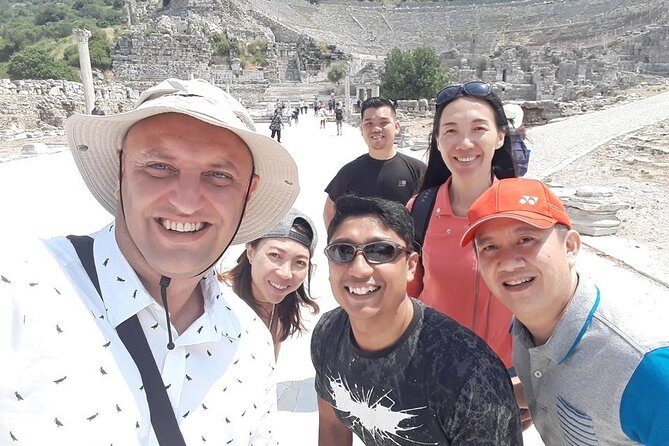
The tour runs about 8 hours and starts at 9:00 am. You’ll travel in a small group by minibus, and your guide leads the day in English. You also get hotel pickup and drop-off, including pickup from the port area in Kusadasi.
This setup is practical. You don’t have to coordinate public transport, haggle with taxis, or worry about timing between sites. And because the group stays small (up to 14 people), you’re less likely to feel like you’re being dragged through ruins at full speed.
Still, it is a full day. You’ll be walking on uneven ground and shifting between viewpoints and paths. If you’re the kind of person who needs frequent breaks, plan to slow down when you can and take your time with the scenes.
Didyma’s Temple of Apollo: the oracle made stone
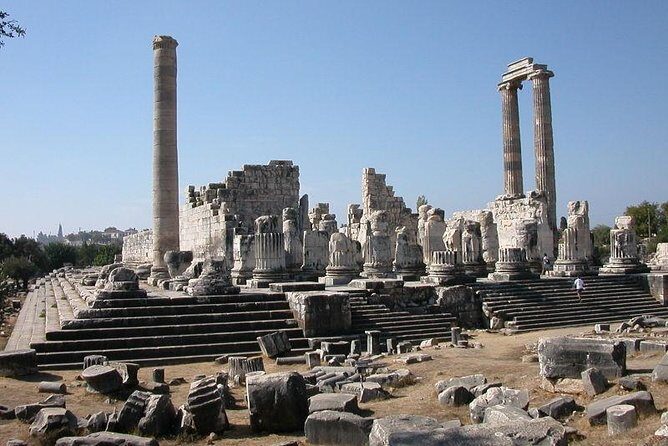
Didyma is where the day gets memorable for a reason. The site was famous across the ancient world as a colossal Temple of Apollo and a place where the oracle offered guidance. It wasn’t just a building; it was a religious center tied to wider Greek myth and worship.
At the start of your Didyma visit, you’ll hear the story of how this place relates to the so-called twins—Apollo and Artemis—through the meeting of Zeus and Leto. In practical terms, it helps you read the ruins with a sense of purpose: this wasn’t built for casual sightseeing. People came for answers.
What you’ll actually see today is the effect of multiple construction phases. The original archaic temple is referenced as being from the late 8th century BCE, and the remains of that earlier temple are said to sit under later Hellenistic construction. That layering is part of what makes the ruins feel real: you’re not just looking at one frozen moment.
If you remember one visual from Didyma, make it the stone Medusa’s head and the rows of white columns in the larger temple setting. The steep stepped base also gives you a sense of scale, especially when the site opens up for views.
Miletus: a major city with a port-side mindset
Miletus has a different energy than Didyma. Didyma feels sacred and pilgrimage-focused. Miletus feels civic—built for power, learning, and connection to the sea.
The site you visit is associated with Miletos as an Ionian city and a major player in the Ionian league. It’s described as having been one of the greatest Greek cities in the east before 500 BC, with a strong role as a route for goods moving from Anatolia to the wider world.
You’ll also get a sense of how Miletus produced ideas as well as ships. The names tied to the area include Thales, Anaximander, Anaximenes, and Hecataeus—figures linked with early scientific and philosophical thinking. Even if you don’t walk out reciting names, it changes how you read the city: you start seeing it as a place that mattered in more ways than trade.
On the ground, your guide takes you around a set of standout features, including:
- the theatre
- Byzantine fortress structures
- harbour monuments
- Delphinium
- the South Agora
- the Baths of Faustina
- a Mosque of Ilyas Bey area
- a Caravansaray
A big advantage here is how the small-group format helps you notice details you’d miss alone. Miletus can feel wide and confusing if you’re just scanning for the next sign. With a guide, you’ll understand how these pieces fit together as a working city.
Priene: theatre, Athena, and an unusually planned city
Priene is the quieter, more “geometric” feeling stop. It’s set in a hillside setting between the mountain and the flood plain, with sweeping views toward cotton fields and the Aegean direction. That setting matters because Priene’s layout makes more sense when you understand it as a city shaped by terrain and life near the sea.
The highlight is the Temple of Athena on top of the hill. Even if you’re not a temple person, this is worth it because it anchors the city’s logic. You’re not looking at random ruins—you’re seeing where the important structures sat and why.
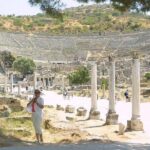
Then there’s the theatre. Priene’s theatre is noted for holding about 6,500 people and being built in the Hellenistic era. One of the cool practical facts here is that it’s described as the only theatre not renewed by the Romans. It also gets praise for acoustics, meaning the space was designed for voices to carry.
Priene also has a story of everyday life detail. It’s described as being wealthy, with about a third of citizens having their own bathroom with toilet facilities—an unusually specific glimpse of how advanced city life could be for the time. That kind of detail helps you move from “wow, old stones” to “wow, they lived differently here.”
Priene’s visit runs about 1 hour, which is a good length for a first-time stop. If you want more time for photos and slower wandering, you may feel the clock, but you’ll still see the core sights.

Lunch, timing, and what you should budget for
The tour includes a buffet lunch, plus transport and the guided program. Drinks aren’t included, so plan on paying for water or soft drinks once you’re on-site or at lunch.
Entrance fees are where you need to pay attention. The overall tour listing says entrance fees aren’t included, but the stop notes say Temple of Apollo admission is free and Milet Antik Kenti admission is free, while Priene’s admission is listed as not included. Translation: depending on the day’s setup, you may have little to pay at two stops, but you should expect the possibility of an extra Priene-related charge.
I recommend you treat this as a “mostly covered” day, not a fully all-in one. Budget a little extra just in case you’re asked to pay an admission on arrival at Priene.
The practical rhythm is also good. You start early, you hit the big sights in the right order, and you’re back by hotel drop-off in the evening. This is ideal if you’ve already seen Ephesus or you want a route that still feels authentically ancient without repeating the same crowd-heavy highlights.
Guides make or break ancient sites
The biggest strength of this tour, in my opinion, is how the guide role changes your reading of the ruins. With a dedicated art historian guiding, you’re not left with vague explanations or a “look over there” approach.
Guides connected to the experience—Gul, Mehmet, and Melike—are specifically described as friendly and strong at sharing the information you actually want. That matters for these sites because they’re full of partial remains, layered construction, and myth references. A good guide helps you understand what you’re seeing, not just when it was built.
English-language interpretation is also a real value point. If you don’t read Turkish or Ancient Greek (most of us don’t), you’ll be able to follow the bigger story and the city-to-city connections.
Price and value: what you’re paying for
At $216.74 per person, this is not the cheapest way to do the coast-to-ruins loop. But you’re paying for a package: hotel pickup and drop-off, minibus transport, a guided full-day program led by an art historian, plus a buffet lunch.
So the real question isn’t only the headline price. It’s whether you value the convenience and time saved. If you’re trying to piece together routes on your own in a day, you’ll spend time managing transport and then still need to figure out which buildings matter.
This is also a good value if you want a calmer group experience. With a maximum of 14 travelers, you’re less likely to feel like you’re in a factory line.
Just remember the one “possible extra” theme: entrance fees may still cost you at Priene, and drinks aren’t included. If you plan for that, the day becomes a solid deal.
Who this tour suits best
This works well if:
- You’re staying in the Kusadasi area and want a single organized day instead of DIY transport
- You’ve already visited Ephesus and want a different ancient Greek/Greco-Roman experience
- You enjoy explanations that connect myth, city layout, and architecture
- You prefer small groups over big bus tours
It may be less ideal if you want long free time in only one site. This is a “see the big three” format, and each stop has a planned visit length. If you tend to lose time when you browse slowly, you’ll want to mentally accept a tighter pace.
Should you book this Priene, Miletus, and Didyma day tour?
I’d book it if you want a high-efficiency day that still feels thoughtful. The combination of Didyma’s oracle atmosphere, Miletus’s port-and-ideas vibe, and Priene’s planned hilltop setting makes for a satisfying arc—especially with a guide who can translate what you see into a story you can actually follow.
Skip or reconsider if you’re trying to keep the entire day strictly free of extra costs. Entrance fees aren’t broadly included, and Priene is specifically listed as not included for admission, so you might pay at least there.
If you’re deciding today, here’s your quick rule of thumb: if you want less planning and more “I get what I’m looking at,” this is a strong choice. If you want total independence and flexible wandering with no structured stops, you’ll probably prefer DIY routes.
FAQ
How long is the Priene, Miletus, and Didyma day tour?
It runs about 8 hours.
What time does the tour start, and where do they pick you up?
The start time is 9:00 am. Pickup is offered from hotels in the Kusadasi and Selçuk area, plus from the port in Kusadasi.
Is lunch included, and are drinks included?
Lunch is included as a buffet. Drinks are not included.
Is the tour offered in English?
Yes, the tour is offered in English.
How big is the group on this tour?
This tour has a maximum of 14 travelers, and it operates as a small-group minibus tour.
Are entrance fees included?
Entrance fees are listed as not included. However, the stop descriptions indicate free admission for the Temple of Apollo and Milet Antik Kenti, while Priene’s admission is listed as not included.
Is there a vegetarian lunch option?
Yes. A vegetarian option is available if you advise the provider at booking.
Will I get a mobile ticket?
Yes, a mobile ticket is provided.
How soon will I get confirmation after booking?
Confirmation is received within 48 hours of booking, subject to availability.
What is the cancellation rule for a full refund?
You can cancel for a full refund up to 24 hours before the experience’s start time.