REVIEW · KUSADASI
Ephesus: Half-Day Tour from Kusadasi
Book on GetYourGuide →Operated by OKEANOS TRAVEL · Bookable on GetYourGuide
Ephesus in half a day feels unreal. You’re dropped into Turkey’s best-known open-air museum for 3.5 to 4.5 hours, with a guide who connects monuments like the Library of Celsus to real stories. It’s compact, focused, and perfect when you don’t have a full day to spare.
I especially like two things: the photo-ready drama of the Library’s two-story façade, and the hunt for small, surprising details on the marble streets—like the world’s oldest advertisement carving. If you enjoy seeing how a city worked, not just what it looked like, this stop-and-walk style really fits.
One possible drawback: it’s a short schedule packed with walking. If you’re sensitive to getting pulled into shopping stops, I’d ask before you go how free-time is handled, since one guest described being taken to multiple shops.
In This Review
- Key Highlights at a Glance
- A Fast, Focused Taste of Roman Ephesus (From Kusadasi or Izmir)
- Pickup, Vehicle, and the Skip-the-Line Advantage
- The Marble Streets Walk: Where You Get Oriented Fast
- Library of Celsus: The Façade That Makes Ephesus Feel Real
- Hadrian’s Temple, Medusa, and Scholastica Baths Details
- Great Theatre: 24,000 Seats and the St. Paul Connection
- Artemis Area and the Big Picture of Why Ephesus Matters
- Guide Quality: The Difference Between Facts and Feeling the Place
- Price and Value: What You’re Paying For in This Half-Day
- What to Watch Out For: Walking Pace and Possible Shopping Pressure
- Practical Tips: Shoes, Sun, and What to Bring
- Should You Book This Ephesus Half-Day Tour?
Key Highlights at a Glance
- Half-day timing that targets Ephesus essentials in 3.5–4.5 hours
- Skip-the-line entry plus a small group (up to 10)
- Cruise-proof returns with an on-time return promise
- Story-led guides with several languages, including examples like Fortunato and Tamer
- Details you can spot such as Hadrian’s Medusa carving and the world’s oldest advertisement
A Fast, Focused Taste of Roman Ephesus (From Kusadasi or Izmir)
This is the kind of tour that makes sense when Ephesus is your one big must-see. You’re looking at a city that feels endless—marble streets, monumental gates, theatres, baths—so the half-day format is actually a benefit. It helps you see the key highlights without burning a whole day getting oriented.
What makes it work is the mix of scale and storytelling. You’ll walk the 2,000-year-old marble streets and then zoom in on signature monuments like the Library of Celsus and the Great Theatre. The guide doesn’t just recite dates; they point out the why behind the stones, and that’s what turns the ruins into a real place.
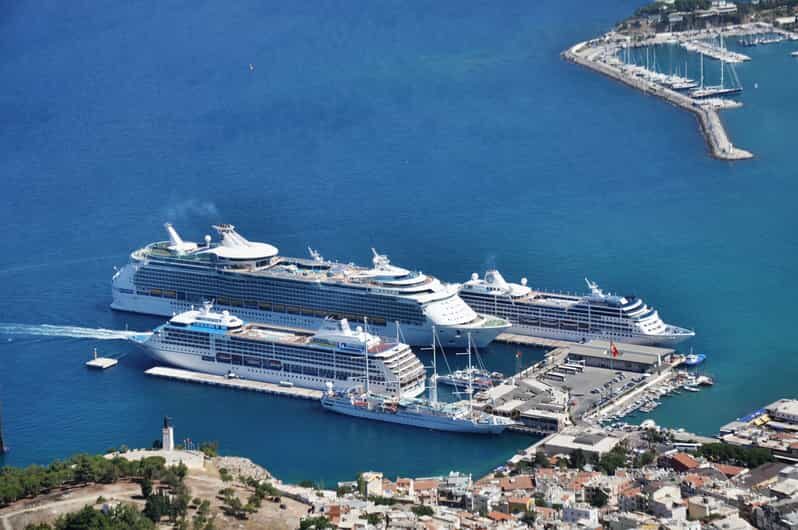
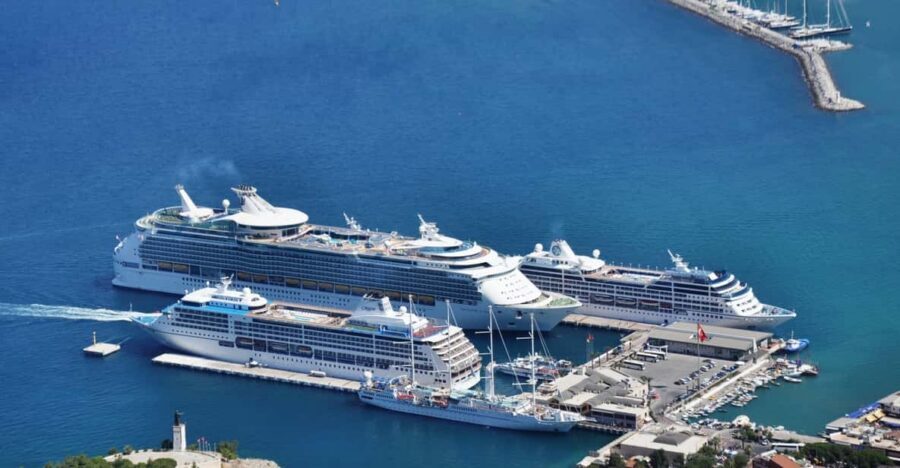
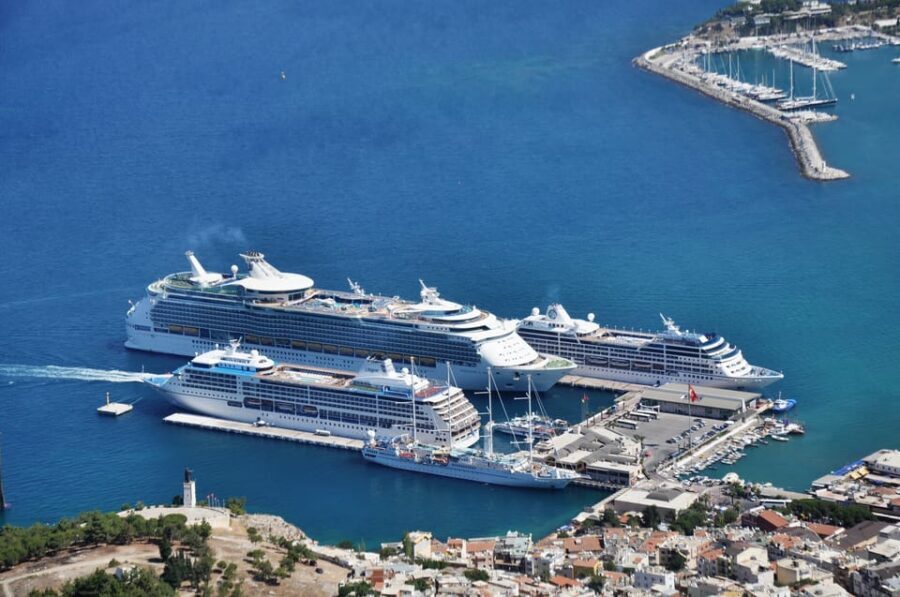
The tour also includes hotel or port pickup from Kusadasi or Izmir, which matters when you’re juggling cruise timing or limited daylight.
You can also read our reviews of more tours and experiences in Kusadasi

Pickup, Vehicle, and the Skip-the-Line Advantage
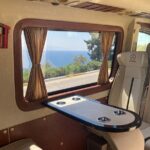
Expect air-conditioned comfort and a professional driver in a vehicle designed for tourism days. This matters more than you might think in the Aegean region, where walking time can build up fast.
The tour includes pickup and drop-off, and you can arrange it based on where you are—port, airport, or hotel—so you’re not worrying about buses, taxis, or finding the group in the heat.
A big practical plus: skip the ticket line. Ephesus can get busy, and saving that chunk of time helps you spend more minutes at the actual monuments instead of waiting at entrances.
Group size is capped at 10 participants, which usually means a less chaotic pace and more room to ask questions. I like this because Ephesus rewards curiosity—one good explanation can change how you look at a façade or a theatre seat.
The Marble Streets Walk: Where You Get Oriented Fast
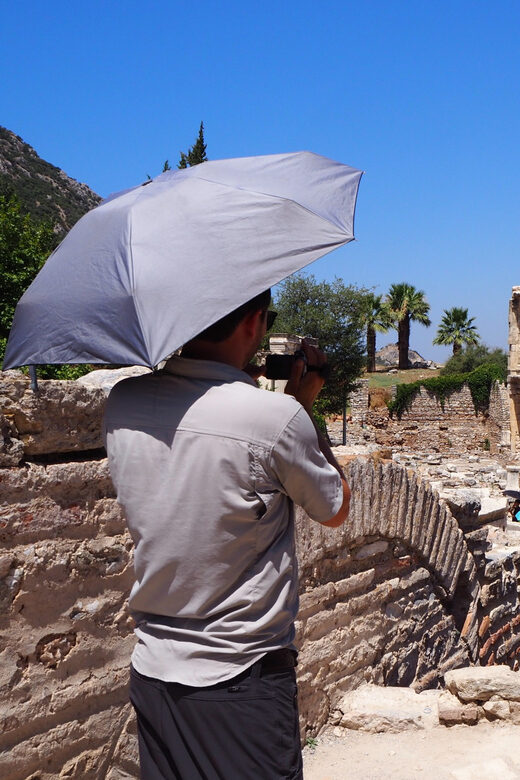
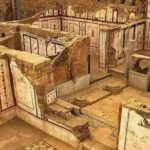
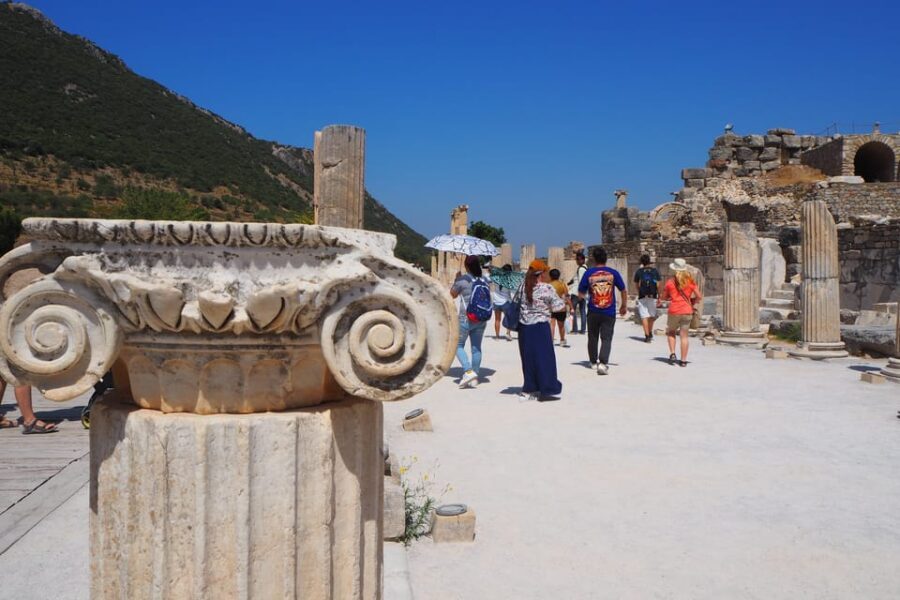
Your first payoff is the atmosphere of the site. Ephesus isn’t a single monument you view from one spot; it’s a connected city. Walking the 2,000-year-old marble streets gives you the layout in your legs, not just in your mind.
And here’s where you’ll feel the difference between a rushed tour and a well-guided one. The guide will point out hidden or easy-to-miss features, so you’re not just passing by stones and wishing you had read more beforehand.
One fun “look closely” moment: the guide will direct you to the carving sometimes described as the world’s first advertisement. The design includes a footprint, a heart, and a woman’s head, tied to the idea of ancient brothel directions and promises of a good time. Even if you find the content a little cheeky, the fact that you can literally spot this kind of messaging carved into marble is what makes Ephesus feel human.
Tip for your visit: keep your phone camera ready, but also look with your eyes first. The details are easier to catch when you’re not constantly hunting through your viewfinder.
Library of Celsus: The Façade That Makes Ephesus Feel Real
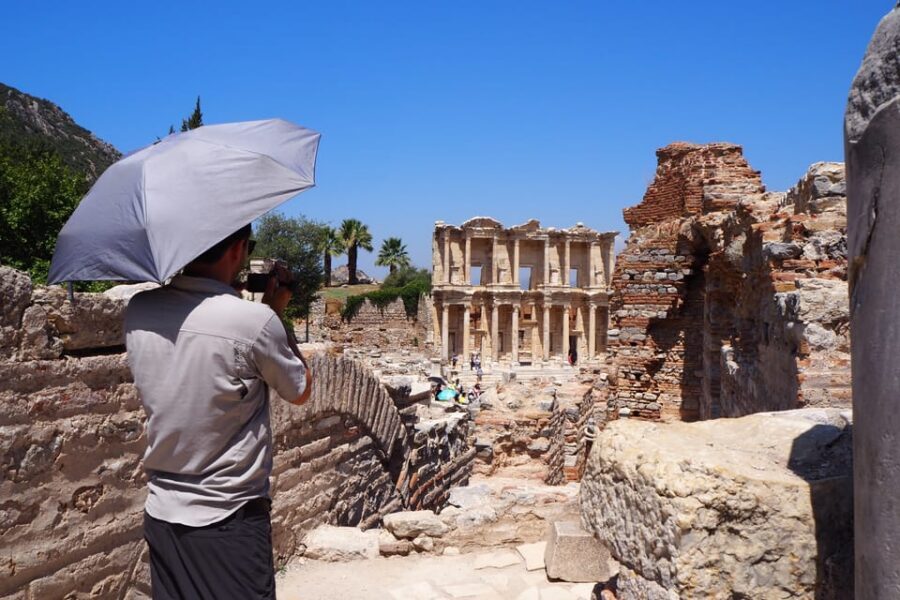
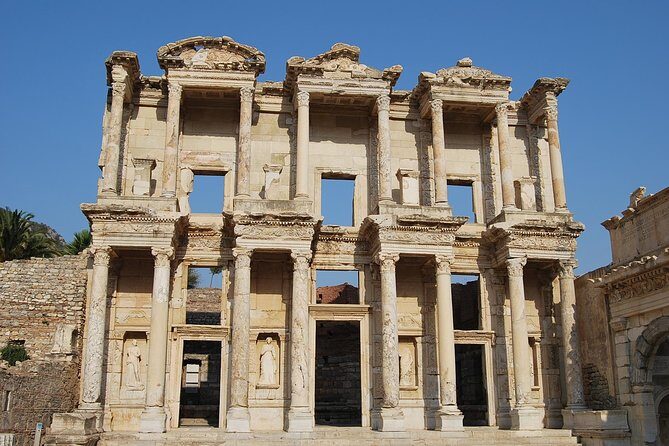
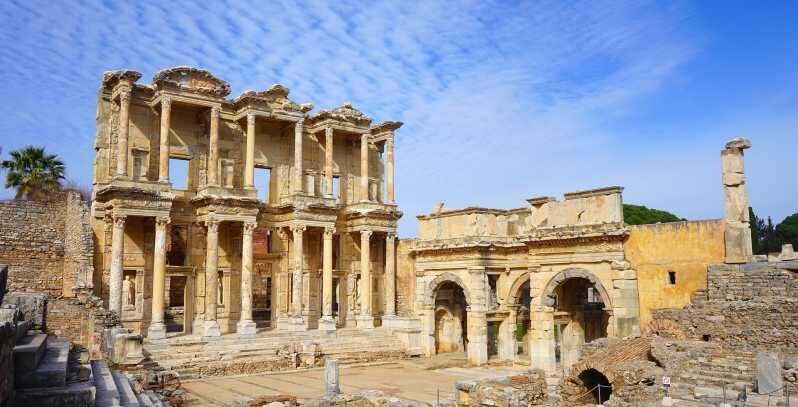
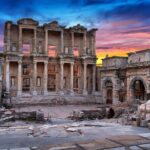
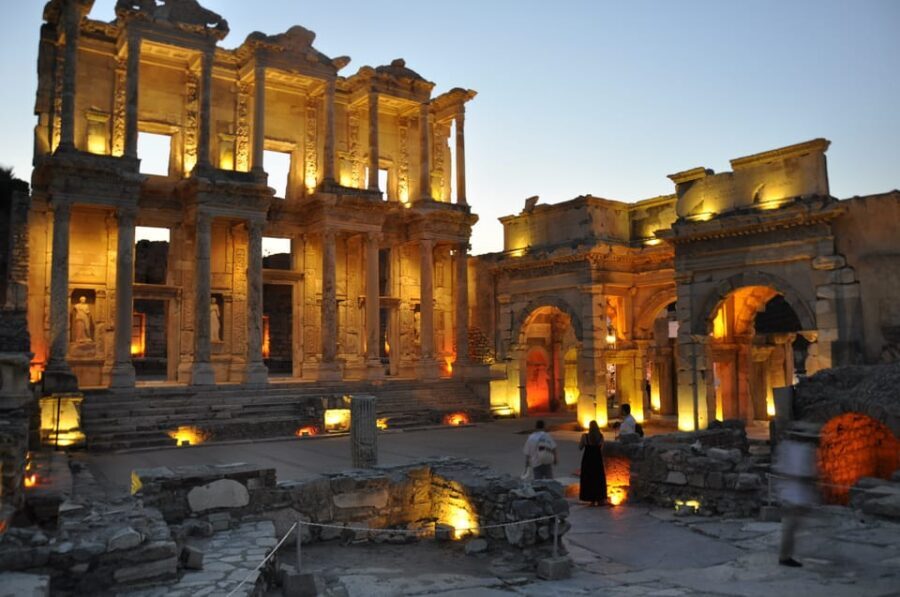
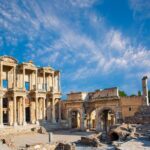
If Ephesus had a single poster image, it would be the Library of Celsus. You’ll see the spectacular two-story façade, and it’s hard not to pause here even if you’re trying to keep a tight pace.
But the Library isn’t just a beautiful face. It served as more than a place for scrolls, and it’s also known for its connection to a Roman senator’s tomb. Your guide’s job is to translate that mix of public culture and private legacy into something you can picture—who visited, why it mattered, and how power showed up in architecture.
Practical advice: take a moment to circle your focus area. Even from the same general point, the façade reads differently as you change angles. If you’re short on time, pick one angle for photos and one angle for reading details from your guide’s explanation.
Hadrian’s Temple, Medusa, and Scholastica Baths Details
This tour doesn’t just treat ruins like postcards. You’ll get specific “story targets” where ornament and everyday life overlap.
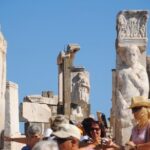
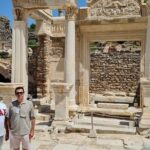
One highlight is the Temple of Hadrian, including a carved head of Medusa. That detail is the kind of thing you could easily miss if you’re walking quickly, but it’s exactly why a guide helps. You’re not only learning that Medusa appears in decoration; you’re seeing how the ancient world used myth in real public spaces.
You’ll also hear about the Scholastica Baths, including the ancient public toilets. Yes, toilets. I know. But this is where you get the most useful kind of travel learning: evidence of how people lived day to day. It’s not “how it must have been” guessing; it’s a physical system that still exists as stone and layout.
If you like authenticity, these practical details are the stuff you remember later, especially when the more famous monuments start blending together.


Great Theatre: 24,000 Seats and the St. Paul Connection
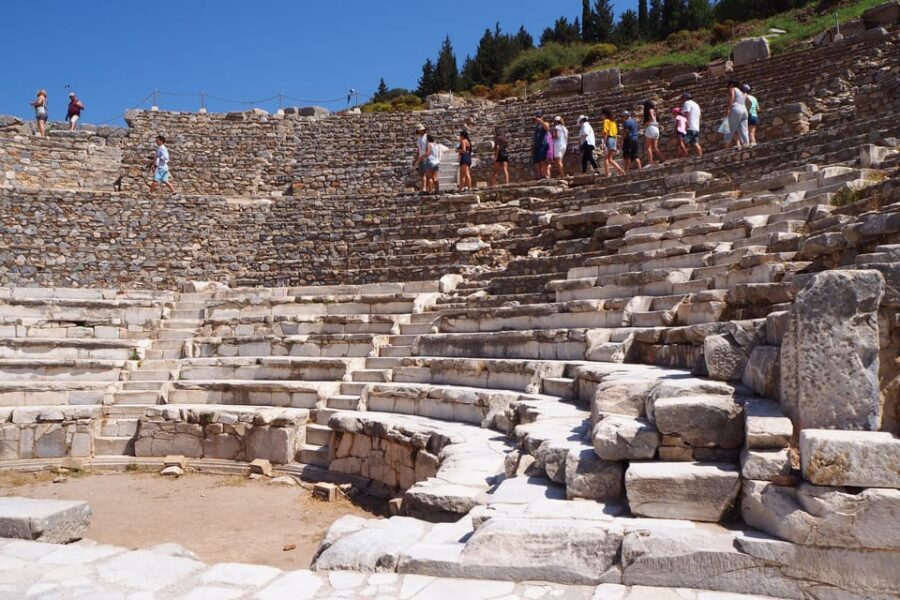
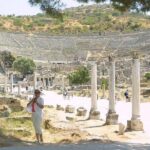
The Great Theatre is big enough that it changes your sense of scale. The capacity is often cited at 24,000 spectators, and when you look across the stone seating, you can almost hear the crowd noise you’re imagining.
This is also where the guide typically makes the site feel emotionally specific. The theatre wasn’t a silent museum space; it was a loud place for performances and games—so your brain starts to fill in spectacle where you’d otherwise see empty tiers.
There’s another important layer: it’s also where St. Paul is said to have preached to the Ephesians. Whether you’re religious, curious, or strictly history-minded, this connection helps the theatre feel tied to more than entertainment. It points to how public spaces carried ideas and gatherings, not just shows.
Practical advice: bring a light water plan. You’ll be in the open and walking across uneven stone. If you start to feel heat fatigue, this is the time to slow down for a few minutes and take shade where you can.
Artemis Area and the Big Picture of Why Ephesus Matters
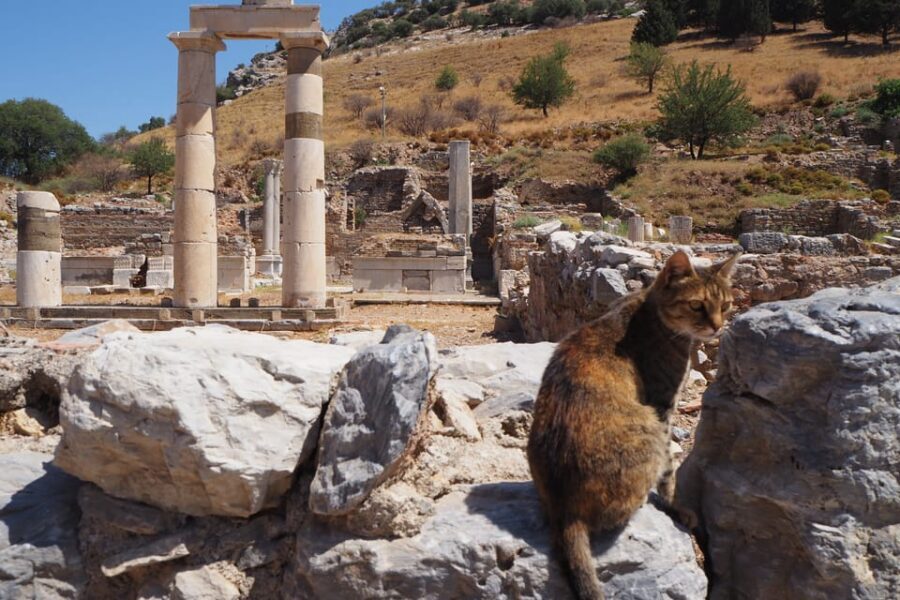
Ephesus is famous for a reason, but it’s easy to misunderstand that fame if you only focus on the “top 3” highlights. The tour also includes stops connected to the Temples of Hadrian and Artemis, which helps you understand Ephesus as a layered city—Greek influence, Roman power, local worship, and everyday public life all showing up in different forms.
The value here isn’t that you learn every archaeological term. The value is that you see how architecture acted like messaging. Monuments told people what to believe, where to gather, and who had authority to shape civic life.
If you’ve got one morning or part of a day, this is one of the best ways to get oriented. You’ll likely leave with at least a rough mental map of the site—how the big cultural buildings connect and why the theatre and library feel like social centers.
Guide Quality: The Difference Between Facts and Feeling the Place
The biggest swing factor on any Ephesus tour is the guide. This one uses licensed professional guides and offers multiple languages, including English, German, French, Dutch, Italian, Spanish, Japanese, plus other listed languages.
You’ll also see evidence that the guide quality can be excellent. For example, one guest praised Fortunato for fluent Italian, explanations that felt engaging and clear, and an empathetic, professional approach. Another guest called out Tamer as well-prepared and speaking Italian strongly. There’s also praise for Serpil as clear, friendly, patient, and knowledgeable.
And there’s a caution flag too. One guest reported that the guide did not speak Italian well. So if your comfort depends heavily on language quality, consider choosing the tour language carefully when booking.
For me, this is why I rate guided Ephesus experiences higher than self-guided ones. When the guide points out Medusa carving details or explains why a theatre mattered to early Christian communities, the ruins stop being random stone. They become a place with a voice.
Price and Value: What You’re Paying For in This Half-Day
At $135 per person for a 3.5 to 4.5 hour outing, the key question is: do you get real value, or just a rushed highlight reel?
Here, value comes from the mix of included items:
- Licensed English-speaking guidance (and other languages)
- Air-conditioned vehicle with a professional driver
- Pickup and drop-off
- Entrance fees included for the sites on the route
- Skip-the-line entry
- Small group (10 max)
You’re not paying extra to arrange transport, and you’re not losing time to queues at the main entrances. That matters most for cruise passengers and anyone doing Ephesus as a one-hit experience.
The length also affects value. A longer full-day tour can feel better if you want deep museum-style pacing. But if your priority is seeing the headline monuments plus a few standout details, half-day coverage often hits the sweet spot.
What to Watch Out For: Walking Pace and Possible Shopping Pressure
Ephesus is an outdoor archaeological site. Expect walking. The tour isn’t described as suitable for people with mobility impairments or wheelchair users, so plan accordingly.
The schedule is tight, and that means you may not have long free time to wander away from the group. If you’re the kind of traveler who likes to linger quietly for photos, tell yourself you’ll do that at the key photo stops and trust the guide’s pace for everything else.
One more potential issue: shopping stops. The itinerary details you provided focus on monuments, but one negative account described a guide taking the guest to multiple shops and feeling that the shopping was pressured and overpriced. I can’t claim that’s standard for every departure, but I can tell you this: if you want your time to stay strictly at Ephesus and you dislike shopping detours, ask the tour provider how time is allocated and whether any store stops are added.
Practical Tips: Shoes, Sun, and What to Bring
This tour is straightforward, but the basics matter because you’ll be outside for hours.
Bring:
- Passport or ID card
- Comfortable shoes (non-negotiable)
- Sun hat and sunscreen
- Sunglasses
- A camera
Not allowed:
- Luggage or large bags
- Video recording
That last one is important. If you planned to film long segments, adjust expectations before you arrive. Also, keep your bag small enough to move easily with the group.
Heat strategy I recommend: do sunscreen early, not after you start sweating. Start protected at the first stop so you don’t pay for it later at the Great Theatre.
Should You Book This Ephesus Half-Day Tour?
Book it if:
- You want the major monuments without losing a whole day
- You care about guided storytelling, not just ruins
- You’re on a cruise schedule or you have one morning to make it count
- You appreciate small group pacing and skip-the-line convenience
- You’d enjoy spotting details like the world’s oldest advertisement and the Medusa carving
Consider skipping (or asking extra questions) if:
- You need a low-walking pace or wheelchair-friendly route
- Your language needs are strict and you want absolute confidence in interpretation quality
- You strongly dislike any possibility of store stops added during the half-day
If you’re like most first-timers, this is a solid, efficient way to see why Ephesus has earned its fame. You won’t see every corner of the site, but you will see the pieces that most clearly explain how this city impressed, educated, entertained, and organized public life.