REVIEW · KUSADASI
Day Tour – Pamukkale, Travertines and Hierapolis Tour from Kusadasi
Book on Viator →Operated by Fez Travel · Bookable on Viator
Pamukkale looks like snow, but it’s mineral water. This full day out of Kusadasi pairs guided UNESCO travertines with the ruins of Hierapolis, plus time to soak in natural spa pools. I especially like the way the guide explains the geology and how those white terraces form, so you’re not just taking photos—you’re understanding what you’re seeing.
I also love the balance of structure and freedom: you’ll get a walking route through Hierapolis (necropolis, Roman theatre, and St Philippe Martyrion), then you’ll have time to relax in the pools. One consideration: the day is long because you’re crossing the coast, and you should expect lots of walking and some potential shopping stops that can cut into on-site time.
In This Review
- Key highlights at a glance
- Kusadasi to Pamukkale: The long ride, and how to make it easier
- Walking the White Terraces of Pamukkale
- Hierapolis thermal pools: How the soak fits into a busy day
- Hierapolis ruins: Necropolis, Roman theatre, and St Philippe Martyrion
- Lunch, shopping stops, and how to protect your time
- Price and logistics: What you’re paying for (and what’s extra)
- Group size, guide style, and what to look for
- Walking stamina and season tips you’ll actually use
- Should you book this Pamukkale and Hierapolis tour?
- FAQ
- What time does the tour start?
- How long is the tour?
- How many people are in the group?
- Is hotel pickup and drop-off included?
- Is the transport air-conditioned?
- Is a mobile ticket used?
- Are entrance fees included in the price?
- Is lunch included?
- Do I need a swimsuit?
- Is the tour dependent on weather?
Key highlights at a glance
- Max 14 people means you’re not stuck in a giant herd
- Hotel pickup/drop-off by air-conditioned coach makes the day easier
- Pamukkale geology explained (including the 200 m/656 ft water pathway)
- Hierapolis thermal pools with time to soak (bring a swimsuit)
- Roman sights that are real and close: necropolis, theatre (12,000 seats), St Philippe Martyrion
- Reviews often mention the day can feel tight in peak season, so plan for a brisk schedule
Kusadasi to Pamukkale: The long ride, and how to make it easier
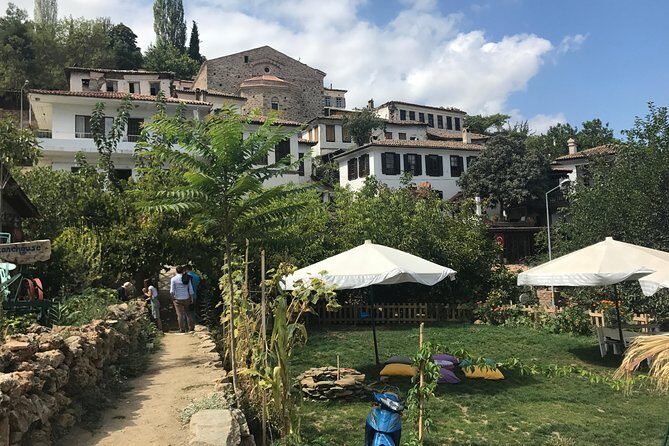
This is a classic coast-to-interior day trip. Pickup starts at 8:00 am, and the drive is long enough that you’ll want to treat it like a whole day, not a quick excursion. In practice, expect roughly three hours each way, so the schedule is built around getting you there, then squeezing in two big experiences.
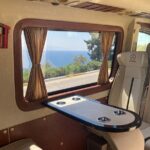
The upside is comfort. You ride in an air-conditioned vehicle, and pickup/drop-off means you don’t have to negotiate buses, taxis, or parking. The small-group size helps too; you feel more like a group with a plan, not a transfer assembly line.
Still, be honest with yourself about your stamina. Between the walkways, stairs, and uneven ground around the travertines and ruins, this is not a sit-and-see day. If you know you’ll struggle, bring support gear (good shoes, maybe a small day bag that’s easy to manage). Some visitors even suggest renting a cart at the site if you need it—so that’s a smart idea if walking is your limiter.
You can also read our reviews of more tours and experiences in Kusadasi.

Walking the White Terraces of Pamukkale
The heart of Pamukkale is the surreal white travertine terraces. From a distance they can look like frozen waterfalls or icy cliffs, but the magic is mineral deposits left behind as hot spring water flows over the rock. The guide’s explanation matters here: you’ll learn that the hot bath water travels about 200 meters (656 feet) down the cliffside, building those pale layers over time.
On the walk, you’ll get close enough to see how the surface changes—smooth in spots, textured in others—so the site feels less like a photo backdrop and more like a living process. And yes, you’ll take a lot of pictures. You’ll also notice that crowds can affect your movement and timing, especially in warmer months when pools and walkways get busy.
A practical tip: go slow on the travertines. The ground can be slippery and the terrain is uneven. Wear shoes you trust, and keep your phone/keys secure so you’re not juggling gear while you’re stepping on mineral surfaces. If the weather is hot (and it often is), carry water and protect your head. A hat or umbrella can be the difference between enjoying the day and feeling wrecked after 60 minutes.
Hierapolis thermal pools: How the soak fits into a busy day
The best reason to include Hierapolis is the chance to soak in the natural spa pools. After you’ve explored Pamukkale, you’ll spend time relaxing in the Hierapolis pools—this is the part that turns a history day into a body day.
Bring a swimsuit, even if you think you’ll only dip your toes. The pools are a big part of the experience, and once you’re there, it’s hard not to enjoy the feeling after hours of walking and sun. Expect time to change, soak, and cool down. If it’s crowded, plan for it; in peak heat, the pool areas can be busy, which can limit how long you want to linger.
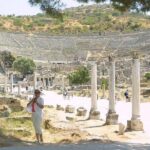
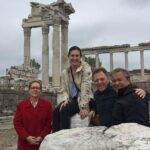
Around the pools, you’ll see the visual link between nature and empire: Greco-Roman columns frame the area, and that contrast makes the setting extra memorable. You’re soaking in mineral-rich water while surrounded by Roman-era architecture. It’s one of those moments where the site’s layers—geology, water, and human history—hit at the same time.
Then comes the trade-off: the day keeps moving. You’ll head to lunch and then transition into a walking tour through the ruins. If you want a longer soak, the timing matters. This is why I’d rather you treat pool time as a priority you plan around, not something you do “if there’s time.”
Hierapolis ruins: Necropolis, Roman theatre, and St Philippe Martyrion
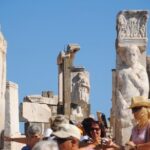
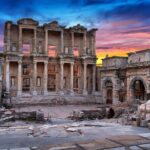
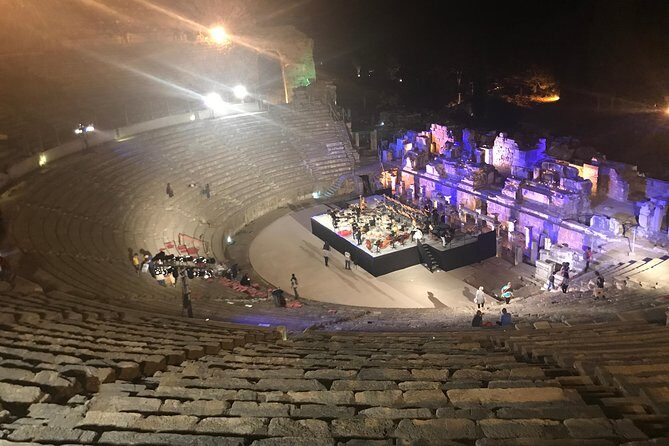
Hierarchy in Hierapolis isn’t subtle. Even when ruins are partially collapsed, the scale still shows. The highlight stop is the Roman theatre, which once seated 12,000 people. It’s not hard to imagine the sound carrying when you stand where the audience would have sat.
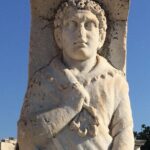
You’ll also see the necropolis, a Roman graveyard area that helps explain how the city worked in daily life and in death. It’s not just monumental architecture—it’s a whole civic system tied to the landscape and the beliefs of the time.
Then there’s the St Philippe Martyrion (Basilica of St Philippe). This is the kind of site that makes you look twice at what remains. It connects Hierapolis to early Christianity and adds a different layer to the Roman-and-hellenic feel you’ll have already seen around the theatre and columns.
One small caution: the walking is real. Hierapolis paths can be uneven, and there’s less “wide easy flooring” than you might expect. Keep your pace steady. Take breaks if you need them, and don’t feel guilty if you miss a small fragment of the site. The big structures are worth your attention, and the guide will help you see what’s most important.
Lunch, shopping stops, and how to protect your time
Lunch usually comes as a café stop after your pool time. What you buy is up to you, and the quality you get can vary. The key point is this: the day can start to feel scheduled, and lunch is one part of that.
The bigger time consideration is shopping. Some departures include detours tied to textiles, gems, leather, onyx, or similar demo-style stops. On a day this full, these can quietly eat into time where you’d rather be standing on travertines or walking among the ruins. Even if you like shopping, it’s worth keeping your expectations in check.
How do you handle it? Start with your priorities: if Pamukkale and Hierapolis are your top two, keep an eye on the clock when you’re at any showroom stop. If your guide gives you time to ask questions or set expectations, ask directly how much time you’ll have at each major site. You’ll thank yourself when you’re planning photos, shade breaks, and pool time.
Also, avoid packing yourself into a rushed lunch scenario. If you’re traveling in hot weather, bring water and keep snacks simple if you can. Even if lunch is available, you may want something quick if the schedule runs a bit tight.


Price and logistics: What you’re paying for (and what’s extra)
At $152.97 per person, you’re paying for a full-day package from Kusadasi: pickup and drop-off, an air-conditioned coach, and a professional English-speaking guide for the route between sites. In practical terms, this is paying for two things most independent travelers underestimate: transportation time and “someone who knows what to point out.”
The catch is that entrance fees are not included. For 2025, entrance for Pamukkale and Hierapolis is listed as €30.00 per person, paid separately on site. That means your real day cost is the tour price plus the entrance fees, plus your lunch and drinks.
Is it still good value? Often yes, because the guide experience is the difference between seeing a place and understanding it. The geology explanation at Pamukkale and the site context at Hierapolis can turn a tourist checklist into a real day trip. For many people, it’s cheaper than you’d expect to DIY with reliable transport plus paid guiding.
Still, if your main goal is to get there and back cheaply, you might consider shuttle or taxi options. This tour is best when you value a guided route and want the day to run with less hassle.
Group size, guide style, and what to look for
A major plus is the small-group cap of 14 people. That size helps on crowded sites like Pamukkale: you’re easier to manage, you can hear your guide better, and you’re less likely to feel lost in a crowd.
Guides on this route are often described as friendly and engaging in the way they explain the sites. Names that have come up include Mehmet and Tahsin, both praised for being approachable and passionate about the places. I can’t promise who you’ll get, but you can expect a real effort to make the history and geology understandable.
What should you look for during the day? Watch how your guide handles the tricky parts: where to stand for the best views, how to move through the travertines safely, and how to prioritize what matters at Hierapolis when time is tight. If your guide gives you clear pointers early, your experience will feel smoother later.
Also: English quality can vary with any tour. If fluent guiding is a must-have for you, it’s smart to pick a tour with strong communication in the description and then pay attention to your guide’s pacing once you’re on the ground.
Walking stamina and season tips you’ll actually use
This is a day with “be ready” energy. You’ll walk in both sites, and the surface at Pamukkale plus the uneven ruins at Hierapolis mean you need footwear you trust. Comfortable walking shoes are non-negotiable.
Pack for sun and heat:
- Water: keep it where you can grab it quickly
- Hat or umbrella: especially if you’re sensitive to midday sun
- Swimsuit: for the pool time
- Sunscreen: the terraces and open ruins have little cover
Crowds are another reality. In August, the pools can feel packed, which can reduce how comfortable swimming feels. If you want the soak to be relaxing, arrive ready to manage crowd flow and keep your expectations flexible.
If you have mobility concerns, don’t silently suffer. Ask about options like site carts if they’re available. It’s better to make it easy on your body than to power through and ruin the last half of the day.
Should you book this Pamukkale and Hierapolis tour?
I’d book this tour if you want a guided, small-group day that hits the big two: Pamukkale’s travertines and Hierapolis’ ruins plus thermal pools. It’s a strong choice if you’d rather spend your energy absorbing geology and Roman history than figuring out transport across the region.
Don’t book it if you hate long travel days, struggle with lots of walking, or you’re very time-sensitive about how many minutes you get at each major site. In peak season, some people feel the schedule is rushed, and shopping stops can eat minutes you’d rather spend on-site.
If your ideal day includes a real guide, reliable transport, and a chance to soak in natural pools, this is a solid package. Just go in with a clear plan: shoes on, swimsuit ready, and treat it like a full-day commitment from the start.
FAQ
What time does the tour start?
The start time is listed as 8:00 am.
How long is the tour?
The duration is approximately 10 hours.
How many people are in the group?
This tour has a maximum of 14 travelers.
Is hotel pickup and drop-off included?
Yes. Hotel pickup and drop-off are included.
Is the transport air-conditioned?
Yes. The tour includes an air-conditioned vehicle.
Is a mobile ticket used?
Yes. The tour includes a mobile ticket.
Are entrance fees included in the price?
No. Entrance fees for Pamukkale and Hierapolis in 2025 are €30.00 per person, paid separately.
Is lunch included?
Lunch is listed as not included (food and drinks are not included unless specified).
Do I need a swimsuit?
Yes, you should bring one. The experience includes soaking in the natural springs and pools at Hierapolis.
Is the tour dependent on weather?
Yes. The experience requires good weather. If canceled due to poor weather, you’ll be offered a different date or a full refund.